




































Solar photovoltaics accelerates dramatically whilst wind confronts manufacturing and policy challenges, with China dominating both sectors despite regional variations and obstacles across markets
The renewable energy sector experienced unprecedented growth in 2024, with solar photovoltaics leading a transformative shift in global electricity generation whilst wind power navigated a complex landscape of manufacturing pressures and policy uncertainties.
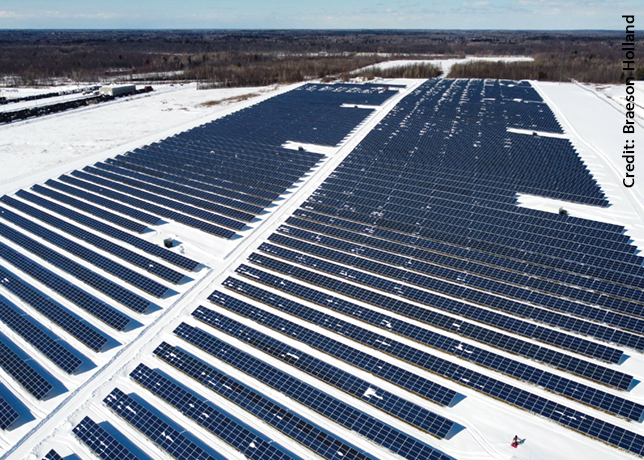
Solar photovoltaics shattered records throughout 2024, with global installed capacity surpassing 2 terawatts (TW) and reaching 2.25 TW, nearly double the capacity installed just two years earlier.
Annual additions hit an extraordinary 602 gigawatt (GW), representing a 32 per cent year-on-year increase and equivalent to all global PV capacity installed by the end of 2019.
According to the REN21’s ‘Renewables 2025 Global Status Report’, this surge was 'facilitated by record-low module prices due to oversupply, as well as favourable policy environments and falling installation costs in key markets'.
China maintained overwhelming dominance, accounting for approximately 60 per cent of new additions globally with a staggering 357 GW installed, 30 per cent more than 2023.
The country’s solar PV capacity reached 1.05 TW, representing 47 per cent of the global total, and China achieved its combined 2030 solar and wind capacity target six years ahead of schedule.
Solar electricity generation grew to 2,131 TWh globally, representing 6.9 per cent of global electricity generation, up from 5.6 per cent in 2023.
China alone accounted for 53 per cent of this growth, increasing its solar PV generation by 46 per cent or 265 Terawatt-hour (TWh).
In the US, solar generation rose by 64 TWh, and the combined share of solar PV and wind overtook coal for the first time.
The European Union (EU) also witnessed solar PV generation overtaking coal, with solar contributing around 14 per cent of total EU electricity generation.
Utility-scale solar PV installations surged by approximately 380 GW, a 43 per cent year-on-year increase, representing nearly two-thirds of global solar additions.
Multiple installations exceeding 500 MW came online across China, the US and India, with Germany’s Witznitz Solar Park becoming Europe’s largest at 650 megawatt (MW).
Decentralised and rooftop systems grew more moderately, adding around 220 GW, with significant deployments in Germany (10 GW), Italy (5.3 GW), and emerging markets like Pakistan, where high retail electricity prices and cheap modules drove primarily rooftop-based growth.
Twenty-three countries achieved solar PV shares exceeding 10 per cent in their electricity mix, with Hungary leading at 25 per cent, followed by Luxembourg, Chile, Greece and Spain; all exceeding 20 per cent.
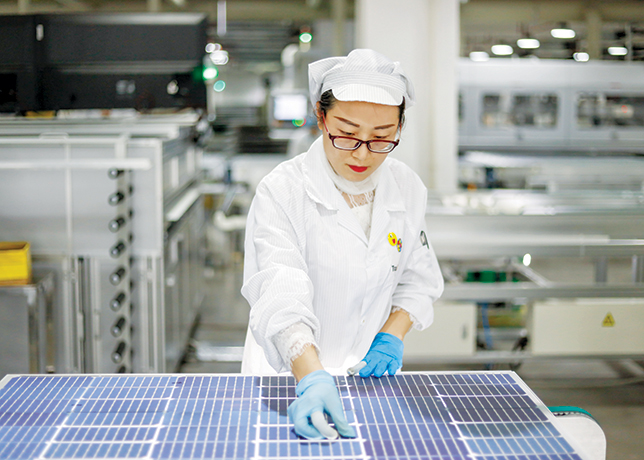
Manufacturing capacity surged from 1.135 TW per year in 2023 to 1.5 TW per year in 2024, with China accounting for approximately 80 per cent of production capacity along the entire PV manufacturing value chain.
Chinese factories produced approximately 630 GW of modules, nearly double the country’s annual deployment, leading to significant global oversupply and pushing module prices down to around $0.10 per Watt, a reduction of roughly 45 per cent year-on-year.
The solar PV sector employed an estimated 7.2 million people globally by end-2023, with China accounting for 4.6 million jobs, nearly half of which were in manufacturing.
WIND POWER HITS RECORD CAPACITY AMID PERSISTENT CHALLENGES
Wind power added an estimated 116.8 GW of capacity to global grids in 2024, setting a new record despite representing just a marginal 0.2 per cent increase over 2023.
Onshore installations grew 3.1 per cent to 109 GW, whilst offshore additions decreased by 27.5 per cent compared to the previous year.
China again dominated the global wind market, accounting for 68.3 per cent of additions with a record 79.8 GW connected to the grid, as provinces rushed to meet renewable energy targets by the end of 2025.
China’s total wind power capacity reached an estimated 520.6 GW, nearly 46 per cent of the global total, with wind generation accounting for approximately 10 per cent of the country’s electricity production.
Installations in the US fell for the fourth consecutive year to the lowest level since 2014, with almost 4.1 GW added, bringing total capacity to 154.8 GW.
Inflation, high interest rates, equipment shortages and a near-doubling of turbine delivery times all delayed commissioning for several projects.
Germany added more than 4 GW of wind power capacity, with record permitting and auction results owing to government interventions that removed barriers to deployment.
India experienced rapid market growth with installations rising 21 per cent to 3.4 GW, while Brazil saw annual investment, installations and generation plummet, dropping from third to fifth place globally.
Europe’s additions fell 16 per cent from 2023 to 15 GW, with deployment slowed by grid bottlenecks, permitting issues and challenging financial conditions, leaving the region well below what is needed to achieve EU targets for 2030.
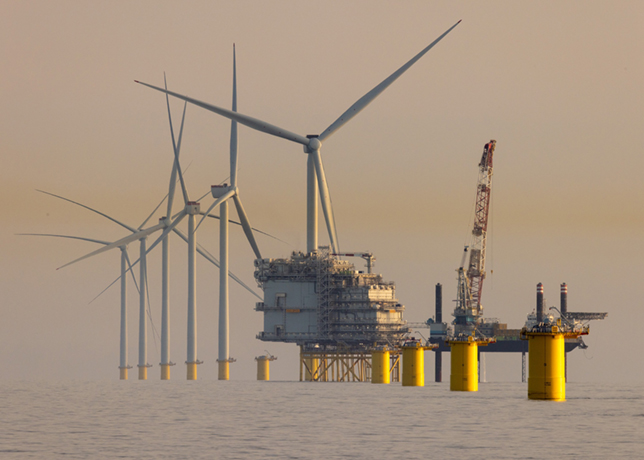
Offshore wind added 7.9 GW globally, with capacity additions falling 27.5 per cent from 2023 due to construction and grid-connection delays, particularly in China and Europe.
The wind industry confronted numerous challenges including macroeconomic pressures, complex permitting processes, grid infrastructure inadequacies, and intense competition that created razor-thin or negative margins across the industry.
Global wind power investment fell 16 per cent to $194.8 billion, the lowest level since 2020, with significant declines across the Americas and Europe, though China accounted for nearly 50 per cent of total global investment.
Six of the ten largest turbine manufacturers were Chinese, with Chinese firms holding the top four spots for the first time, while rapid innovation in turbine size, reaching 15 MW for onshore and 26 MW for offshore applications, created both opportunities and technical risks.