


















Commercial carbon capture facilities surge 54 per cent YoY as governments deploy tax credits, industrial hubs and cross-border storage agreements to accelerate decarbonisation of hard-to-abate sectors
The global carbon capture and storage industry has reached a pivotal inflection point, with 77 commercial facilities now operational worldwide, capturing 64 million tonnes of CO2 annually (mtpa); a 54 per cent increase in operating facilities and 25 per cent rise in capture capacity within just twelve months.
An additional 44 mtpa of capture capacity currently sits under construction, positioning the sector for a nearly 70 per cent expansion in operational capacity as these projects come online over the coming years.
According to the Global CCS Institute’s Global Status of CCS 2025 report, the total development pipeline has expanded to 734 facilities from 628 the previous year, reflecting how 'governments and companies are staying the course in progressing this critical technology despite geopolitical headwinds in some regions'.
The institute’s analysis projects operating capacity could reach 337 mtpa by 2030, more than five times current levels, representing a compound annual growth rate approaching 40 per cent.
POLICY ARCHITECTURE DRIVES COMMERCIAL DEPLOYMENT
The direct correlation between supportive policy frameworks and project proliferation has become unmistakable across all major deployment regions.
In the US, the 45Q tax credit continues to anchor investment despite broader policy uncertainty, with the recent One Big Beautiful Bill Act establishing parity between dedicated geological storage and enhanced oil recovery at $85 per tonne for point-source capture and $180 per tonne for direct air capture.
Fifteen US states have enacted carbon management legislation, with Louisiana, North Dakota, West Virginia and Wyoming securing primacy for CO2 injection permitting from the Environmental Protection Agency, whilst Arizona and Texas await final approval.
The UK’s Track-1 cluster programme delivered concrete outcomes in December 2024 when Net Zero Teesside and the Northern Endurance Partnership reached financial close, securing a combined £8 billion in debt financing, the largest project financings in the UK in several decades and the first project financing of a full-chain CCS facility globally.
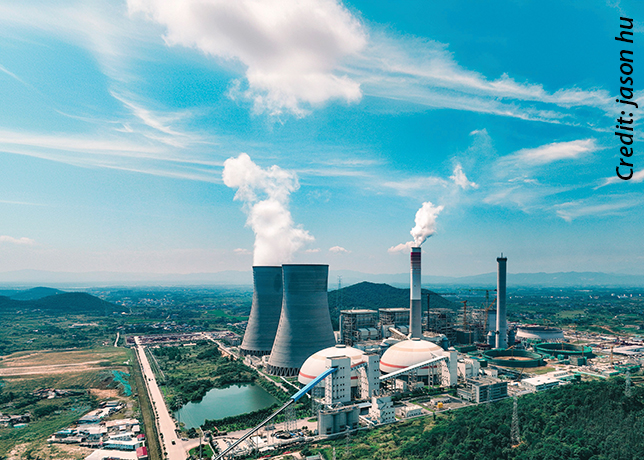
China has embedded CCS into sectoral transition plans for coal-fired power generation, with Huaneng’s 1.5 million tonne per annum facility—the largest such project globally—at a coal plant now operational.
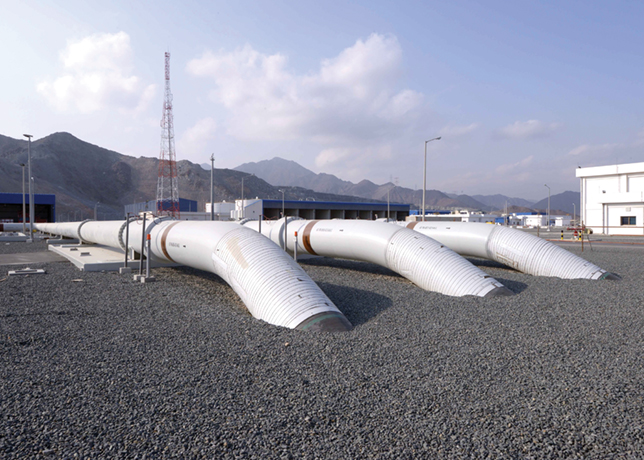
Meanwhile, CNPC has commenced construction of a 400-km CO2 pipeline with 4 mtpa transport capacity.
The European Union’s (EU) Net-Zero Industry Act introduced a legally binding mandate requiring 44 oil and gas producers to collectively develop 50 mtpa of CO2 injection capacity by 2030, transforming voluntary ambition into enforceable obligation.
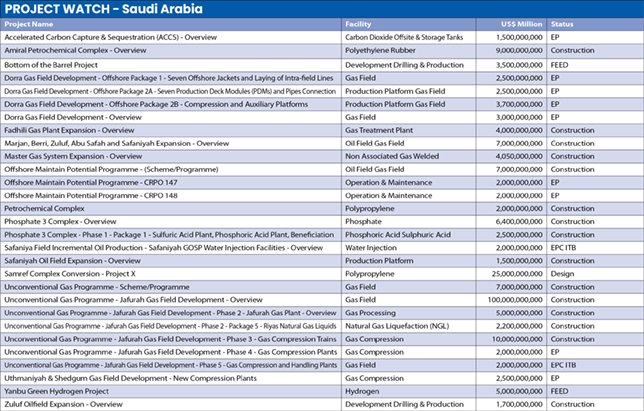
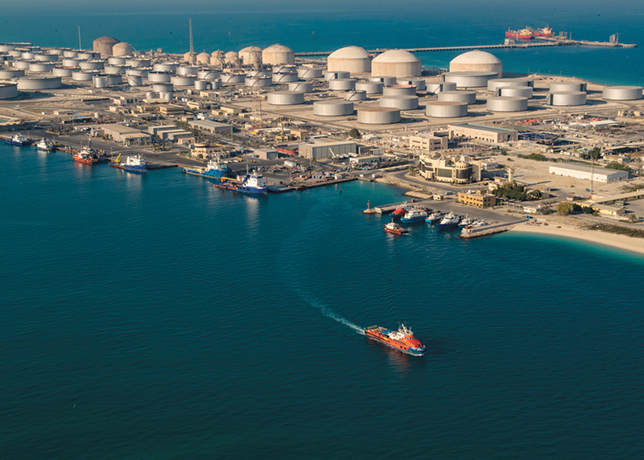
In the Middle East, Saudi Arabia’s Jubail CCS hub is advancing towards 9 mtpa capture capacity by 2028, whilst the UAE’s Federal Decree-Law No 11 of 2024 formally recognises CCUS as core mitigation strategy with enforcement mechanisms including fines of up to $550,000 for non-compliance.
INDUSTRIAL DIVERSIFICATION RESHAPES SECTOR COMPOSITION
Whilst natural gas processing has dominated CCS deployment since 1972, the sector composition is undergoing fundamental transformation as applications expand across industrial processes.
Low-carbon hydrogen and ammonia production is projected to assume the largest share of CCS capacity by 2030, with an estimated addition exceeding 100 mtpa before potentially being overtaken by power generation and heat.
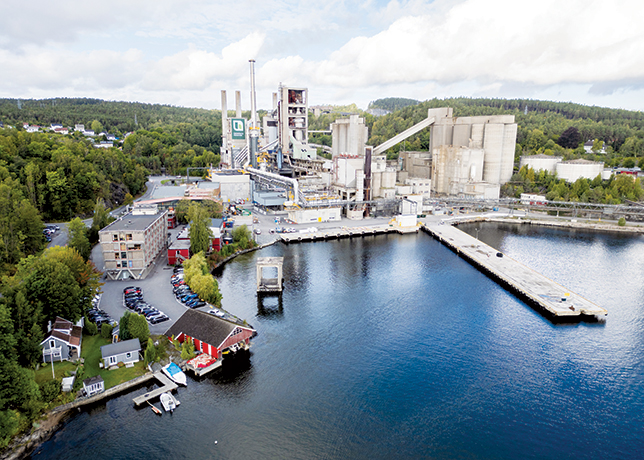
The cement sector has demonstrated particular momentum, with operational facilities now running in China and Norway, including Heidelberg Materials’ Brevik plant, the world’s largest CCS-equipped cement facility at 400,000 tonnes per annum, which commenced operations in June 2025.
Multiple pilot and commercial-scale cement projects are advancing globally, signalling strong sectoral commitment to achieving net-zero concrete by mid-century.
Natural gas-fired power generation with CCS is emerging as a critical application, particularly in North America where electricity demand surges from artificial intelligence, data centres and digital infrastructure.
At least, 11 natural gas power plants with CCS have been announced across the US and Canada specifically linked to data centre requirements, with capacities ranging from 120 megawatts to 5 gigawatts.
The US Energy Information Administration’s (EIA) levelised cost analysis positions natural gas combined cycle with CCS as the second-lowest cost dispatchable power option at $45.90 per megawatt-hour on a capacity-weighted average basis. This is lower than nuclear, biomass and even unabated natural gas when tax credits are included.
INFRASTRUCTURE INVESTMENT UNLOCKS NETWORK EFFECTS
Dedicated CO2 transport and storage infrastructure projects doubled in Europe between 2023 and 2024, establishing the foundation for shared networks that improve scalability and reduce unit costs.
Northern Lights in Norway reached a major milestone with commissioning of its transport and storage system, followed by a final investment decision to expand storage capacity. This sent a strong market signal that full-chain CCS is ready to scale.
The UK’s East Coast Cluster, Saudi Arabia’s Jubail hub and Norway’s Longship initiative are setting standards for integrated networks, whilst CO2 shipping capacity enters rapid expansion with vessels in design, construction and commissioning phases.
Denmark received its first domestically-built offshore CO2 carrier in May 2025 to serve the Greensand project, whilst Dalian Shipbuilding Industry delivered the first two liquid CO2 transport ships to Northern Lights in late 2024.
Japan has initiated standardisation efforts for CO2 ship transport through JOGMEC and METI, establishing a council to develop standard specifications and reduce transportation costs, with seven companies jointly studying how to establish standard designs for liquefied CO2 carriers.
Mitsui OSK Lines and Mitsubishi Shipbuilding received approval from ClassNK for the world’s first liquefied CO2 and methanol combination carrier, eliminating empty return trips and significantly increasing transport efficiency.
Cross-border frameworks are advancing in Asia-Pacific, with Indonesia’s Regulation No 16 of 2024 providing authorisation for geological storage independent of hydrocarbon activities, whilst Malaysia’s Carbon Capture Utilisation and Storage Act passed parliament in March 2025, establishing comprehensive regulation across the CCS lifecycle.
Australia declared provisional application of the 2009 amendment to the London Protocol in November 2024, whilst Royal Vopak signed a memorandum of understanding to construct a CO2 import terminal at the Port of Darwin with operations targeted for 2030.
FINANCIAL ARCHITECTURE MATURES BEYOND PUBLIC SUPPORT
The securing of non-recourse debt financing for CCS projects marks a watershed moment in sector maturation, signalling that robust policy frameworks and offtake mechanisms can attract conventional project finance.
Private capital is entering through multiple channels, with Eni partnering with Global Infrastructure Partners in May 2025 to co-own CCS assets in the UK, Netherlands and Italy, reflecting growing institutional confidence.
Carbon markets are evolving in parallel, with the EU and UK ETS linkage agreement promoting regulatory alignment whilst Norway and Switzerland’s Article 6.2 deal creates one of the first frameworks for international carbon removals under the Paris Agreement.
Voluntary carbon markets (VCM) are expanding rapidly, with Microsoft increasing its bioenergy with CCS offtake from Stockholm Exergi to over 5 million tonnes, whilst the European Commission explores an EU-level carbon dioxide removal purchasing programme to stimulate early demand.
Several EU Member States have developed state aid schemes supporting CCS, with Germany approving €5 billion ($5.76 billion) for electrification, CCS, CCU, energy efficiency and hydrogen projects, France committing €3 billion through carbon contracts for difference, and Sweden allocating €3 billion for bioenergy with CCS through 15-year contracts.
In the Americas, the convergence of artificial intelligence-driven power demand, CCS-ready infrastructure and state-level regulatory frameworks is creating economic opportunities, with Louisiana’s $29.5 billion in projected carbon management investments estimated to generate $90.2 billion in economic value over two decades and support nearly 120,000 direct and indirect jobs annually.
IMPLEMENTATION CHALLENGES PERSIST AT SCALE
Despite accelerating momentum, significant barriers continue to constrain deployment velocity and ultimate scale.
Even if all 734 facilities in the current development pipeline become operational, the sector will fall short of gigatonne-scale CO2 capture goals required to meet climate targets, with every year of delay increasing costs and difficulty.
Policy gaps remain acute in many jurisdictions, particularly the absence of carbon contracts for difference or equivalent long-term revenue guarantees that would enable private investment in carbon capture beyond self-contained industrial applications.
In Asia-Pacific, whilst regulation has advanced rapidly in Indonesia and Malaysia, geological storage of CO2 outside oil or gas tenements generally cannot be authorised in most jurisdictions, and bilateral agreements essential for cross-border transport and storage have not yet been negotiated.
Public acceptance challenges persist, with France’s Pycasso project suspended in late 2024 due to local opposition, whilst community concerns about transboundary CO2 imports as potential waste dumping require sustained stakeholder engagement and transparent communication.
The current pipeline represents 513 mtpa of total capture capacity, yet this remains well short of the International Energy Agency’s (IE) projection that approximately two-thirds of the CO2 requiring capture and storage to 2050 lies in emerging and developing economies, where energy demand growth and fossil energy consumption continue rising.
The sector stands at a critical juncture where policy durability, infrastructure build-out velocity, financial innovation and social licence will determine whether carbon capture and storage scales sufficiently to fulfil its role in global decarbonisation pathways, or whether deployment constraints render climate targets unattainable at acceptable cost.