









 Hydrogen’s growth trajectory remains intact with committed investments rising
The industry is recalibrating ambitions amid rising costs and regulatory uncertainty, yet fundamental growth trajectory remains intact with committed investments rising nearly 20 per cent
The global hydrogen sector reached a pivotal inflection point in 2024, confronting harsh economic realities whilst simultaneously demonstrating signs of structural maturation that distinguish current progress from previous failed attempts to commercialise the technology.
Global hydrogen demand climbed to nearly 100 million tons in 2024, representing a 2 per cent increase from the previous year that aligned precisely with overall energy demand growth patterns.
The International Energy Agency’s (IEA) Global Hydrogen Review 2025 reveals that this expansion was driven entirely by traditional industrial sectors including oil refining and chemicals, whilst demand from new applications accounted for less than 1 per cent of total consumption and was concentrated almost entirely in biofuels production.
Supply remained overwhelmingly dependent on fossil fuels, consuming 290 billion cu m of natural gas and 90 million tons of coal equivalent throughout 2024.
Low-emissions hydrogen production grew by 10 per cent in 2024 and is projected to reach 1 million tons in 2025, yet this still represents less than 1 per cent of global production.
The sector experienced its first-ever contraction in projected 2030 production capacity, with announced projects now totalling 37 million tons per annum (mtpa) compared to 49 million tons forecast in the previous year’s review.
Cancellations and delays were concentrated in early-stage projects across Africa, the Americas, Europe and Australia, with electrolysis projects responsible for more than 80 per cent of the total decline.
Final investment decisions increased by nearly 20 per cent since the 2024 review, now representing 9 per cent of the total project pipeline to 2030.
Production from operational projects and those with committed financing is set to reach 4.2 mtpa by 2030, marking a fivefold increase compared to 2024 levels.
An additional 6 million tons of production capacity demonstrates strong potential for 2030 operation if effective demand creation policies and offtake facilitation measures are implemented.
COST COMPETITIVENESS & MANUFACTURING DOMINANCE
The cost gap between low-emissions hydrogen and unabated fossil-based production widened in 2024 as natural gas prices declined from 2022-23 peaks whilst electrolyser costs increased due to inflation and slower-than-expected deployment rates.
Renewable hydrogen in China could achieve cost competitiveness by decade’s end through low technology costs and favourable cost of capital conditions.
Europe faces a narrowing cost gap driven by carbon dioxide pricing, elevated natural gas prices for industrial users, and regions with high renewable energy potential.
The US and Middle East will maintain larger cost gaps due to cheaper natural gas availability, making carbon capture utilisation and storage more competitive for near-term low-emissions hydrogen production.
China established decisive leadership in electrolyser deployment and manufacturing, accounting for 65 per cent of global installed capacity and projects with final investment decisions.
Global installed water electrolysis capacity reached 2 gigawatts in 2024, with more than 1 gigawatt added through July 2025.
China commands nearly 60 per cent of global electrolyser manufacturing capacity, supported by traditional manufacturers and new market entrants.
Manufacturing costs for electrolysers installed in China ranged from $600 to $1,200 per kW in 2024, compared with $2,000 to $2,600 per kilowatt (kW) for production and installation outside China.
Engineering, procurement, construction and contingency costs represent more than half of total electrolyser installation investments, with location-specific factors determining final expenses.
Transport costs and tariffs narrow the installed cost of Chinese electrolysers outside China to $1,500 to $2,400 per kW, reducing the competitive advantage versus non-Chinese manufacturers.
Chinese electrolysers face efficiency challenges, underperformance issues and local standards adaptation requirements that increase operational costs and potentially eliminate upfront investment advantages.
Chinese manufacturers are addressing technical barriers through innovation initiatives and exploring overseas manufacturing operations to overcome market limitations.
Electrolyser manufacturers outside China experienced sharp revenue reductions and increased financial losses in 2024, leading to bankruptcies and acquisitions that signal potential industry consolidation.
China’s 20 gigawatts per year of manufacturing capacity significantly exceeds current demand of approximately 2 gigawatts in 2024, potentially triggering consolidation within the domestic market.
Capital spending on low-emissions hydrogen projects reached $4.3 billion in 2024, an 80 per cent increase from 2023, with projected spending of nearly $8 billion in 2025 based on recent final investment decisions.
Demand creation policies advanced slowly despite regulatory momentum, with new offtake agreements reaching 1.7 mtpa in 2024 compared to 2.4 million tons in 2023.
Existing hydrogen applications in refining and chemicals sectors, plus hydrogen-based fuels for shipping and limited aviation and power generation use, account for nearly all firm private sector offtake agreements and 80 per cent of committed production project investment.
European tenders for steel sector hydrogen procurement experienced delays or were placed on hold, whilst tenders for refining and fertilisers led to final investment decisions for production facilities in Europe and India.
Europe leads demand creation policy adoption through sectoral quotas within the EU Renewable Energy Directive and aviation sector mandates, though full implementation depends on member state transposition into national legislation.
India launched ambitious programmes targeting refining and fertilisers sectors, whilst Japan and Korea focused on power generation applications.
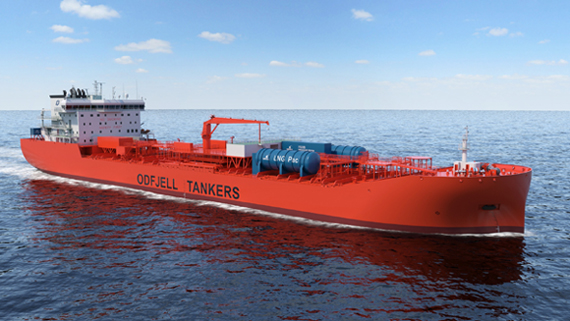
The International Maritime Organization (IMO) Net-Zero Framework could stimulate hydrogen-based fuel uptake in maritime transport, though short-term regulations may favour liquefied natural gas or biofuels instead.
More than 60 methanol-powered vessels were operational as of June 2025, with nearly 300 additional ships on order books, highlighting the need for accelerated bunkering infrastructure development.
Marine fuel bunkering remains highly concentrated geographically, with Singapore supplying approximately one-fifth of global demand and just 17 ports covering over 60 per cent of sector refuelling requirements.
Nearly 80 ports possess well-developed expertise in managing chemical products, indicating strong readiness to handle hydrogen-based fuels, with more than 30 able to access at least 100 kilotonnes per year of low-emissions hydrogen supply from announced projects within 400 kilometres.
Southeast Asia’s hydrogen demand reached 4 mtpa in 2024, led by Indonesia with 35 per cent, followed by Malaysia, Viet Nam and Singapore.
Ammonia production accounted for nearly half of regional demand, with refining and methanol production comprising the remainder, supplied primarily through hydrogen produced from unabated natural gas at 80 per cent of total.
Hydrogen production consumes approximately 8 per cent of Southeast Asia’s gas supply and accounts for slightly over 1 per cent of regional energy-related carbon dioxide emissions.
Announced projects indicate potential low-emissions hydrogen production of 480 kilotonnes per year by 2030 in Southeast Asia, concentrated in Indonesia and Malaysia, though only 6 per cent has reached final investment decision and 60 per cent remains at very early development stages.
A 240-MW electrolyser project under construction in Viet Nam represents one of few projects at this scale outside China to reach final investment decision.
Approximately 40 per cent of Southeast Asian projects target exports, predominantly ammonia, which represents the primary product for the regional project pipeline.