


















































Despite geographical constraints limiting expansion, global geothermal capacity reached 15.1 gigawatts in 2024, with direct heat applications surging 20 per cent to meet rising demand
Geothermal energy experienced its most robust expansion in half a decade during 2024, adding 400 megawatts (MW) of new power capacity, the largest annual increase since 2019 and one-third greater than the preceding five-year average.
According to the Renewables Global Status Report 2025 by REN21, at least 400 megawatts of new geothermal power capacity was added globally in 2024, bringing the worldwide total to 15.1 gigawatts.
This represented the largest annual increase since 2019 and was approximately one-third larger than the preceding five-year average.
Over the five-year period from 2019 to 2024, global net capacity additions totalled approximately one gigawatt, with generation reaching an estimated 99 terawatt-hours (TWh) in 2024, representing a 1.7 per cent increase over 2023.
Meanwhile, the direct use thermal energy supply totalled an estimated 245 TWh (882 petajoules), marking an estimated 19.5 per cent increase over 2023, due largely to policy-driven expansion in China.
Geothermal energy now generates one per cent of all renewable electricity globally, whilst direct use of geothermal heat accounts for three per cent of all renewable heat supply.
Twenty-eight countries utilised geothermal energy to generate electricity in 2024.
POWER CAPACITY LED BY NEW ZEALAND
The top 10 countries for geothermal power capacity at the end of 2024 remained the US, Indonesia, the Philippines, Turkiye, New Zealand, Mexico, Kenya, Italy, Iceland and Japan.
Six countries added new capacity in 2024: New Zealand, the Philippines, Türkiye, Indonesia, the United States and Japan, in descending order.
New Zealand completed two geothermal power installations in 2024, one triple-flash design and one binary-cycle unit, expanding capacity by 225 megawatts (MW), more than half of total global additions.
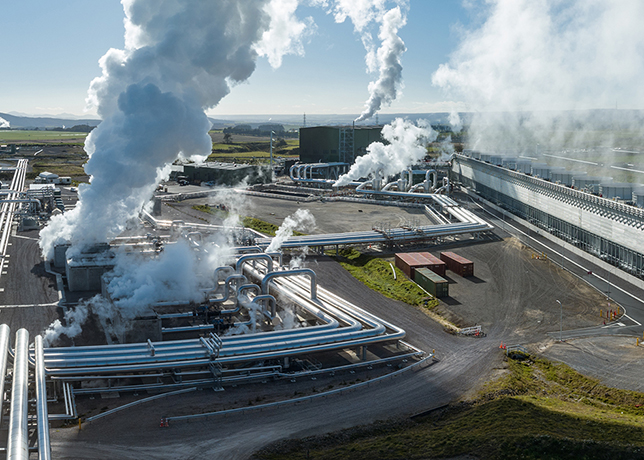
The unit completed at the Tauhara plant near Taupo is one of the world’s largest single unit binary power stations and is designed to reinject all its carbon dioxide emissions back into the geothermal reservoir.
Overall carbon dioxide emissions from New Zealand’s geothermal sector have been declining due to gas-reinjection retrofit schemes at several existing locations.
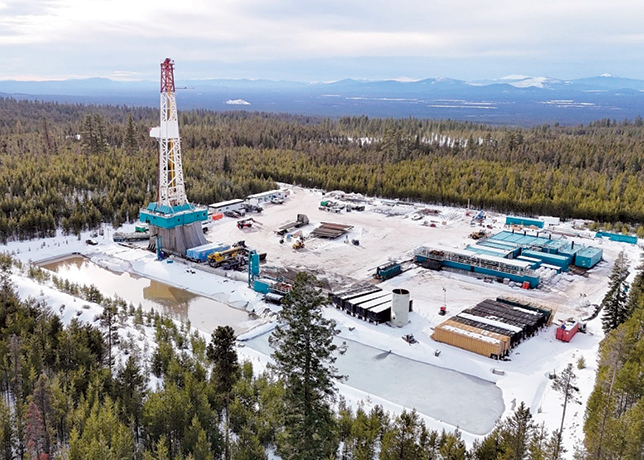 |
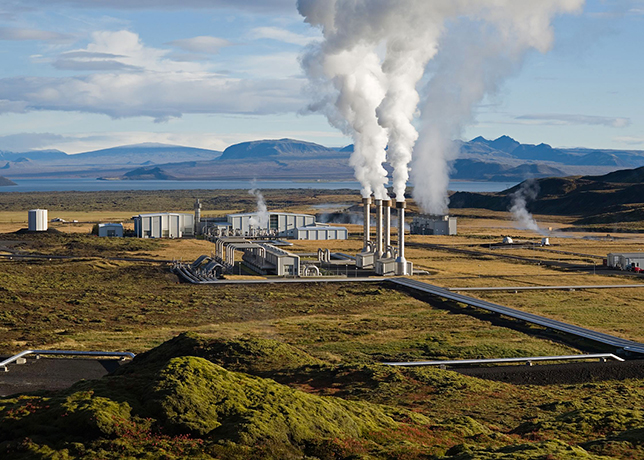
Geothermal operations at Newberry Volcano in Oregan, US ... Mazama Energy created the world’s hottest enhanced geothermal system on the site |
Geothermal power capacity in New Zealand, nearing 1.3 gigawatts (GW), is well utilised at a capacity factor of 85 per cent in 2023 and supplied 17.8 per cent of the country’s electricity in 2023.
The Philippines ranked second for additions in 2024, adding at least 54 MW of new geothermal power capacity.
Total installed generator capacity neared 2 GW, of which around 1.8 GW was operating capacity and 1.2 GW was available for dispatch at year’s end.
Geothermal facilities in the Philippines provided around nine per cent of the country’s electricity in 2023.
To mitigate the significant financial risk associated with exploration and development of geothermal resources, in 2024 the Philippine government advanced plans to establish financing facilities to derisk future projects.
Following two years of stagnation, Turkiye completed three new units totalling 42 MW in 2024, raising installed capacity to 1.7 GW.
In 2023, a revised feed-in tariff was approved, as the original geothermal feed-in tariff adopted in 2021 had been deemed insufficient given development timeframes, project costs and exploration and development risks.
Geothermal power in Turkiye provided 11.2 TWh of electricity in 2024, representing 3.2 per cent of supply, compared to 8.9 TWh or three per cent of supply in 2019.
The average capacity factor of the country’s geothermal power assets was about 75 per cent.
Indonesia’s geothermal power capacity expanded by at least 33 MW, bringing the total to approximately 2.6 GW.
During the five-year period 2019-2024, net geothermal capacity in Indonesia grew 24 per cent, averaging 102 MW annually, from 2.1 GW to more than 2.6 GW.
The total investment in geothermal activity during 2024 exceeded the government’s target at $748 million, somewhat higher than the annual average for the preceding three years of $626 million.
In late 2024, Indonesia announced a successful auction of permits for seven geothermal working areas, totalling an estimated 300 MW of potential capacity.
The only geothermal power project completed in the US during 2024 was the repowering of the Beowawe facility in Nevada.
Reported net operable capacity at year’s end was 2.7 GW, with nameplate generator capacity of 4 GW.
Estimates suggest that generation dropped to 15.7 TWh in 2024 from 16.4 TWh in 2023, representing 0.36 per cent of the country’s net electricity supply.
Japan added three new geothermal power units with a total capacity of 22.5 MW in 2024, one in each of the country’s most active geothermal regions.
The largest unit completed was the 14.9-MW Appi plant in Iwate prefecture, Honshu, a project that took 20 years from survey to completion, with construction alone lasting five years due to the challenging mountainous environment.
China completed a small power unit at a co-generation facility in Shaanxi province, with an effective power capacity of at most 80 kilowatts.
Whilst China is home to an estimated two-thirds of global geothermal heat supply, its geothermal power generation capacity remains miniscule in comparison, with a total of 16 MW in operation.
DIRECT HEAT APPLICATIONS DOMINATED BY CHINA
The global direct use of geothermal energy increased around 20 per cent in 2024, to an estimated 245 TWh.
The top countries for direct use in 2024 were China, Turkiye, Iceland and Japan, in descending order.
China continues to be the world’s fastest growing market for geothermal heat, predominantly used for space heating, with capacity additions in 2024 somewhat larger than in 2023.
Measured in units of floor area of heated dwellings, China’s geothermal heating capacity at the end of the 13th five-year planning period (2016-2020) was estimated to be 582 million sq m was expected to grow 50 per cent to 873 million sq m by the end of the 14th planning period in 2025.
At the start of the 2024-2025 heating season, geothermal heating capacity was reported to have grown more than 17 per cent, serving an additional 120 million sq m of space, up from an increase of 95 million sq m in 2023.
Based on this increment, the country’s geothermal space heating capacity served a total of 808 million sq m, suggesting total annual direct use for space heating of 488 petajoules, more than half of the global total.
In addition to space heating, in 2021 China harnessed 101 petajoules of geothermal heat from hot
springs for recreational uses and 14 petajoules for agriculture, food processing and industrial process heat.
A conservative estimate of total geothermal direct use in China in 2024 would be 603 petajoules, 43 per cent more than the global total in 2019.
The direct use of geothermal energy in Turkiye for space heating, greenhouse cultivation and recreation appears to have expanded rapidly in recent years.
Following average annual growth of 3.8 per cent for the period 2015-2019, growth accelerated to an annual average of 14 per cent for the three years through 2022, reaching 5.2 GW thermal.
In Iceland, geothermal energy is the dominant source of heat for all thermal applications, meeting 97.4 per cent of heat demand in 2023.
Geothermal heat consumption grew 10.4 per cent over the period 2018-2023, with a strong uptick in the last year of 3.8 per cent to 36.3 petajoules.
In 2023, the residential sector was the largest consumer at 16.7 petajoules, followed by commercial and public services at 13.8 petajoules, fisheries at 4.1 petajoules, industry at 1.2 petajoules and agriculture at 0.7 petajoules.
Japan continues to rank fourth for geothermal direct use, mostly by 'onsen' bath facilities, with capacity estimated at 2.1 GW thermal and energy use at around 24 petajoules.
In the Netherlands, geothermal heat production increased by 16 per cent in 2024, reaching 7.9 petajoules, following two years of six per cent growth.
Much of the growth came from increased utilisation of existing wells, whilst drilling of new wells for production and resource mapping also continued during 2024.
Whilst geothermal heat is well-suited for district heating, its use in the Netherlands is almost exclusively limited to greenhouse horticulture.
TECHNOLOGY & POLICY DEVELOPMENTS
Whilst geothermal energy is theoretically ubiquitous, its use is limited by technical and economical constraints to the boundaries of the Earth’s lithospheric plates, where high heat is found relatively close to the surface.
Recent technological advances and improving economics of energy extraction suggest that geothermal energy extraction may become viable in a wider range of geographies.
The combination of binary-cycle energy conversion technology and advanced energy extraction technology has the potential to make geothermal energy, for the first time, a significant variable in the global energy mix.
In 2024, a handful of technology companies, concentrated in North America, pursued next-generation geothermal energy projects against a backdrop of improving economics but also regulatory uncertainty.
The report indicates that addressing both technical and policy barriers remains essential for unlocking geothermal energy’s full potential in the global transition to renewable energy systems.
The concentration of growth in just a few countries highlights both the geographical limitations and the untapped opportunities that exist where supportive policies and investment frameworks are established.