


































The regional states have scaled organisational AI adoption yet only 11 per cent generate earnings from implementations, exposing critical gaps in talent, governance, and workflow transformation, says a study
The Gulf Cooperation Council (GCC) countries stand at a critical juncture where decades of hydrocarbon wealth meet the computational demands of artificial intelligence.
The region’s trajectory from oil producer to AI infrastructure hub represents one of the most ambitious economic pivots in recent history, with energy sector giants leading the charge.
Recent survey data shows 84 per cent of GCC organisations have adopted AI in at least one business function, up from 62 per cent in 2023.
Yet this headline figure masks profound disparities in implementation maturity and value realisation across the six-nation bloc.
According to a report by McKinsey, only 31 per cent of respondents indicated their organisations had scaled AI deployment across operations, whilst a mere 11 per cent qualified as value realisers generating at least 5 per cent of earnings from AI initiatives.
ENERGY SECTOR LEADS REGIONAL AI IMPLEMENTATION
The energy sector exemplifies both the promise and challenges of GCC AI adoption.
Saudi Aramco deployed decades of operational data to construct a generative AI model with 250 billion parameters, analysing drilling plans, geological data, historical drilling time, and costs.
This application demonstrates how hydrocarbon majors leverage proprietary datasets accumulated over generations of extraction operations.
Amin Nasser, Aramco CEO, has stated that the Kingdom would capitalise on abundant cheap natural gas and renewables to transform Saudi Arabia into a global leader in AI.
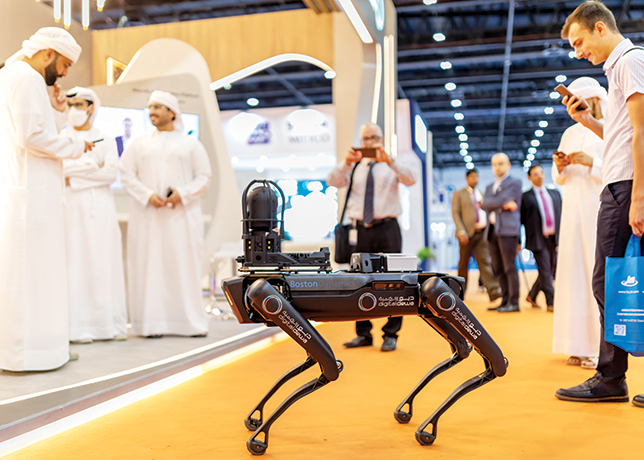 |
The GCC nations aim to transform the region into a global AI hub |
Commercial electricity prices in Saudi Arabia run 30 to 50 per cent below the global average, with the Kingdom maintaining the world’s lowest oil production cost at under $10 per barrel.
This energy advantage forms the cornerstone of Saudi Arabia’s AI infrastructure strategy.
Aramco acquired a significant minority stake in HUMAIN, Saudi Arabia’s national AI champion launched in May 2025 with majority ownership by the Public Investment Fund.
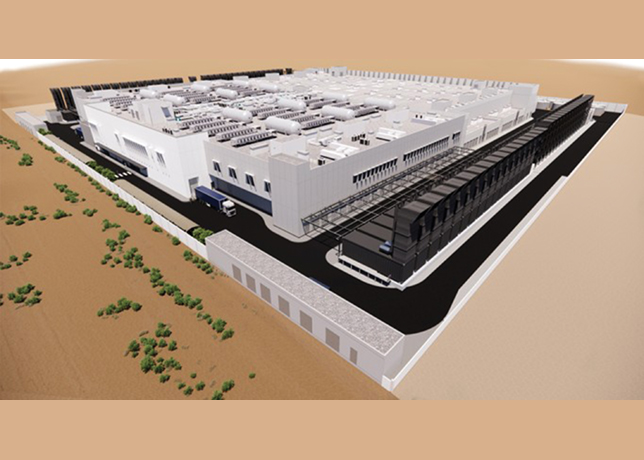
Tareq Amin, CEO of HUMAIN, declared the ambition to establish Saudi Arabia as the world’s third-largest AI market after the US and China, with plans to build 6 gigawatts in data centre capability across the country by 2034.
The UAE pursues a parallel strategy anchored by G42, which the country positions as the world’s foremost sovereign investor in AI, recently announcing a $100 billion AI-focused investment fund called MGX, according to BCG.
Abu Dhabi’s G42 announced numerous infrastructure deals whilst Qatar invested in AI cloud capacity.
These supply-side commitments reflect determination to establish the region as an international AI superpower.
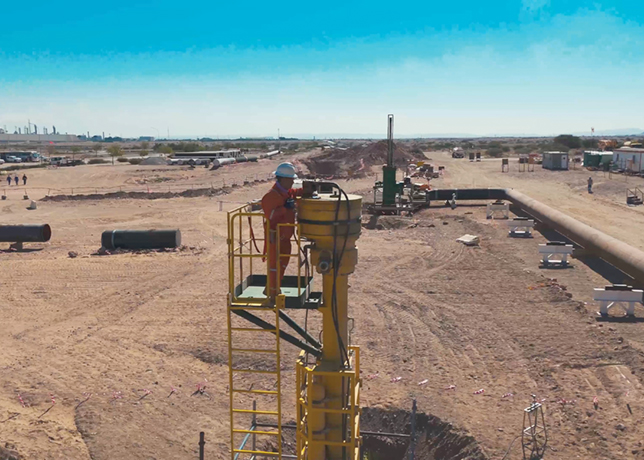
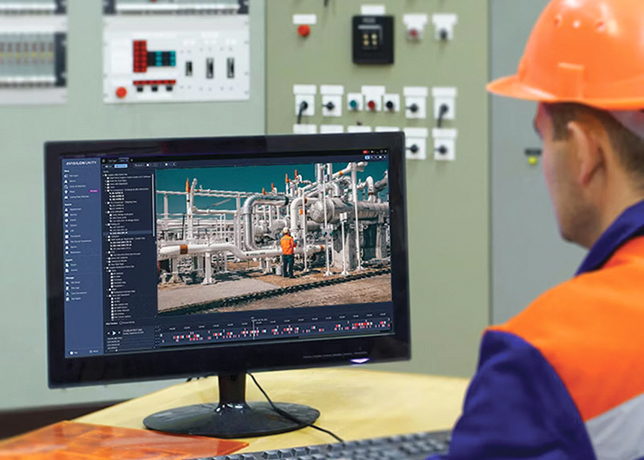
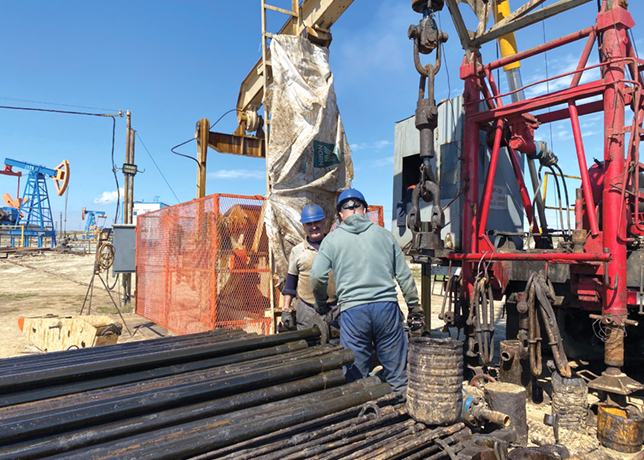
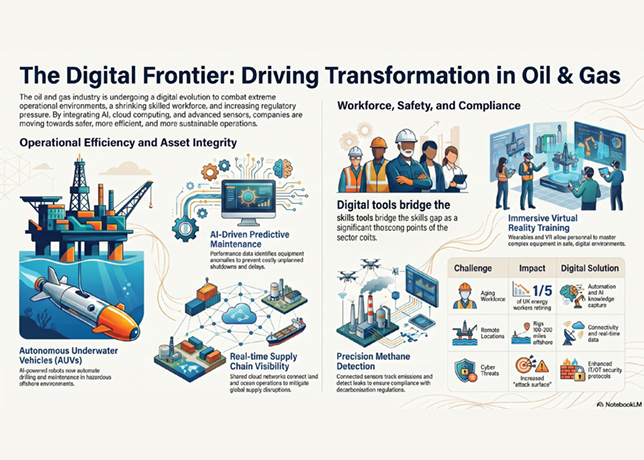
Energy companies leverage AI for reservoir optimisation, predictive maintenance on offshore platforms, drilling efficiency improvements, and supply chain management.
The biggest jump in AI deployment over the past two years occurred in product and service development, where organisations rewire end-to-end development workflows and innovation cycles.
Sixty per cent of survey respondents reported their organisations use AI agents to some extent, with agentic software orchestrating complex workflows, coordinating activities among multiple agents, and evaluating answers to queries.
One interviewee noted specialised agentic AI models offer far greater accuracy than earlier iterations, supporting real business applications without manual processes whilst delivering direct bottom-line impact through reduced selling, general, and administrative expenses and shortened development cycles.
CRITICAL CAPABILITY GAPS HINDER VALUE REALISATION
Financial capital alone proves insufficient for AI leadership in the energy sector.
Whilst Saudi Arabia and the UAE show considerable success in attracting AI specialists, their numbers remain limited at nearly 5,000 and 7,000 respectively, compared to contender countries like Germany with more than 40,000.
Over 80 per cent of Middle Eastern organisations feel intense pressure to adopt AI, yet nearly half struggle with talent and technological capability shortages necessary for successful scaling, Deloitte research indicates.
Survey respondents overwhelmingly plan to increase AI budgets in the coming year at 89 per cent, yet only 37 per cent of non-value-realising organisations reported well-established technology foundations and strong data fundamentals.
Fifty-three per cent of survey respondents identified output inaccuracy as one of the most significant barriers to AI adoption, reflecting data integrity challenges including poor quality, missing values, bias, and outliers.
Some energy organisations prioritise AI domains that don’t rely heavily on legacy data, such as automating operational workflows to improve efficiency without requiring vast proprietary data lakes.
Only the UAE and Saudi Arabia enforce comprehensive personal data protection laws with defined fines and breach notification requirements, whilst other GCC states rely on patchwork sector-specific cyber-security provisions and voluntary guidance.
No GCC state has yet enacted omnibus AI statute comparable to the EU AI Act adopted in 2024, though the UAE Cabinet’s April 2025 decision to establish comprehensive AI-linked legislative framework marks meaningful progress.
Value-realising organisations distinguished themselves through centralised AI expertise combined with business execution know-how, working in agile cross-functional squads.
McKinsey research in financial services found 70 per cent of organisations with centralised models progressed to production compared with approximately 30 per cent using decentralised approaches.
Survey results confirm value realisers outperform peers across three critical fronts: business-led AI strategy chasing value, delivery capabilities encompassing technology and talent, and change management programmes encouraging adoption at scale.
Of 13 respondents from value-realising organisations, 11 reported strength in talent and operating model, technology and data, and change management areas, compared with fewer than half of remaining respondents.
Interviewees emphasised three approaches to maximise value alongside scale: establishing accountability by tying deployment to measurable key performance indicators such as cost savings, revenue uplift, or cycle-time reduction; using AI to build AI to accelerate delivery of solutions; and redesigning workflows to capture AI’s potential.
BCG’s assessment using the ASPIRE framework measuring AI ambition, skills, policy, investment, research, and ecosystem across 30-plus indicators identified two prevalent archetypes across the GCC region: AI Practitioners including Bahrain, Kuwait, Oman, and Qatar, and AI Contenders comprising Saudi Arabia and UAE, with no GCC country yet achieving AI Pioneer status alongside leaders such as the US and China.
GCC countries perform well in ambition with average scores just behind AI pioneers, however skills, investment, and research and innovation fall significantly below the global average, underscoring key capability gaps.
The intersection of energy abundance and AI infrastructure represents the GCC’s most distinctive competitive advantage.
Energy sector organisations across the GCC possess both the capital and domain expertise to lead regional AI adoption.
Whether they translate infrastructure investments into sustained competitive advantage depends on addressing persistent gaps in talent development, data governance, regulatory harmonisation, and organisational change management.
The region’s transformation from technology sprint to socio-technical marathon has only just begun.
BY Abdulaziz Khattak