

























































The energy sector dominates sustainable loan issuance by borrower sector, with renewable energy companies and non-renewable energy firms together accounting for the largest concentration of activity
The global sustainable finance industry achieved record volumes in 2024, yet faces an increasingly complex risk landscape as renewable energy infrastructure confronts mounting technological and environmental challenges.
With $960 billion worth of public sustainable loan deals signed during 2024, the market has reached unprecedented scale, though growth momentum slowed significantly in early 2025 as borrowers navigate heightened scrutiny around credibility, insurance costs, and climate resilience.
According to data from Environmental Finance, the first six months of 2025 saw more than $390 billion raised through sustainable loans, down approximately 18 per cent on amounts raised during both halves of 2024.
However, the second quarter of 2025 was just 3 per cent lower than the same period in 2024, suggesting sustainable loan activity is stabilising after initial setbacks.
Environmental Finance’s Sustainable Loans Insight 2025 report emphasises that sustainability-linked loans (SLLs) have received increased attention as market participants look to close the 'credibility gap' for the performance-based instrument, with more than $6 in every $10 of sustainable loans signed during 2025 being through sustainability-linked structures.
ENERGY TRANSITION ACCELERATES DESPITE HEADWINDS
Sustainability-linked loans dominated quarterly issuance throughout the period from H2 2024 to H1 2025, consistently representing the largest share of sustainable loan volumes.
Q4 2024 saw overall loan volumes peak at over $253 billion, with SLLs making up $158 billion of that total.
Regional patterns reveal significant concentration in established markets. Europe remained the largest region for sustainable loans both in terms of number and value, with over $384 billion raised from 598 loans during H2 2024 to H1 2025, representing 44.5 per cent of global sustainable loan issuance.
North America followed as the second-largest region with $298 billion worth of sustainable loans signed (34.5 per cent of global issuance) though significantly fewer loans were issued at just 236, leading to substantially higher average loan values of $1.26 billion compared to $642 million for European loans.
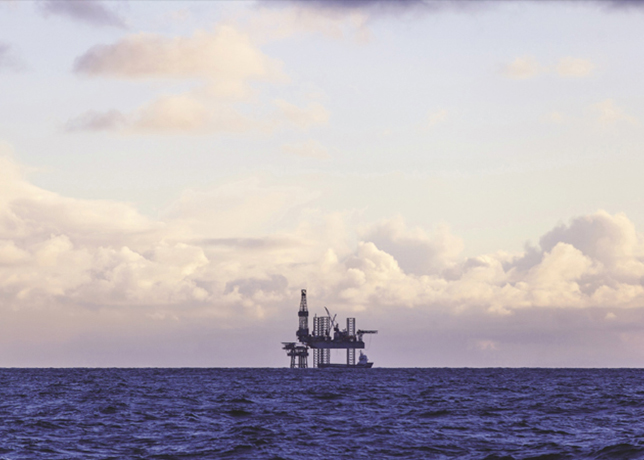
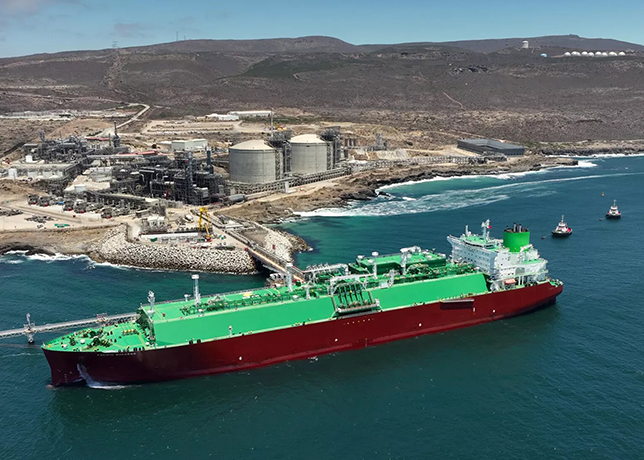
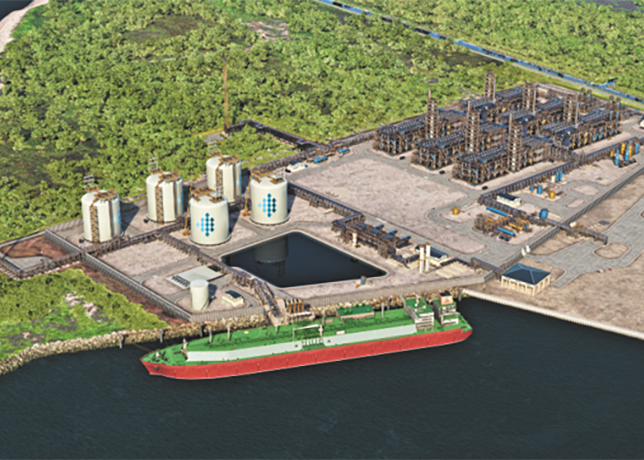
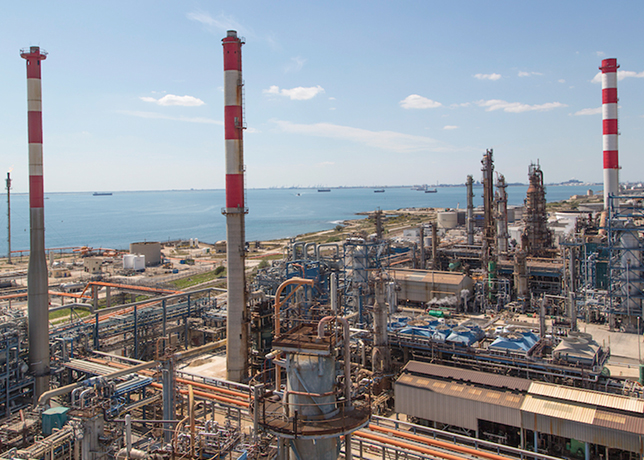
The energy sector dominated sustainable loan issuance by borrower sector, with renewable energy companies and non-renewable energy firms together accounting for the largest concentration of activity.
This reflects both the capital-intensive nature of energy infrastructure and the sector’s central role in meeting climate commitments.
Renewable energy remained the bedrock of use-of-proceeds lending during H2 2024 to H1 2025, capturing over half the value raised by such loans at 53.58 per cent.
Green buildings emerged as the second-largest category at 16.05 per cent, reflecting real estate’s pivot to sustainable design, particularly through REIT financing.
Key performance indicators across the market centred predominantly on carbon and greenhouse gas emissions reduction, with $111 billion raised for carbon and GHG emission reduction KPIs between H2 2024 and H1 2025.
Renewable energy KPIs attracted almost $19 billion during the period, whilst gender equality emerged as the most popular social KPI with over $40 billion raised.
The US dollar remained the most popular currency for sustainable loan issuance at $414.08 billion across 516 deals, despite Europe being the largest market for sustainable loans.
The euro followed in second place with $320.52 billion across 436 deals, demonstrating investor preference for hard currencies in the sustainable loan market.
MANAGING RISKS TO THE ENERGY SECTOR
As renewable energy infrastructure expands at unprecedented rates, the sector confronts mounting physical and operational risks that threaten project viability and investor confidence.
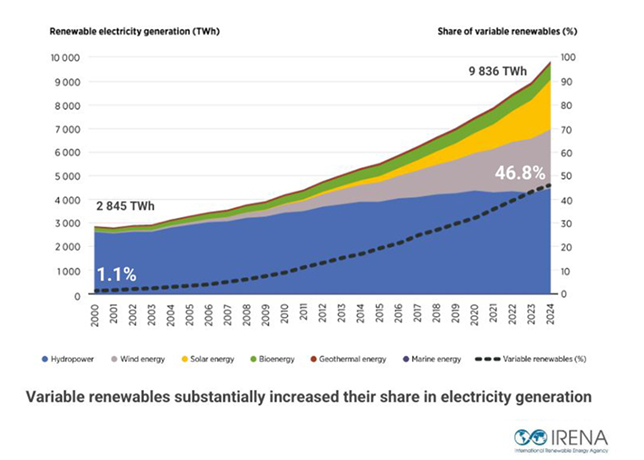
Between now and 2030, renewable energy consumption is expected to grow by 60 per cent, yet this growth trajectory faces significant headwinds from technological uncertainties and climate vulnerabilities.
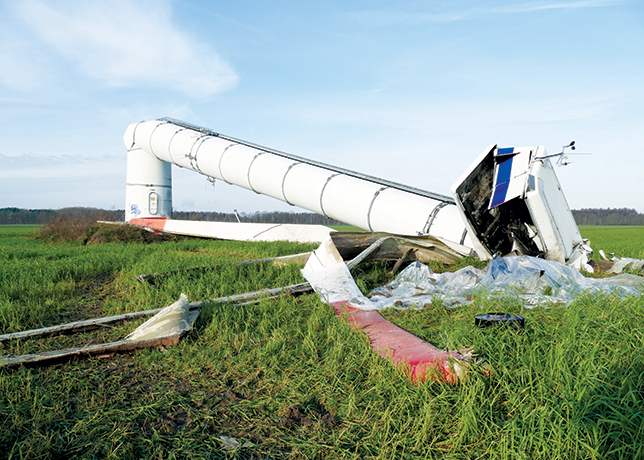
In 2022 alone, the US renewable energy market experienced 650 claims costing around $800 million, pushing property and casualty premiums up by as much as 45 per cent for certain projects in certain regions.
Since 2018, hail-related losses in Texas alone exceeded $600 million, with the average claim costing in the region of $60 million.
A survey of 400 renewable energy providers and 250 senior financiers revealed that 97 per cent of solar energy providers plan to grow their capacity in the next three years, including 45 per cent who expect growth exceeding 100 per cent.
Similarly, 95 per cent of onshore wind operators plan capacity expansion, with 40 per cent planning to double it or more.
However, operators face substantial risk exposure throughout project lifecycles.
During construction, the top risks identified were rising equipment costs (44 per cent), regulatory and permitting delays (41 per cent), and supply chain disruptions (40 per cent).
Meanwhile, during operational phases, priorities shifted to weather damage (54 per cent), failure of generation equipment (50 per cent), and supply chain disruptions for replacement parts (48 per cent).
More than half (54 per cent) of energy providers expressed concern about what they perceive as lack of transparency from original equipment manufacturers, with a further 47 per cent expressing nervousness at the pace of technological change.
Doug Patterson, Senior Vice President for Forest Products and FM Renewable Energy, observed: 'There is a real urgency to implement new technology to gain a competitive edge. But whilst it’s available, it might not be reliable. Much of it is prototypical and, in many cases, hasn’t gone through extensive testing before being used.'
Despite these challenges, 59 per cent of renewable energy providers reported being very or extremely confident in the resilience of their projects.
Yet significant uncertainties remain, with providers highlighting lack of understanding of environmental factors (54 per cent), lack of transparency from equipment manufacturers (54 per cent), and the pace of technology change (47 per cent) as greatest sources of uncertainty.
The financial implications of this uncertainty are substantial. Approximately 87 per cent of providers reported that insurance is likely to add, at least, 10 per cent to overall construction costs, whilst 49 per cent said insurance adds about 10 per cent to construction costs and 42 per cent reported similar impacts on running costs.
For financiers, project resilience has become a critical consideration, with a total of 66 per cent indicating that project resilience would influence their decision to invest, and 69 per cent saying it would influence their valuation and deal terms.
Some 61 per cent of financiers reported that current demand for investment outstrips supply, the need to demonstrate resilience has become crucial for securing financing.
The transition finance agenda is gaining momentum as market participants seek to expand beyond traditional green activities.
In its initial transition loan guidance published in October, the Loan Market Association (LMA), alongside the Loan Syndications and Trading Association and Asia Pacific Loan Market Association, addresses critical challenges facing participants in transition finance markets, where definitional inconsistency and fragmented taxonomies have created significant barriers to scaling capital deployment.
Market participants currently grapple with sectoral and regional divergences, alongside difficulties in verifying alignment and ensuring consistent reporting across jurisdictions.
Recognising that emerging market and developing economies, as well as small and medium-sized enterprises, face distinct technological and infrastructural constraints, the framework emphasises context-specific approaches rather than one-size-fits-all solutions.
The document introduces voluntary Transition Loan Principles for asset and project-level financing, filling a gap where no globally equivalent labelled framework previously existed for activities outside traditional 'green' classifications.
Both entity-level strategies and project-level investments require transparent governance, regular reporting, and alignment with credible decarbonisation pathways, whether through formal transition plans or robust indicators of climate commitment.
The framework acknowledges uncertainty around emerging technologies’ scalability and life-cycle impacts whilst promoting flexibility to accommodate diverse sectoral starting points and regional capabilities in the global transition to net zero.
In August, LMA reported that SLLs had made 'important' improvements to become 'more robust' in the two years since it raised 'market integrity concerns.'
Meanwhile, Japan tightened its sustainability-linked debt guidance in December to address 'two major concerns' related to 'poorly designed' metrics as well as targets that 'lack relevance and materiality.'
Innovation continues through instruments like Sustainability-Linked Loan Bonds, with guidance co-developed by ICMA and LMA in June 2024.
Several SLLB issuances from banks, including Emirates NBD, Crédit Agricole Corporate & Investment Bank, Bank of China, and Nordea, demonstrate growing market interest.
The path ahead requires enhanced collaboration between developers, financiers, and insurers to establish comprehensive risk frameworks.
As renewable energy infrastructure becomes increasingly critical to global electricity supply, the industry must balance ambitious growth targets with rigorous risk management to ensure long-term sustainability and investor confidence.
BY Abdulaziz Khattak