











































Where conventional methods offer partial solutions, solid inhibitor containers, such as TRIL, have shown superior performance in mitigating scale, paraffin, and corrosion in wells, writes Stanislav Lialin, founder of L-Reagent
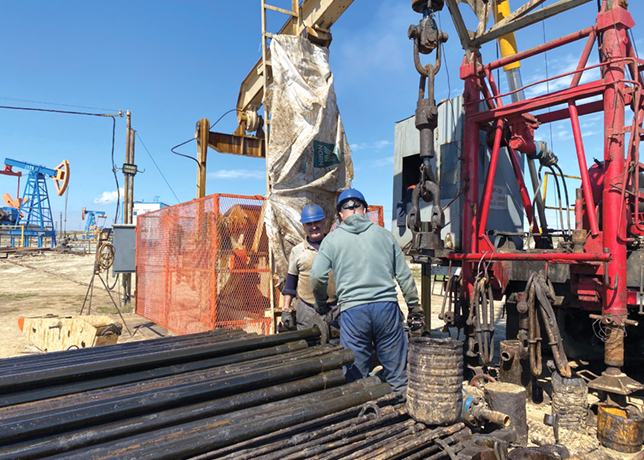
Oil production wells are exposed to multiple complications that threaten equipment reliability and production stability.
Among the most common challenges are mineral scale deposition, paraffin and asphaltene accumulation, corrosion of metallic surfaces, and formation of emulsions.
These issues directly reduce the lifetime of electrical submersible pumps (ESPs), shorten mean time between repairs (MTBR), and lead to unplanned workovers.
For operators, particularly in the Middle East onshore fields, mitigating these complications is not only a technical priority but also a matter of economic survival.
This article explores both conventional and modern approaches to well protection, with special focus on the TRIL® solid inhibitor container technology.
OILFIELD COMPLICATIONS IN PRODUCTION WELLS
Scale deposition originates when produced water, containing dissolved salts, such as calcium carbonate, barium sulphate, and strontium compounds, undergoes changes in pressure and temperature.
The precipitation of these salts results in hard, crystalline deposits that obstruct tubing and clog ESP intakes.
In severe cases, scaling can completely block fluid flow, forcing immediate well intervention.
Paraffin and asphaltene deposition represent another complication: As temperature drops, wax molecules crystallise and form solid layers along tubing surfaces.
This wax accumulation reduces internal diameter and increases pump loads.
Corrosion, accelerated by high salinity and gas components, further weakens tubing and ESP housings.
Additionally, emulsions complicate separation processes, raising processing costs and reducing oil quality.
Together, these factors reduce operational reliability and impose significant economic burdens on oil producers.
CONVENTIONAL MITIGATION METHODS
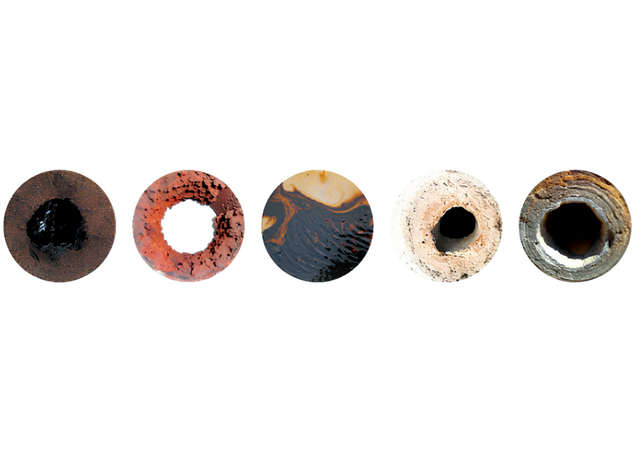 |
In severe cases, scaling can completely block fluid flow, forcing immediate well intervention |
The oil industry has long relied on several methods to address these complications.
Mechanical scraping tools are deployed to remove scale or paraffin deposits, but such interventions are short-lived and cause downtime.
Hot oiling is applied to dissolve wax deposits, but repeated thermal treatments increase costs and are environmentally questionable.
Continuous liquid chemical injection systems have been the dominant approach for decades.
These systems involve tanks, dosing pumps, and capillary tubing lines that deliver inhibitor chemicals into the wellbore.
While effective under controlled conditions, liquid injection requires stable operations, constant monitoring, and significant surface infrastructure.
In onshore fields with dispersed well locations, the maintenance of such systems becomes costly and logistically complex.
SOLID INHIBITOR CONTAINERS: PRINCIPLES & DESIGN
The limitations of conventional methods have encouraged the development of alternative approaches, among which solid inhibitor containers have proven especially promising.
These containers are installed directly below ESPs and are filled entirely with active inhibitor compounds.
During production, as fluids pass through the container, small amounts of inhibitor dissolve and create a thin protective film on tubing and ESP surfaces.
This film prevents scale nucleation, reduces paraffin adhesion, and protects against corrosion.
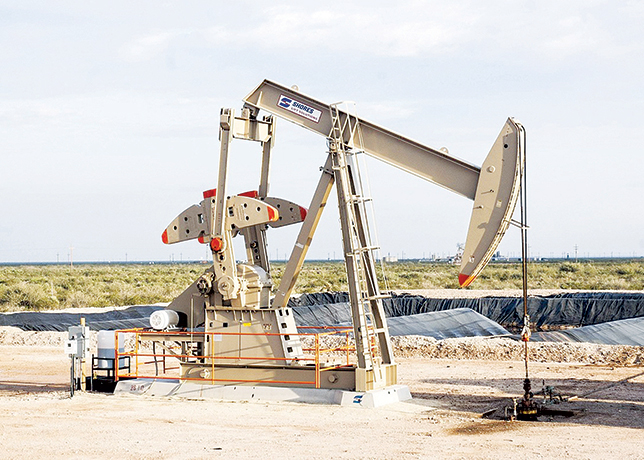
Unlike liquid injection systems, solid containers require no surface infrastructure, making them ideal for remote onshore wells.
The TRIL® container design incorporates features such as sequential release sections and delayed dosing mechanisms, allowing engineers to match inhibitor delivery with production dynamics.
RESULTS FROM FIELD APPLICATIONS
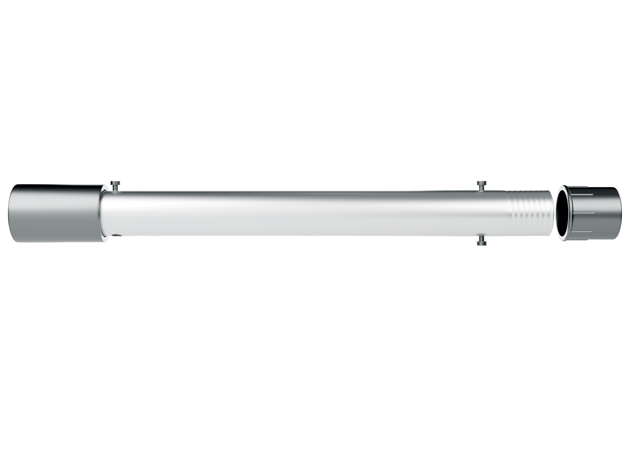 |
The TRIL® container allows engineers to match inhibitor delivery with production dynamics |
Field experience with TRIL® solid inhibitor containers has demonstrated significant operational improvements.
Statistical analysis across more than 80 wells revealed the following outcomes:
• Mean Time Between Repairs (MTBR) increased
by two to almost four times.
• Salt deposition was reduced by 70–90 per cent.
• Mean operating period (MOP) was
extended up to 13.8 times compared with conventional methods.
In dismantled ESPs, no visible scale deposits were observed after long-term operation with TRIL® containers.
In fields affected by paraffin, operators reported an 80 per cent reduction in annual interventions, demonstrating both technical reliability and cost savings.
There are several case studies to verify the results.
• Case study No 1 — Scale control: In one well characterised by intensive barium sulphate scaling, a TRIL® container was installed below the ESP.
After 237 days of continuous operation, the pump was dismantled for inspection.
The ESP surfaces and production tubing showed no visible scale deposits, while similar wells without the container required multiple cleanouts during the same period.
• Case Study 2 — Paraffin deposition: In a paraffin-prone onshore well, TRIL® containers were applied to reduce wax buildup.
Before the trial, the well required monthly hot-oiling operations to restore flow.
After the installation, the interval between treatments extended to 11 months, cutting hot-oil interventions by more than 80 per cent and ensuring stable production.
• Case Study 3 — Combined complications: Another test well suffered from both scaling and corrosion issues.
With TRIL® containers, the MTBR increased 3.2 times, and corrosion traces inside the tubing were reduced to minimal levels.
The ESP completed a full operating cycle without premature failure, confirming the dual protective effect of solid inhibitors.
DISCUSSION
The comparison between liquid injection systems and solid inhibitor containers highlights fundamental differences.
Liquid systems depend on external pumps and pipelines, exposing operations to infrastructure failures and human error.
Even when properly maintained, dosing accuracy fluctuates with production changes, making underdosing and overdosing common.
Solid inhibitor containers, however, provide autonomous dosing that scales naturally with fluid flow.
Their modular design allows customisation: operators can stack multiple sections for longer protection or adapt release rates to post-fracturing scenarios.
Economically, the impact is substantial. Workover frequency is one of the most critical cost drivers in oil production.
By extending MTBR, TRIL® containers reduce not only direct maintenance expenses but also deferred production losses.
In many cases, avoided ESP replacements translate into savings of hundreds of thousands of dollars annually.
Moreover, eliminating the need for surface injection equipment reduces CAPEX, making solid inhibitors a cost-effective solution for both mature and newly developed fields.
FUTURE PERSPECTIVES
Solid inhibitor technology continues to evolve. Research is focused on optimising inhibitor formulations to expand temperature and salinity tolerance, ensuring performance in extreme reservoir environments.
There is also interest in integrating real-time monitoring of inhibitor dissolution, allowing operators to correlate chemical release with production parameters.
The applicability of solid inhibitors is particularly promising for onshore fields in the Middle East, where wells are numerous, infrastructure is spread out, and reducing operating costs is essential.
Beyond the region, solid inhibitor containers could also be applied in unconventional reservoirs and offshore marginal fields.
Oilfield complications remain a significant challenge to production stability and equipment reliability.
Conventional methods provide partial solutions but are limited by infrastructure costs and operational inefficiencies.
Solid inhibitor containers, particularly the TRIL® technology developed by L-Reagent, demonstrate superior performance in mitigating scale, paraffin, and corrosion.
Field data confirm improved MTBR, extended MOP, and substantial economic benefits.
For operators in the Middle East and other regions, adopting solid inhibitors represents a strategic step toward more efficient and sustainable oil production.
REFERENCES
• Crabtree, M, et al (1999). Fighting scale—removal and prevention. Oilfield Review, 11(3), 30–45.
• Kan, A T, & Tomson, M B (2012). Scale prediction for oil and gas production. SPE Journal, 17(2), 362–378.
• Oddo, J E, & Tomson, M B (1994). Why scale forms and how to predict it. SPE Production & Facilities, 9(1), 47–54.
• Amjad, Z (2016). Mineral scale formation and inhibition. Springer.
• Tang, Y, et al. (2019). Development of solid scale inhibitors for oilfield applications. Journal of Petroleum Science and Engineering, 179, 928–937.
• Al-Sharji, H H, et al. (2002). Scale deposition in Middle Eastern oilfields. SPE International Symposium on Oilfield Chemistry.
• AONG Oil & Gas Portal (2023). Articles on oilfield equipment and chemical technologies. Retrieved from https://aong.at/