













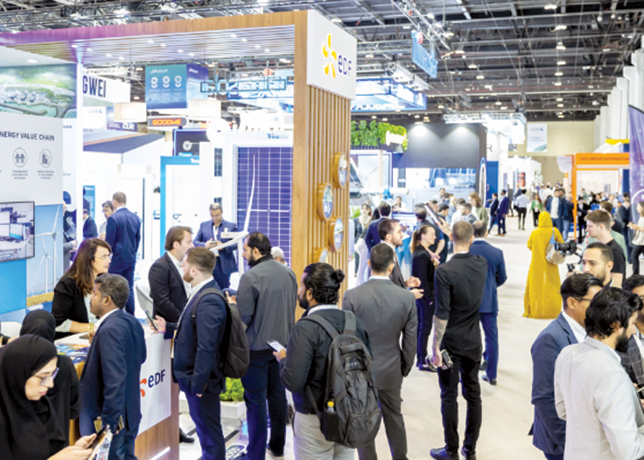
 Over 40 firms to showcase AI for grid stability, renewables, and climate modelling
The 18th World Future Energy Summit (WFES), held as part of Abu Dhabi Sustainability Week (ADSW) from January 13-15, 2026, is set to be the Middle East’s platform for renewable energy, clean tech, and sustainable innovation.
Hosted by Masdar at Abu Dhabi National Exhibition Centre (ADNEC), the summit will bring together global companies, governments, academic institutions, and NGOs, with record participation expected.
High-profile organisations including IRENA and the EU Hydrogen Council will host dedicated summits within the event.
WFES 2026 comes at a time of unprecedented momentum in the region’s energy transition.
The UAE has pledged $54 billion in renewable energy by 2030, alongside $83 billion mobilised at COP28 and $30 billion through the new Alterra Fund.
Saudi Arabia has earmarked $270 billion for renewables and $200 billion for climate initiatives under the Saudi Green Initiative.
The summit will focus on transforming these commitments into tangible solutions through exhibitions, conferences, and innovation hubs.
Key highlights include the launch of FUSE AI, a first-of-its-kind zone and two-day conference exploring AI applications in energy, smart cities, and climate resilience.
Over 40 companies will showcase AI solutions to improve grid stability, integrate renewables, and enhance climate modelling, reflecting the Middle East’s growing ambitions in AI and Fourth Industrial Revolution technologies.
WFES will also feature the reimagined Greenhouse platform, hosting 50+ startups across clean energy, mobility, water, and climate-tech sectors, connecting innovators with investors and corporate partners.
This builds on the legacy of the Climate Innovations Exchange (CLIX), continuing to tackle global sustainability challenges.
New additions include the Greenpeace Cinema, in collaboration with Greenpeace Middle East, offering a creative space to spotlight environmental issues through storytelling and visual media.
Returning programmes such as co-located Carbon Forward will provide insights into the risks and opportunities of climate change for both public and private stakeholders.