


















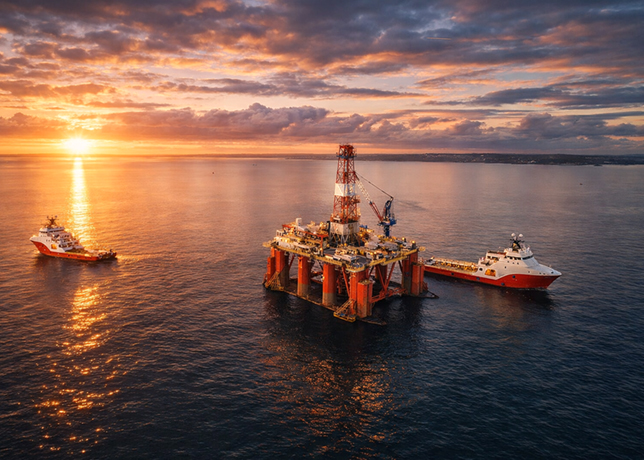

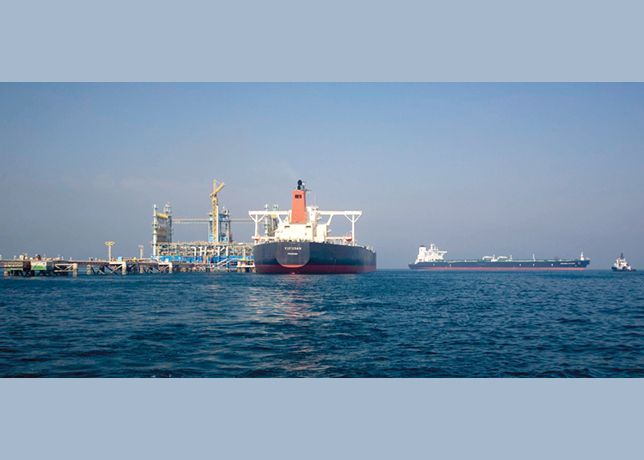








FPSO operators are prioritising bankable, lower-emission, and cost-efficient floating production solutions across an increasingly competitive and technically demanding environment
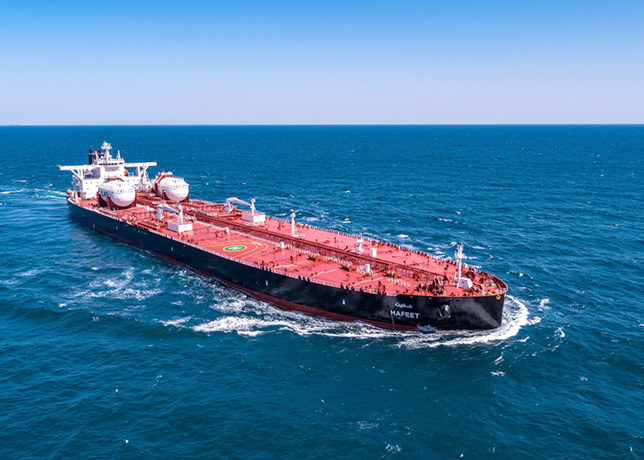
Africa's offshore energy sector is entering a period of accelerated activity, with floating production, storage and offloading (FPSO) systems emerging as the central infrastructure underpinning new developments, asset life extensions, and deepwater expansion.
Across multiple basins, exploration momentum is intensifying, capital is being selectively deployed, and project models are evolving in response to increasingly complex technical, regulatory, and financial constraints.
According to the Africa 2026 FPSO report, the continent’s FPSO landscape is entering a decisive growth phase, supported by an expanding offshore project pipeline and sustained investment in deepwater developments driven by large hydrocarbon discoveries.
Declining yields from mature onshore fields are reinforcing the strategic pivot offshore, positioning FPSOs as a cost-efficient and operationally flexible solution for unlocking reserves.
EXPANDING OFFSHORE EXPLORATION & BASIN ACTIVITY
Exploration and upstream activity across Africa are undergoing a structural shift, marked by increased participation from both international majors and independent operators, alongside a reorganisation of asset portfolios.
Offshore drilling programmes are expanding across key basins, with capital directed towards high-impact prospects and underexplored acreage.
Angola continues to lead activity levels, driven by Azule Energy’s drilling programme and progress on the $8.2 billion Agogo project, while preparations are underway for the country’s first standalone gas development by 2026.
At the same time, Shell is re-entering Angola after a two-decade absence, signalling renewed confidence in the basin’s deepwater potential.
In Nigeria, portfolio consolidation is reinforcing a deepwater focus, with regulatory approval enabling increased equity stakes in offshore assets, highlighting a strategic shift away from onshore operations.
Namibia’s Orange Basin has emerged as one of the most closely monitored frontier regions, with multiple operators advancing exploration campaigns.
Rhino Resources has extended rig contracts following a high liquid-yield gas condensate discovery, while additional appraisal work is underway to evaluate reservoir potential and inform development strategies.
Parallel activity from TotalEnergies, Galp, and Petrobras is concentrating attention on prospects such as Mopane, reinforcing the basin’s role as a future hub for offshore production.
Exploration intensity is also rising across the Gulf of Guinea, where Petrobras, Shell, Total, Murphy Oil, and Eni are active across Sao Tome, Cote d’Ivoire, Liberia, Ghana, and Cameroon.
Indigenous players, including Nigerian independents, are scaling up development drilling programmes, contributing to a more diversified operator landscape. New frontier moves are evident in Gabon, where production sharing agreements are opening acreage for modern deepwater exploration, while seismic and appraisal activities are expected to accelerate.
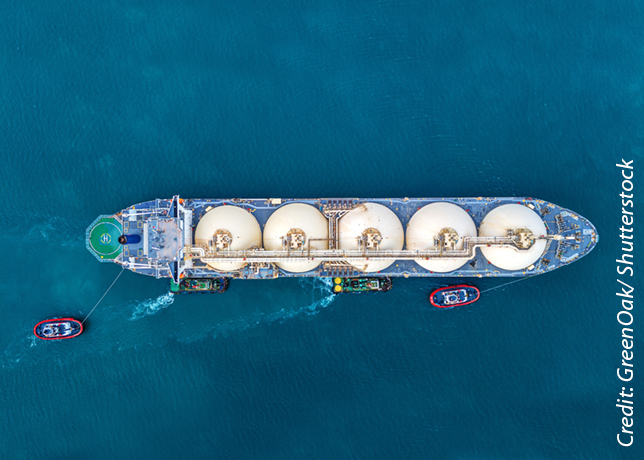
Beyond oil, offshore gas developments are advancing in parallel, particularly in Mozambique, where a second floating LNG unit has reached final investment decision and is expected to double national LNG output by 2028.
In South Africa, regulatory processes are shaping project timelines, with environmental and social impact assessments extending development schedules for key offshore gas blocks, reflecting tightening environmental frameworks and heightened scrutiny of offshore approvals.
Across these developments, FPSOs remain integral to both frontier and mature projects, providing a flexible production solution that aligns with the technical and logistical realities of Africa’s offshore environment.
AFRICA’S FPSO MARKET SCALE & PROJECT PIPELINE
Africa’s position within the global FPSO market is strengthening, supported by a growing installed base and a robust pipeline of planned and sanctioned projects.
With 43 FPSOs already deployed, the continent accounts for approximately 23 per cent of the global fleet, with a projected increase of 25 per cent through 2030.
This expansion is concentrated in established offshore markets, including Nigeria, Angola, Ghana, and Mozambique, while emerging regions such as Namibia are expected to contribute to future growth.
Country-level distribution underscores the concentration of activity, with Angola hosting 16 operating FPSOs and Nigeria 15, followed by Congo with 10 and Equatorial Guinea with four.
Additional units are distributed across Ghana, Cote d’Ivoire, Gabon, and North African markets, reflecting a broad but uneven geographical spread.
The forward pipeline includes a mix of conversion and newbuild projects scheduled between 2025 and 2030.
Planned developments such as Tamara Nanaye, EMEM, Agogo, and Kaminho are primarily based on conversion strategies, while newbuild projects including Bonga South West and Bilabri highlight continued investment in bespoke assets.
Announced projects extend into the latter part of the decade, with developments such as Venus indicating longer-term growth potential.
Pre-FEED and FEED activity remains active across multiple jurisdictions, with expected final investment decisions spanning from 2025 through 2033.
Projects such as Baleine Phase 3 in Cote d’Ivoire, DW Tano Cape Three Points in Ghana, and multiple Angolan developments are progressing through early-stage evaluation, while Namibia’s Venus, Mopane, and PEL 0039 projects represent a significant cluster of greenfield opportunities.
Recent final investment decisions demonstrate sustained commitment to deepwater developments, with projects such as Kaminho and Agogo in Angola and Baleine phases in Cote d’Ivoire advancing through successive development stages.
These projects are characterised by high production capacities, with Baleine Phase 3 expected to reach 150,000 barrels per day (bpd) and the Agogo integrated hub delivering approximately 120,000 bpd.
Redeployment and refurbishment strategies are playing an increasingly prominent role in the market.
The upgrade of the Baobab FPSO, supported by a $1.1 billion investment, illustrates the scale of capital being directed towards extending asset life and enabling further drilling campaigns.
Similarly, subsea tie-backs to existing FPSO infrastructure, such as the Begonia field connection to the Pazflor unit, are enhancing production capacity while minimising incremental capital expenditure.
Globally, up to 50 new FPSO projects are expected to be awarded for greenfield developments, with a significant share located in Africa.
Within this context, the continent’s available FPSO capacity and active pipeline position it as a central contributor to global floating production demand.
DECISION DRIVERS SHAPING FPSO INVESTMENTS & PROJECT SANCTIONING
While the project pipeline is expanding, the criteria for sanctioning FPSO developments are becoming more stringent, reflecting a convergence of financial, technical, and regulatory pressures.
Capital allocation decisions are increasingly centred on ensuring predictable performance, reduced lifecycle risk, and compliance with evolving environmental standards.
A defining feature of current investment strategies is the prioritisation of redeployment and life extension.
Redeployed FPSOs can require as little as one-tenth of the capital expenditure of newbuild units, with potential cost savings of up to 55 per cent and significantly reduced lead times, enabling deployment within six months compared to approximately three years for newbuilds.
This economic advantage is particularly relevant in a capital-constrained environment, where operators are seeking to optimise returns while managing risk exposure.
Technical integrity remains a primary determinant of project viability. Investments in hull and structural integrity are essential for ensuring long-term operation in harsh metocean conditions, reducing the likelihood of unplanned shutdowns and extending asset lifespan.
Similarly, mooring systems, turret configurations, and riser reliability are critical for maintaining operational stability and influencing insurance and financing terms.
Topsides systems, including compression and power generation, are central to production performance and cash flow predictability.
Modernisation efforts are focused on improving fuel efficiency, enabling waste heat recovery, and supporting hybrid or electrified configurations that reduce emissions intensity.
These enhancements are directly linked to financing decisions, as they underpin long-term revenue stability.
Digitalisation and automation are increasingly integrated into FPSO operations, enabling real-time monitoring, predictive maintenance, and reduced reliance on offshore personnel.
These technologies contribute to lower operating expenditure, improved safety, and enhanced uptime, reinforcing their role as key investment priorities.
Maintenance strategies are shifting towards proactive models, with increased emphasis on corrosion management, inspection regimes, and structured life extension programmes.
These approaches provide assurance to regulators, insurers, and financiers, supporting project approval and long-term viability.
Environmental, social, and governance considerations have become central to project economics, with flare reduction, emissions management, and decarbonisation investments now essential components of financing and regulatory approval processes.
Operators are required to balance production objectives with compliance requirements, integrating ESG considerations into all stages of project design and execution.
The financial environment presents a complex backdrop for these decisions.
Despite a projected increase in global FPSO capital expenditure, including a 3.5-fold rise in Africa between 2024 and 2033, bank funding for fossil fuel projects has declined, creating a widening funding gap.
This dynamic is driving the adoption of collaborative project models, including partnerships between operators, financiers, and technology providers, aimed at improving capital efficiency and risk sharing.
Industry stakeholders are aligning around a common objective of reducing technical, schedule, and emissions risks to secure project sanctioning.
Oil and gas producers are focusing on disciplined capital expenditure and reliable production, FPSO operators are investing in asset integrity and digital capabilities, and EPC contractors are optimising conversion efficiency and delivery timelines.
Technology providers are contributing through solutions that enhance operational performance and compliance, directly influencing financing and insurance outcomes.
Within Africa’s offshore context, these investment decisions are amplified by the dominance of deepwater developments, infrastructure constraints, and the availability of redeployment opportunities.
FPSOs, as self-contained production systems, are uniquely suited to these conditions, but their complexity and capital intensity necessitate increasingly rigorous evaluation processes.
As the continent’s offshore sector continues to expand, the interplay between exploration activity, project execution, and capital discipline will define the trajectory of FPSO deployment, shaping both the pace and sustainability of future developments.