









Major projects have been launched in the industrial cities of Jubail and Yanbu which will further boost industrial development in Saudi Arabia.
The two cities were launched by the Royal Commission for Jubail and Yanbu to provide top quality, purpose-built and a highly efficient environment for industrial development.
The industrial complexes in Jubail near the Arabian Gulf and Yanbu near the Red Sea play a major role in the industrial sector of the kingdom.
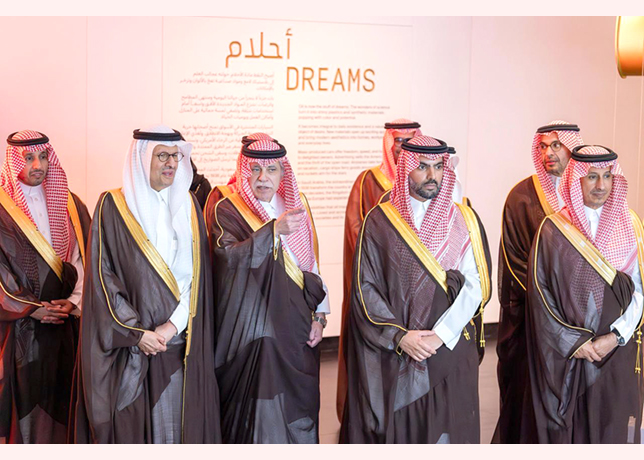
The Custodian of the Two Holy Mosques King Abdullah bin Abdulaziz announced several industrial and infrastructure projects worth more than $22 billion at the Second Jubail Industrial City (Jubail II).
A number of the projects belong to the Royal Commission of Jubail and Yanbu, Saudi Basic Industries Corporation (Sabic) as well as private companies, says a report.
He also launched the new facilities at King Fahd Industrial Port and infrastructure projects of Jubail II.
King Abdullah also inaugurated a number of projects, completed under Phase One of Jubail II, including a seawater intake structure and pumping facility capable of delivering 200,00 cubic metres per hour of seawater, a 33-km road network, 30 km of pipelines for fuel gas and feedstock, paths, bridges, drainage, waste water systems, and a water distribution system.
He also opened the expansion at the King Fahd Industrial Port, which included additional petrochemical terminals and tank farms.
The king commissioned the 75,000-tonne butanediol petrochemical complex, which belongs to the Saudi International Petrochemical Company (Sipchem).
The plant, the first of its kind in the Middle East, has an annual capacity of 75,000 tonnes to meet world and domestic market demands.
Jubail Industrial City now accounts for seven per cent of the world’s total petrochemical production, 70 per cent of the Kingdom’s non-oil exports, and contributes more than 11 per cent of the Kingdom’s total non-oil gross domestic product, and helps sustain the Kingdom’s annual growth at six per cent.
Jubail II is expected to attract investment projects worth 220 billion riyals and create some 55,000 job opportunities.
Royal Commission for Jubail and Yanbu Chairman Prince Saud bin Abdullah bin Thunayan said Jubail-II would provide an expansion facility for the industrialisation of the city for the next 25 to 30 years.
Jubail, a burgeoning industrial hub on the Arabian Gulf, has been named the city with the best economic potential in the Middle East by the prestigious business publication Financial Times’ Foreign Direct Investment (fDi) magazine.
Jubail received the accolade after its detailed economic information was assessed by a panel of expert judges who selected the city over 40 other economic centres in the Middle East.
The city has enjoyed massive foreign investments of over SR172 billion ($46 billion).
It is expected to rise even further on the map of global commerce and industry in the areas of energy and transportation.
Of all foreign investments flowing into Saudi Arabia, nearly half have gone to Jubail.
Many new petrochemical, oil and infrastructure projects are coming up in Jubail, involving billions of riyals in investment.
The Saudi Kayan Petrochemical Company at Jubail Industrial City is expected to go live in 2009, said Sabic Vice-Chairman and CEO Mohamed Al Mady.
He said Sabic had signed deals to become a strategic partner in the formation of the new company.
Saudi Arabia, already top global crude oil exporter, also aims to take a leading role in supplying much-needed transport and heating fuels via $12 billion worth of refining deals with multinationals.
The kingdom, by the end of the decade, plans to ship an extra 800,000 barrels per day (bpd) of refined oil products with the help of US ConocoPhillips and France’s Total.
Saudi Aramco signed a deal with ConocoPhillips for a new export refinery in Yanbu on the Red Sea coast, having sealed a contract earlier with Total for a similar project in Jubail on the Gulf coast.
Aramco officials put the cost of each 400,000 bpd project at $6 billion - up from initial estimates of $4-$5 billion when plans were announced a year ago.
Analysts reckon the costs could climb higher still.
The Yanbu refinery would produce high quality, ultra-low sulphur products aimed for the European and US markets that will be able to meet current and future specifications.
The Jubail refinery is expected to target booming markets in China, the world’s second biggest energy consumer, and fuel-hungry India.
Total, which has gained a foothold in Saudi Arabia’s upstream gas sector, said the Jubail refinery venture reinforced its presence in the kingdom.
Aramco plans to set up joint ventures with Total and ConocoPhillips for the refineries - with each party holding a 35 per cent stake - and offer 30 per cent to the Saudi public.
Aramco has already started work on a $10 billion refinery and petrochemical complex with Japan’s Sumitomo Chemical. It also plans to expand existing refineries at home and abroad.
Aramco and Total said they would carry out a joint front-end engineering and design study and that documents to implement the project would be negotiated in parallel with the study.
Meanwhile, Basell has signed a joint venture agreement with Tasnee & Sahara Olefins Co for the construction of a new integrated ethylene and polyethylene complex at Jubail Industrial City, Basell announced.
The joint venture will operate under a new set-up called Saudi Ethylene and Polyethylene Company, said a Basell source.
Haldor Topsoe has won a contract from Mitsubishi Heavy Industries, covering the use of the Topsoe two-step reforming technology on a 5000 tonnes per day methanol unit for Saudi Methanol Co (Ar-Razi).
The plant, with start up slated in 1Q 2008, will be located at Ar-Razi’s Al-Jubail site.
Output of the unit will total five million tones per year of methanol.
Sabic, meanwhile, said it had signed a $1 billion Islamic loan with Deutsche Bank to help fund future projects.
“Under this deal, Sabic will be able to outsource banking facilities to finance part of its expansion projects and future investments,” a statement said.
In another development, Eastern Petrochemical Company (Sharq) has entered into loan agreements with Japan Bank for International Co-operation (JBIC), Public Investment Fund (PIF) and Local and International Banks, amounting to SR9.11 billion ($2.43 billion), for the construction of its third expansion project in Jubail Industrial City.
Sabic will soon launch between SR1 billion and SR3 billion ($267 million-$800 million) worth of domestic Islamic bonds (Sukuk), a senior official was quoted as saying.
The issue is set to take place in the second quarter of this year, Al Etisadiyah newspaper quoted Sabic Chief Financial Officer Mutlaq Al Morished as saying.
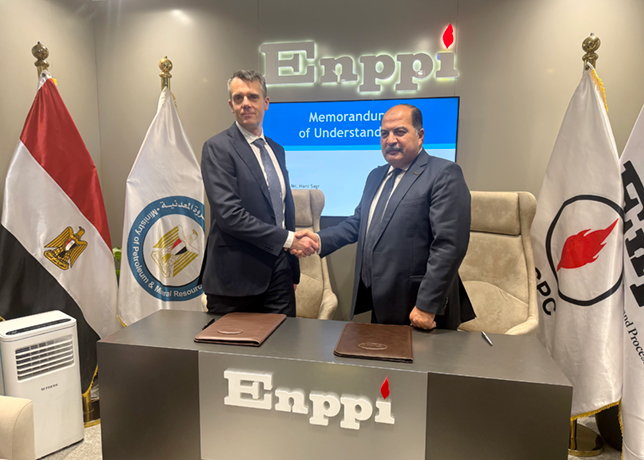
Sabic has also signed a Letter of Intent (LOI) with US Shaw Stone & Webster for the engineering, procurement and construction of a High Density Polyethylene (HDPE) plant at the Yansab affiliate, Yanbu.
Sabic posted a first-quarter net profit of 4.2 billion riyals ($1.12 billion), down 17.3 per cent year-on-year.
Sabic, whose products include steel, said higher iron ore prices offset a 14 per cent rise in sales, and said it would take five billion riyals out of its 42-billion-riyal reserves to fund a one-for-four bonus share issue.
Net profit was 5.08 billion riyals in the first quarter of 2005. The decline in quarterly profit is the first by a Saudi blue-chip this year.
Compared to its level in the fourth quarter of 2005, net profit in the first quarter of 2006 slid seven per cent.
“Sales have increased 14 per cent compared to the same period last year; despite that the company’s profits fell due to ... a rise in the price of the iron ore,” state news agency SPA quoted Mady as saying.
Sabic confirmed it was in talks with China’s Sinopec on a petrochemical plant deal worth more than $1 billion.
Chinese officials said earlier this year that Sabic would resume negotiations with Sinopec to build a major ethylene complex in China.
Sabic has been looking at investing in China’s fast-expanding petrochemical sector for years but has yet to land a concrete deal.
Asked how much the deal would be worth, Mady said: “Any deal (in China) these days is worth more than $1 billion.”
Mady said negotiations were under way, but declined to give a timeframe.
Sabic is to invest in two petrochemical projects in Egypt, Al-Hayat newspaper said.
Sabic is finalising plans to establish a fully registered company in China and open other offices in Indonesia, Australia and Vietnam, the official Saudi Press Agency said.


