










































OMAN, which has been suffering from declining oil production for almost a decade, has arrested the downward slide and now plans to forge ahead with expanding production for the first time since 2001.
Oman’s oil production hit its peak of 950,000 barrels a day (bpd) in 2001. After that, rates fell steadily year-on-year and by 2007 had dropped to 713,000 bpd. Since beginning crude oil production in 1967, Oman has produced more than 8 billion barrels, but the history of its oil production is not a straightforward story of steady declines in productivity.
“The history of oil production in Oman is unique,” says Andy Wood, chairman of Shell Development Oman. It is not like the North Sea, where there were oil discoveries, massive production levels and then fast declines. There had been a steady increase in oil production until the turn of the millennium.
“It is a reflection of the country’s complex geology, where exploration is far less efficient than normal. But technology is evolving and enabling a steady increase in recovery, up to 20 per cent in some fields,” says Woods.
In a sense, Oman’s search for energy reflects the predicament globally for oil producers that are reaching peak production levels using traditional extraction methods. “The easy oil has all been found and developed and now all that is left is the difficult stuff,” Wood adds.
After struggling for almost a decade to stabilise falling oil output, there is now a sense of optimism over future oil earnings in both government and the private sector.
The high oil prices of recent years that have swelled revenues have provided some distraction from concerns over the cost of extracting oil that is geologically difficult to reach.
Hydrocarbons revenues in 2007 were RO7.22 billion ($18.75 billion), up from RO6.74 billion in 2006. They accounted for more than 75 per cent of Oman’s exports in 2007 and 45 per cent of its gross domestic product (GDP). But as crude oil prices fell back to about $50 a barrel in early 2009, the pressure to increase oil revenues by raising production resumed. While efforts to diversify the economy continue, oil will be a critical contributor for years.
State energy company Petroleum Development Oman (PDO) accounts for 85 per cent of Oman’s production. The Omani government owns a majority stake of 60 per cent, controlling PDO activities through the Oil and Gas Ministry. Shell Development Oman, which has a 34 per cent stake in PDO, remains optimistic about the future of the country’s oil sector. The relationship, according to Wood, is one of mutual partnership and the “maximum exchange of knowledge”.
In its bid to boost oil production, Oman has become a pioneer of enhanced oil recovery. In 2006, Shell launched Shell Technology Oman, an enhanced recovery technique research and development centre in Muscat. The centre works closely with Sultan Qaboos University’s oil and gas research department and PDO.
In a sign of the growth of Oman’s enhanced oil recovery sector, Shell Development Oman has outgrown its headquarters – a large rented villa in the Al-Qurm district of Muscat – and will soon move to custom built offices nearby.
The geology of Oman’s hydrocarbons fields reflects its harsh topography, with most of the fields deep and tight, making extraction extremely difficult. The new projects rely on more expensive enhanced recovery techniques to extract what remains in the oil fields. Currently PDO has more than 20 enhanced recovery technique projects planned or under way.
According to Khalifa Al-Hinai, technical adviser to the Oil and Gas Ministry, production costs in Oman are $7-8 a barrel for heavy fuels, and $2-3 a barrel for lighter fuels, which are split roughly evenly. Some analysts suggest Oman’s extraction costs are as much as four times higher than its Gulf neighbours.
However, despite enhanced recovery techniques being capital, technology and skills-intensive, there has been remarkable success so far. “New projects by PDO and the US-based Occidental Petroleum Corporation should enable a higher level of production than in the past few years,” says Wood.
“The Mukaiznah field is ramping up production and PDO hopes they can sustain this for the next 10 years.”
Al-Hinai says in some fields the techniques have exceeded their expectations. “Secondary and tertiary recovery is now fully fledged,” says Al-Hinai. “We have arrested the major decline in the older fields, some of which are 40 years old. In some fields, where we initially thought we would be able to recover only 7 per cent of the oil, we are now achieving 15-16 per cent.”
The country’s hopes of increasing production through enhanced oil recovery rest on one field in particular, the giant Mukaiznah oil field in south-central Oman, which is estimated to hold about 2.1 billion barrels of crude. Operated by Occidental, the field currently produces about 65,000 bpd, having initially produced only 15,000 bpd when the field’s concession was awarded in 2005.
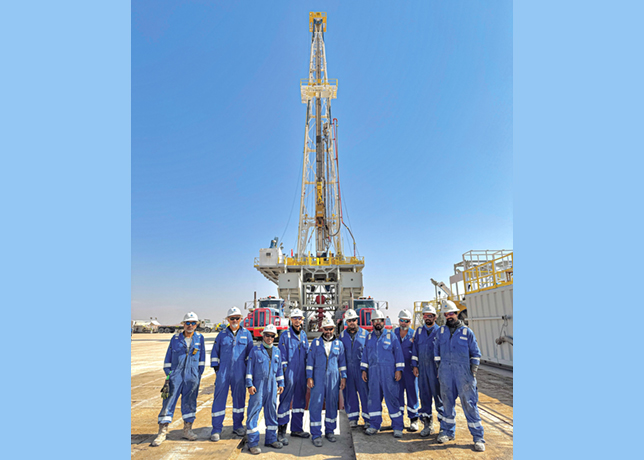
By the end of 2010, Al-Hinai expects Occidental to double production to 130,000 bpd. “There are close to 70 rigs in operation, which is a good measure of activity,” says Al-Hinai. “We have not slackened off at all.”
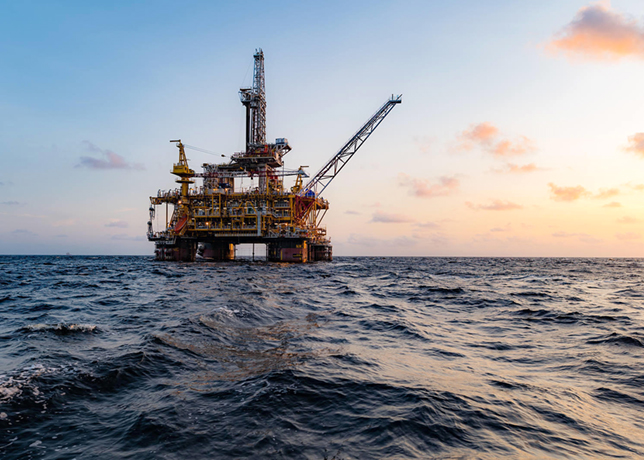
Oman is also looking offshore to increase its oil production. In partnership with India’s Reliance Industries, it hopes to drill an exploratory well, but is currently waiting to get hold of a suitable drilling rig, capable of reaching depths of more than 20,000 ft. Al-Hinai expects this to be completed by the end of 2009. Alongside its decade-long struggle to arrest oil production declines, Oman has had to contend with growing demand for its other chief natural resource, gas. Demand for gas is high in the sultanate and is forecast to reach 3.8 billion cubic feet a day (bcfd) by 2010, well above the planned supply of 2.6 bcfd, according to the Oil and Gas Ministry.
“Average production is 62 million cubic metres a day (cmd). Oman LNG Company and Qalhat LNG Company take 36.4 million cmd. The government gas grid takes 6 million cmd. The difference in industrial usage, power and desalination is 26 million cmd,” says Hinai. “Demand has not even peaked yet.”


