






































PETROLEUM Development Oman, the Sultanate’s principal oil and gas producer, achieved a total hydrocarbon output – combining oil, natural gas and condensate – in excess of one million barrels per day of oil equivalent (boepd) in 2008.
The output, representing a significant production milestone for PDO, is one of the salient highlights of the company’s performance during 2008, a year characterised as “challenging but successful” by managing director John Malcolm in PDO’s 2008 Annual Report. It also marks the “first fruits” of an aggressive drive by PDO over the past several years to sustain and boost hydrocarbon production, Malcolm notes.
For the first time since 2000, PDO’s output of hydrocarbon liquids, comprising crude oil and condensate, recorded a year-on-year increase, according to the Annual Report. Total production averaged 633,000 barrels per day (bpd) in 2008, compared with 607,000 bpd in 2007. Crude oil output alone averaged over 556,000 bpd, which was well within PDO’s target range of 540-560,000 bpd. Gas and condensate output amounted to 467,000 boepd in 2008. Total hydrocarbon output, combining crude oil, natural gas and condensate, surpassed 1 million boepd for the third year running.
“This performance was achieved despite difficult operating conditions, notably an overheated contracting market that led to delays in obtaining resources both in terms of manpower and equipment,” the Annual Report says. Among the notable highlights of the year was a significant increase in the production of condensate, a valuable hydrocarbon produced along with gas. In 2008 condensate output grew from 46,000 bpd to 77,000 bpd, an increase of more than 50 per cent. The increase was largely attributable to higher yields from the Kauther Gas Plant, which came on stream in late 2007.
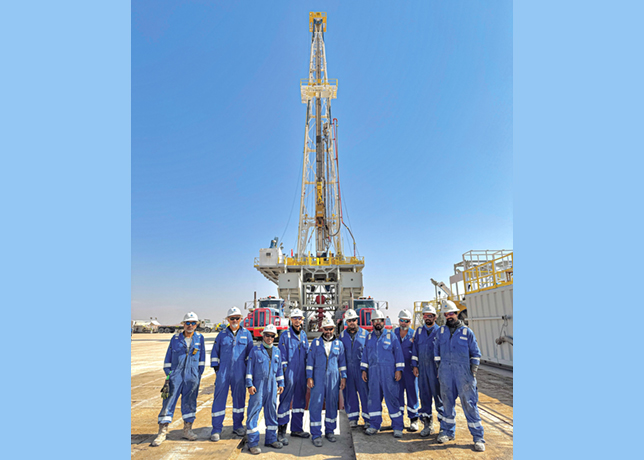
The year 2008 also yielded a number of successes on the exploration front, Malcolm states. Three new oil fields, either discovered or appraised during the year, were rapidly brought on stream thereby contributing to PDO’s 2008 oil output. While two of the fields – Taliah and Malaan West – are part of the Lekhwair cluster in northwest Oman, the third oil field, Rabab Southeast, although discovered earlier, was proven to be commercially developable in well tests conducted last year. First oil production from the Rabab Southeast field is expected in 2009.
In other successes reported during 2008, PDO was also able to improve its assessments of the hydrocarbon potential of the Burhaan West and Fahud Southwest gas fields, as well as in the Budour Northeast oil field. Furthermore, a well drilled to a depth of around 5,000 metres at Khulud, southwest of the Fahud field, has yielded evidence of gas in at least two high-pressure, high-temperature reservoirs. Significantly, this was the first gas exploration well in Oman that was drilled using the under-balanced technique, which allows for gas to flow into the well as it is being drilled.
He says PDO’s mission is to “realise the full potential of Block 6”. “Everything you will hear today is about squeezing the optimum amount of hydrocarbons out of our concession area; be it through normal operations, second recovery techniques such as waterflooding, enhanced oil recovery or exploration for new oil and gas accumulations,” he says.
At almost 100,000 sq kms, PDO’s concession area is large and despite exploring it for more than half a century, it knows there remains tremendous potential for finding new oil and gas reserves.
Over the last few years, PDO has dedicated increasing resources to its exploration efforts in both oil and gas. Last year, it invested over $170 million in either looking for new oil and gas fields or appraising recent discoveries. In all, ten new oil exploration wells were drilled and appraised while a further two very deep gas exploration wells were completed.
“Fortunately, the efforts were not in vain. Today, I am pleased to announce three new oil fields. Appraisal wells drilled by PDO in 2008 have also revealed additional volumes of hydrocarbons in existing oil fields.
Two of the new oil fields – Taliah and Malaan West – are found amongst PDO’s Lekhwair cluster of fields in northwest Oman. They are both part of the Upper Shuaiba geological formation, which contains many of the reservoirs of PDO’s main fields,” he says.
The third oil field discovery – Rabab Southeast – confirms the preliminary results of well tests that the company had conducted.
First oil production from the Rabab Southeast is expected later this year, through the existing conventional production facilities at Harweel, in south Oman.
In addition to revealing these new hydrocarbon accumulations, wells drilled in 2008 enabled PDO’s scientists and engineers to better estimate the true extent of hydrocarbon volumes in the Burhaan West and Fahud South West gas fields as well as in the Budour Northeast oil field, the discoveries of which were announced in previous years.
For these fields, follow-up appraisals have resulted in significant additions to the company’s discovered volumes.
The reservoirs of the Burhaan West and Fahud South West gas fields have low permeability. As a consequence, the reservoir rock first has to be cracked by applying extreme hydraulic pressure to achieve economically viable gas production rates from wells. But the Budour Northeast oil field has proved to be productive without the need of any stimulation. Since its discovery less than three years ago, it has already produced over 2 million barrels of oil.
These new discoveries underscore how very important exploration is to PDO’s long term future and demonstrate that the country remains attractive for oil and gas prospectors. The fact that the new oil discoveries were brought on stream quickly means that they are already contributing significantly to PDO’s oil production.
“Over the coming months, we will start a dedicated drilling campaign to investigate further opportunities in the vicinity of the Taliah discovery,” he says.
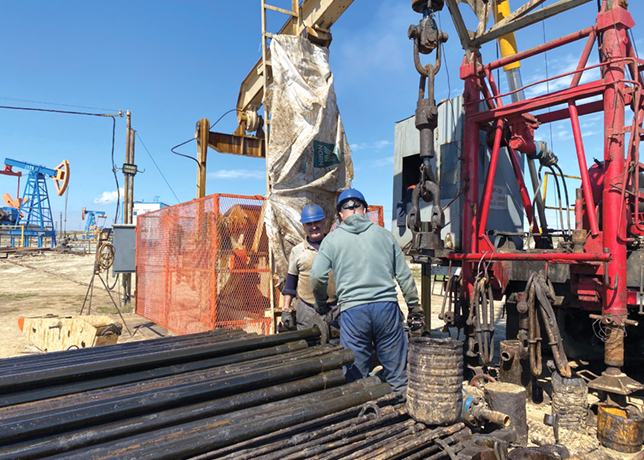
On the gas front, a well drilling to a depth of about 5,000 metres at a new location southwest of the Fahud field has yielded preliminary indications that movable gas is present in at least two separate high-pressure, high-temperature reservoirs. The well is the first gas exploration well in Oman that is being drilled under-balanced: the well-bore pressure is kept deliberately lower than the pressure of the fluids in the surrounding rock formations, allowing gas to flow into the well as it is being drilled. Once the well has reached its target depth, it will be fully tested.
“Our efforts do not stop there. A huge amount of work has to be done before an exploration well is drilled. While there is occasionally a bit of luck in exploration, it requires a successful balancing of calculated risks and opportunities. The secret to finding a field primarily lies in seismic data and geological technical analysis. Let me take you back to the Rabab South East field, south of the Greater Birba region of South Oman where this year we are executing a very large seismic campaign, so that we can refine our development operations and expand our exploration activities in the future,” he continues.
This new wide azimuth seismic survey is the largest and most sophisticated PDO has performed: in fact, just the first phase of the New Generation Birba 3D survey will require recording 120 terabytes of raw data – more data than the grand total collected by all previous seismic surveys PDO has completed over the preceding 40 years. This improvement has been made possible due to the seismic crew operating 24 hours a day, along with the continued developments in processing algorithms assisted by ever greater computer processing power.
The results of the survey even before final processing already show a dramatic improvement on the previous images, with a much clearer picture of the subsurface and new opportunities for further exploration.


