























The company will work with customers to augment and refine the use of remote technology to help them better run their business, boost productivity, reduce downtime, and have 24/7 support, Haytham Yehia, GM of Shell Middle East, tells OGN
Shell continues to pursue the use of advanced solutions and technology turning challenges into opportunities. Its recent offering in the region is its legacy LubeAdvisor service using wearable technology for remote solutions.
Shell’s advocacy for technological adoption is part of its strategy to achieve net-zero goals, as it has set out, by 2050.
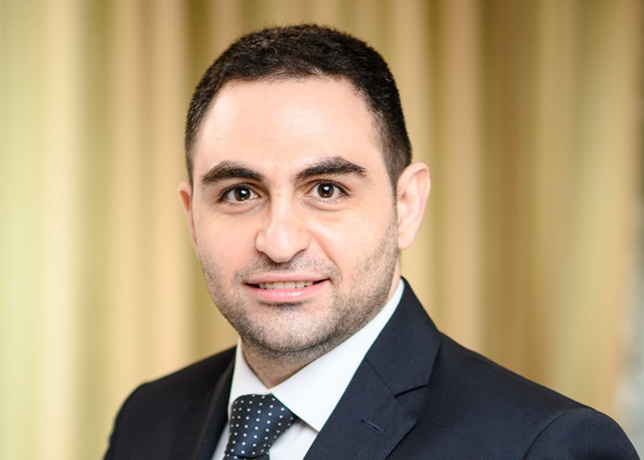
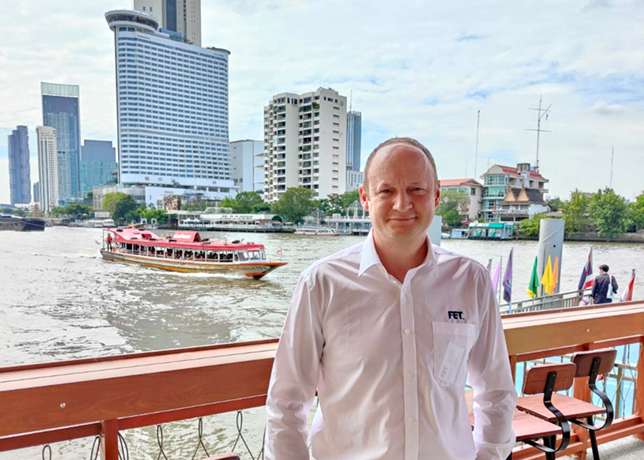
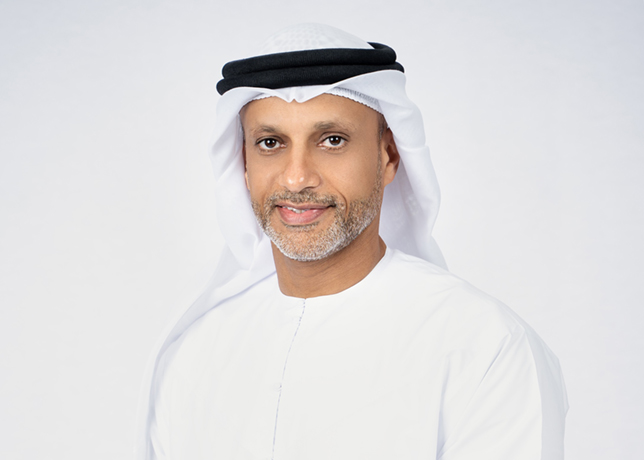
In this interview with Abdulaziz Khattak of OGN, Haytham Yehia, General Manager of Shell Middle East, broadly discusses technology and the company’s decarbonisation plans and policies.
What is the LubeAdvisor using wearable technology, and how does it work?
The Shell LubeAdvisor using wearable technology is designed to ensure customers identify and use the right Shell oil. So in essence we help them optimise their lubricants operations and applications.
We help them improve the lubrication and maintenance cycles of their equipment, ultimately leading to significant benefits, including reduced fleet maintenance and operational costs.
The service is delivered through highly-trained Shell technical staff consisting of office-based technical helpdesks and field-based lubrication engineers.
Shell offers support in many different aspects, such as application and troubleshooting, storage, and handling, disposal, and safety.
• How it works: The LubeAdvisor wearable technology gadget is couriered to customers. Once worn by the user a virtual consultation is then started with one of our experts. After the query is resolved, Shell gets the device it back via courier.
Through the technology our experts offer consultation without the need of a physical site visit.
 |
Shell's remote LubeAdvisor service ... no need for physical site visits |
Our experts see what customers see and hear, absorbing real time information and enabling them to assess and make an informed recommendation on the spot.
This ultimately removes the complications of diary scheduling and travel arrangements, while adhering to social distance guidelines and travel restrictions, without a delay in service.
In addition, there are several helpful and convenient tools customers can utilize along with the complete LubeAdvisor service including access to engineering, technical and application knowledge.
The service was recently rolled out in the Middle East, and is now available in the UAE, Oman, Kuwait, and Qatar.
What is the purpose behind the new tech-driven service?
As a leading global energy company with operations in more than 70 countries and around 86,000 employees, we constantly use advanced technologies and take an innovative approach to help build a sustainable energy future.
From the beginning of the pandemic, we adapted to adhere to Covid-19 regulations to ensure operations run smoothly in a safe and healthy environment, limiting in-person visits, and where possible use advanced technology.
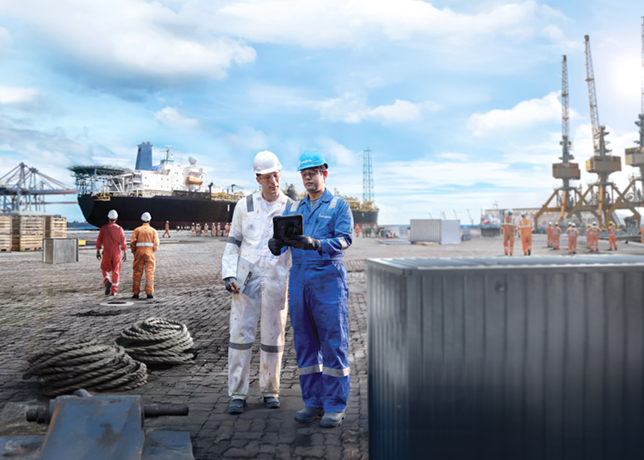
As one of the first adopters of wearable technology, we place great emphasis on equipping frontline workers in vital sectors such as oil and gas, construction, transport, and the manufacturing sectors with the technology that allows them to conduct a range of actions to improve safety, efficiency and result in faster, better decision making, all in real time.
We work closely with various global multinational manufacturers to ensure we offer our customers the highest quality service, while keeping up with constant industry changes.
Our customers and employees’ health remain our number one priority, and to ensure we adhere to social distancing regulations, we re-designed our business operations model and introduced LubeAdvisor wearable technology.
The legacy LubeAdvisor service is now done remotely in a new way that helps customers optimise their lubrication operation and decrease total cost of ownership.
In your view, how should industry players focus on concerning the management of onsite operations especially during uncertain times like the Covid-19 pandemic?
The Covid-19 pandemic has proven that being agile with business operations is key. Companies and service providers have to take a step back and rethink their approach and how they run their operations.
Investing in and using technology to enhance operations is absolutely vital to keep up with the fast-paced changes that vital sectors are going through and eliminate any potential impact our customers could face with business continuity.
As such, using advanced solutions and incorporating technology has allowed us to turn a challenge – of not being able to be physically present for in-person meetings with customers – to an opportunity.
That is why we made the decision to roll out the LubeAdvisor using wearable technology in the Middle East.
How will technology and its increasing adoption drive growth in the oil and gas sector?
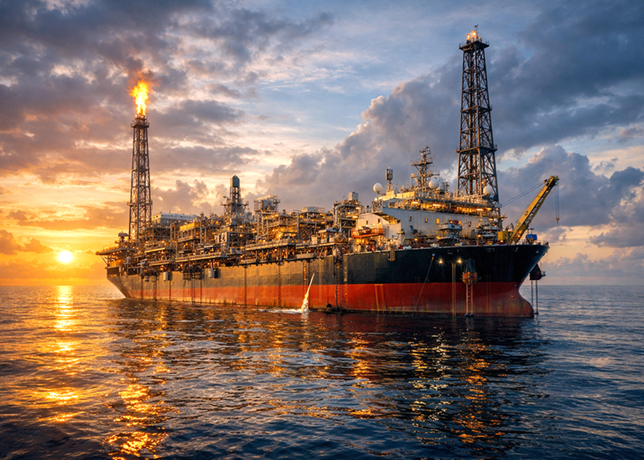
The use of remote technology has now become an integral part of how oil and gas companies run their operations, especially those who operate offshore assets or control assets in remote locations.
In the past, connectivity and reach posed a major challenge for some of these operations, impacting operations, and production output.
The oil and gas sector was undoubtedly one of the early adopters of technology and digitisation, long before Covid-19. But the pandemic accelerated the need to adopt and embrace remote solutions to enhance safety measures, and ensure business continuity.
The solutions allow oil and gas companies and operators the flexibility to scale operations and run more of their infrastructure and assets seamlessly and remotely.
Shell will continue to work with customers to augment and refine the use of remote technology to help them better run their businesses, boost productivity, reduce downtime, and have 24/7 accessibility to experts to address their queries.
How is Shell strategising its sustainability goals in line with the region's own decarbonisation efforts?
Shell is focusing on becoming a net-zero emissions energy business by 2050. This means reducing emissions from our operations, and from the fuels and other energy products we sell. It also means capturing and storing any remaining emissions using technology or balancing them with offsets.
To achieve net-zero, Shell will continue with short-term targets that will drive down carbon emissions as we make progress towards our target. This includes a new set of targets to reduce our net carbon intensity to reach 100 per cent by 2050.
We look at offering sustainable lubricants on the basis of our total portfolio, not product-by-product.
There are many ways Shell Lubricants avoid and reduce CO2 during manufacturing and transportation of its products. For example, over 50 per cent of energy in Shell Lubricant blending plants now comes from renewable sources.
In total, we have taken out over 34,000 tons CO2 emissions from our own operations, reducing our manufacturing carbon intensity by over 30 per cent since 2016.
We have selected our premium lubricants to be carbon neutral, because they are the most efficient to deliver fuel and energy efficiencies to any car or machinery.
Our aim is to encourage customers and consumers to select lubricants that reduce emissions and help them decarbonise their businesses.
For example, the CO2e avoided by fuel savings from top tier fuel economy lubricant compared to a lower tier lubricant helps to reduce fuel emissions of a car in use and potentially outweigh part of a lubricant’s carbon footprint.
Furthermore, we are transforming our business and finding new opportunities through the provision of more low-carbon energy, such as biofuels, hydrogen, charging for electric vehicles, and electricity generated by solar and wind power.
Achieving our target could mean that by 2030, we will be providing enough renewable electricity for 50 million households, operating more than 2.5 million charging points for electric vehicles, producing eight times more low-carbon fuels, and increasing the number of biofuels and hydrogen in the transport fuels we sell to 10 per cent, from 3 per cent today.
Will sustainability mean a compromise for business?
No it doesn’t. In fact both go hand in hand. Sustainability is increasingly becoming a necessity for corporations as the world attempts to transition to a low carbon future. And it is crucial for organisations to address the gap between knowing and doing by embracing sustainable business models.
Climate goals cannot be met through energy transition alone: How true is this statement?
To achieve climate goals all levers will have to be pulled. For example, Shell is working with customers to help them achieve net-zero emissions by selling them a lower-carbon energy mix.
This will reduce our carbon intensity over time, measured as the total amount of carbon dioxide associated with each unit of energy we sell.
We have announced our target to reach net-zero carbon emissions by 2050. This means cutting the carbon intensity of our energy products by 100 per cent, with an interim target of 45 per cent by 2035.
These targets include carbon mitigation actions taken by both Shell and our customers. We will help our customers wherever we can, for example, by offering them nature-based carbon credits.
Transforming the energy system also requires further change on a broader scale, and involves unprecedented collaboration between industry, consumers, and more importantly governments, which have the power to set policy frameworks, regulate markets and stimulate investment in key areas to accelerate the transition to net-zero.
Shell has renewed and expanded its global climate and energy transition positions. These high-level policy positions serve as a global framework for Shell’s advocacy with governments, international organisations, industry associations and coalitions and other stakeholders.