







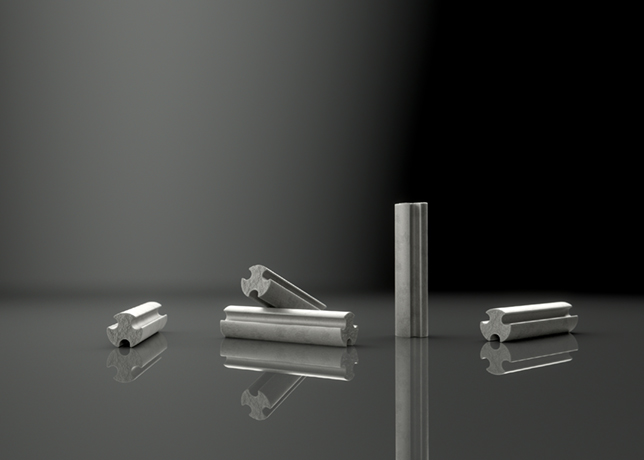










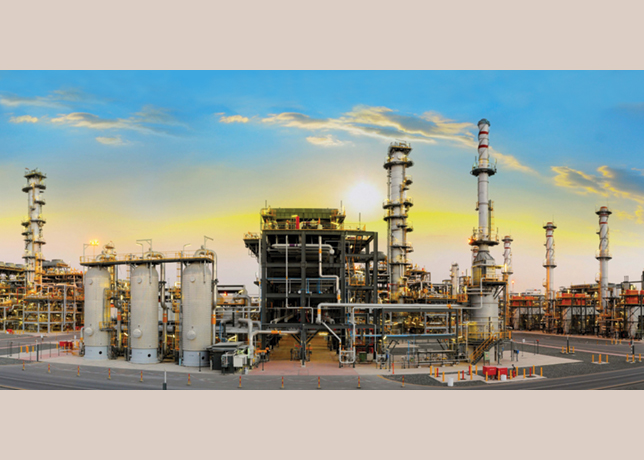



















Diversified technology giant, 3M, has launched a range of Scotchlite glass bubbles - hollow glass microspheres with a high strength-to-density ratio - which can be used in the oil and gas industry to lower the density of drilling fluids and slurries, among other applications.
Extensive drilling throughout the world has left a lot of oil fields in a state of depletion.
There is still a lot of oil present in the formations, but there is no more pressure to produce spontaneously.
Economic demands necessitate oil producers to sink more wells into these formations to maintain production levels.
Technologies need to be developed to accomplish this, claims 3M.
One of these technologies is the use of lower weight fluids.
Before, hydraulic heads needed to be higher than the formation pressure to prevent hydrocarbon production before producers were ready to pump.
Nowadays, hydraulic heads can be kept close to, at or under formation pressure (UBD) and allow hydrocarbons to be produced while drilling. Fluids can have a weight lower than 8.3 ppg.
One of the most visible advantages is avoiding formation damage in low-pressure formations and in areas prone to loss of circulation.
Also increased drill bit penetration has been observed in certain rock formations (ROP), better drill bit life, improved cuttings evacuation and lower workover frequency.
Low density has and still is mostly obtained by aeration.
There are a series of difficulties that are unique to aeration drilling; compressibility gives aerated fluids a demanding hydraulic profile. Costly compressors need to be hired, and MWD mud pulse becomes attenuated.
On the downside, certainly UBD used to entail some risks: hole instability and well control issues are among them.
Kick detection is critical as are drill string vibration, drag and torque.
3M Scotchlite glass bubbles can help alleviate many of these risks.
3M Scotchlite glass bubbles offer an excellent alternative to aeration to make up low-density fluids, claims its developer.
They are incompressible, single-phased, easy to handle, cause less formation damage and can survive pressures up to 18.000 psi.
They are compatible with conventional surface solids control equipment and pumps and have performed well in re-entry, inclined wells and in depleted reservoirs and geologically fractured formations.
3M Scotchlite glass bubbles are of high strength (up to 18.000 psi), low density (between 0,1 and 0,6 g/cc) unicellular and chemically inert.
Their applications range from automotive to construction to the oil and gas industry. They are used in buoyancy modules for subsea buoys, as the heat-preserving and pressure-resistant agent for deep sea pipe-coating, in cementing well bores and drilling fluids.
They can successfully and predictably reduce densities of drilling fluids, claims their developer.
Fluids prepared with glass bubbles are single-phase, incompressible and with a simple hydraulic behaviour.
Bubbles will allow for tailor-made fluids and adds easily to any fluid with a Venturi hopper, whether it is brine, water or diesel. The upper allowed concentration is a function of viscosity and generally at 50 volume per cent.
The Drilling Research Centre in Houston, US, has established that they survive demanding downhole conditions.
The centre's observations included that optimising nozzle diameter and adjusting the angle of the velocity vector around the exit circumference could even improve bubble survival.
They are compatible with standard surface cleaning equipment, claims the company.
They do not adversely affect rheology of the fluid. Bubble sphericity assures a good similarity with conventional fluid, and also helps build a good filter cake and reduce filtrate loss.
By themselves, glass bubbles will not make for good agents for fluid-loss control. In conjunction with primary agents however, bubbles can play an excellent synergy role, mostly because of their particle size distribution. A combination can reduce the total filtrate down with more then 50 per cent.
Other potential benefits include the reduction of formation damage; the reduction of friction from drilling fluids; lubrication of drill string, reduction of casing wear and reusablility, mostly through flotation.


