

















































The European Union's (EU) greenhouse gas emissions fell by 1.6% in 2025 compared with the previous year, while renewable energy capacity and clean technology deployment continued to expand, according to the European Commission's 2026 EU Climate Action Progress Report and Carbon Market Report.
The findings show that
the EU's net greenhouse gas emissions are now 39% below 1990 levels, despite
the bloc's economy growing by 74% over the same period, highlighting the
continued decoupling of economic growth from emissions.
Emissions covered by
the EU Emissions Trading System (EU ETS) declined by around 2% in 2025, while
those covered by the Effort Sharing Regulation (ESR), including transport,
buildings, agriculture and waste, remained broadly stable. Provisional data
also indicated an improvement in the EU's land carbon sink.
The reports highlight
the contribution of clean energy technologies to emissions reductions, energy
security and industrial competitiveness, while warning that faster action will
be needed to meet the bloc's 2030 climate targets.
Progress Towards
2030 Emissions Targets
The EU remains
committed to reducing net greenhouse gas emissions by at least 55% by 2030
compared with 1990 levels. However, the slower pace of reductions in 2025 means
additional efforts will be required across several sectors during the remainder
of the decade.
Emissions covered by
the Effort Sharing Regulation are currently projected to decline by
approximately 38.5% by 2030 compared with 2005, falling short of the EU-wide
target of 40%.
The European
Commission identified nine member states that are not making sufficient
progress towards their national 2030 targets: Austria, Croatia, Cyprus,
Germany, Italy, Ireland, Lithuania, Malta and Sweden. These countries will be
asked to submit corrective action plans outlining additional emissions
reduction measures and investments.
The land-use sector
also faces challenges despite improvements in 2025. Net carbon removals
increased by approximately 11% compared with 2024, but projections indicate a
remaining gap of 40–55 million tonnes of CO₂ equivalent towards the EU's 2030
land-use target.
Renewable Energy
and Clean Technology Expansion
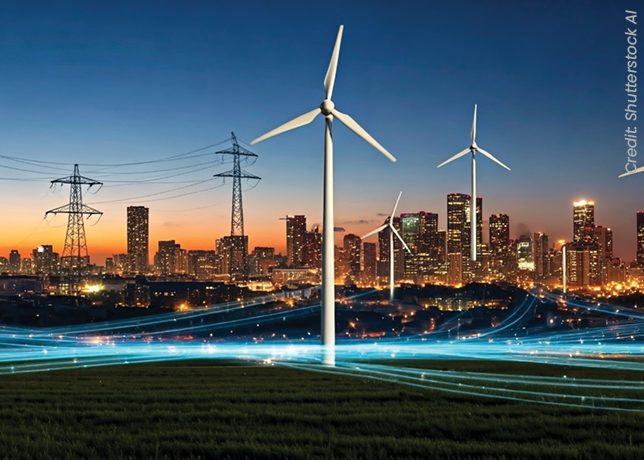
The expansion of
renewable energy and low-carbon technologies continued to support the EU's
energy transition in 2025, helping reduce dependence on imported fossil fuels
and exposure to volatile energy prices.
EU wind and solar
capacity reached 611 GW, representing approximately 49% of the bloc's total
electricity generation capacity.
Battery-electric
vehicle registrations also increased to 1.9 million in 2025, accounting for
roughly one in six new car registrations across the EU.
Meanwhile, heat pump
deployment accelerated, with an estimated 41 GW of additional capacity
installed during the year, compared with 26 GW in 2024.
The Commission noted
that the expansion of clean technologies is creating opportunities for European
manufacturing and investment, although further growth in the sector will be
needed to capture its full economic potential.
EU Carbon Market
Generates €43.2 Billion
The EU Emissions
Trading System generated €43.2 billion in revenues in 2025, an 11% increase
compared with 2024, according to the Carbon Market Report.
Of the total, €23.9
billion went directly to EU member states to support decarbonisation
investments targeting households and industry.
Emissions from
industrial installations covered by the system declined by 3.3% compared with
2024, largely driven by reductions in the iron and steel, cement and chemical
sectors.
Maritime transport
emissions fell by 4%, while aviation emissions increased by 0.2%, highlighting
the continued challenges facing the aviation sector in reducing its
environmental impact.
Although overall
emissions under the EU ETS remained below the system's cap, the Commission
noted that the pace of reductions had slowed compared with previous years.
The EU is targeting a
62% reduction in emissions covered by the trading system by 2030 compared with
2005 levels. The Commission said maintaining the system's integrity and
directing a greater share of revenues towards decarbonisation investments would
be important to achieving this objective.
In July 2026, the
Commission proposed reforms to the EU ETS covering the 2030–2040 period.
EU Sets Legally
Binding 2040 Climate Target
The EU also
strengthened its longer-term climate framework in 2026, with the amended
European Climate Law entering into force in April and establishing a legally
binding target to reduce net greenhouse gas emissions by 90% by 2040 compared
with 1990 levels.
The target provides a
longer-term framework for emissions reductions as the bloc continues its
transition towards climate neutrality.
Climate Risks Drive
Need for Greater Investment
The reports also
highlighted the growing economic costs of climate-related extreme weather
events across Europe.
Climate-related
disasters have caused an estimated €822 billion in economic losses across the
EU since 1980, while approximately €70 billion in annual investment will be
required for climate adaptation through 2050.
In response, the
Commission presented a new EU Climate Resilience Framework in October 2026,
aimed at strengthening the bloc's ability to anticipate, prepare for and manage
climate risks. The framework includes a proposed Climate Resilience Law
supported by a common reference trajectory for global warming.
Overall, the Commission's findings show continued progress in reducing emissions and expanding clean energy, but underline the need to accelerate investment and implementation across transport, industry, buildings and land use to meet the EU's climate objectives. -OGN/TradeArabia News Service