














































The challenge with Mena’s energy transition is no longer building renewable capacity but coordinating increasingly digital, interconnected power systems securely and efficiently, Remi Ramcharan tells OGN
Looking at the Middle East and North Africa’s (Mena) energy transition today, there are often comments around vast ambition and inspiring vision.
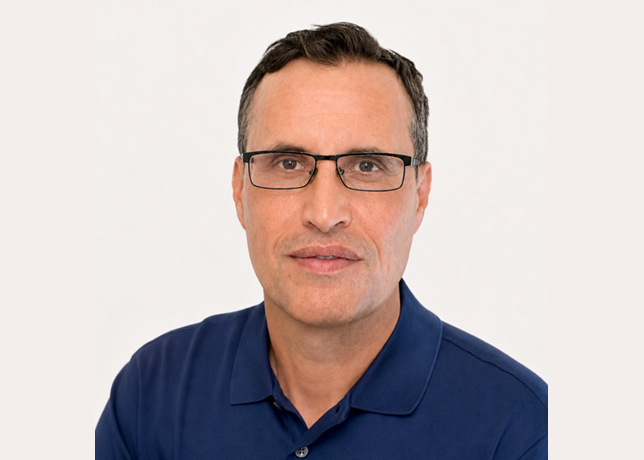
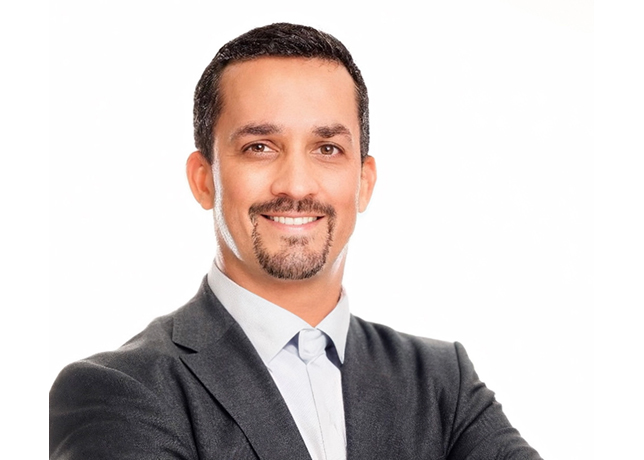
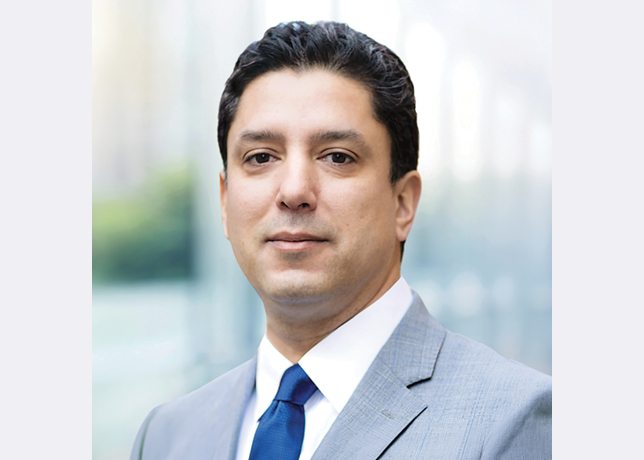
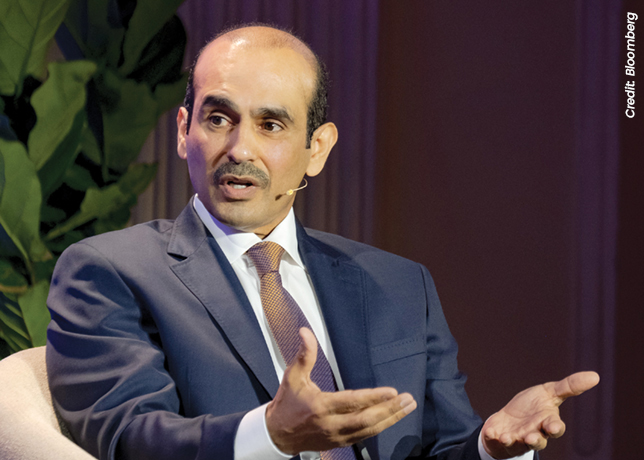
"And while I wholeheartedly agree with this sentiment, what stands out more to me is what has already been translated into action," Remi Ramcharan, Vice-President at Senkron Digital, tells OGN energy magazine.
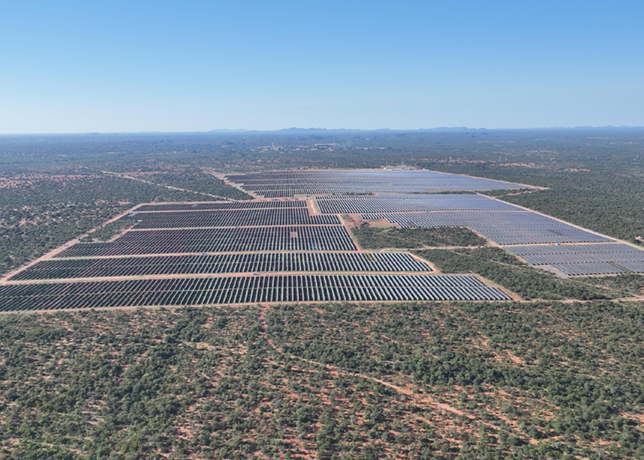
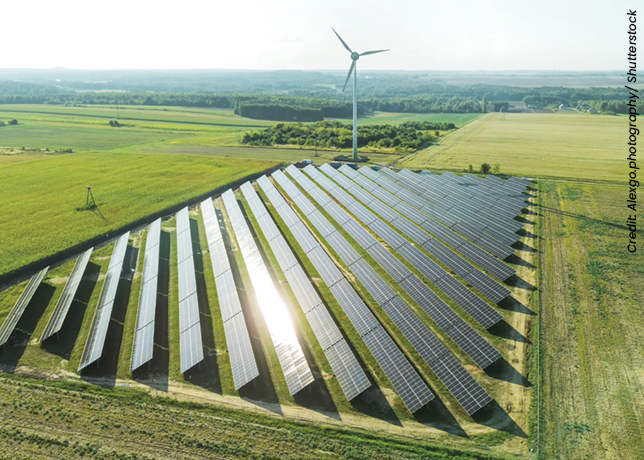
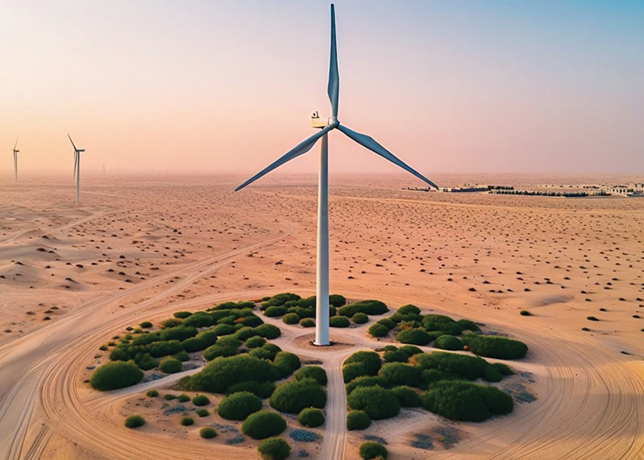
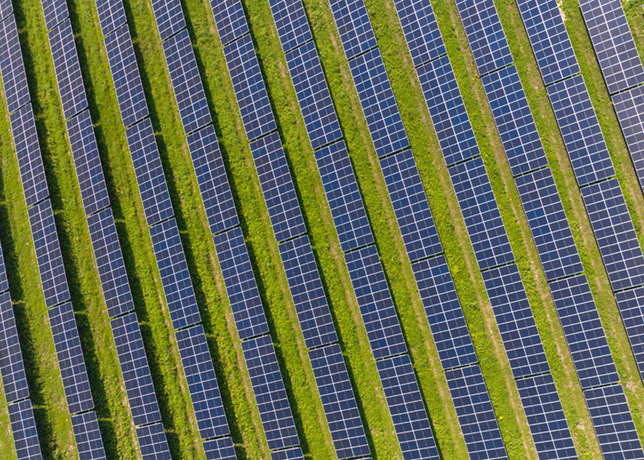
Solar parks now stretch across desert landscapes, major green hydrogen facilities are nearing completion, wind projects are steadily multiplying, and battery storage facilities are moving at scale and pace that would have seemed improbable only a few years ago.
Yet as ambition turns into delivery, a new tension emerges in how effectively these new assets can be managed and coordinated.
For operators, who must balance these systems in real time, whether that’s the engineers managing load curves as temperatures spike, or the grid controllers monitoring fluctuating frequency stability, the ability to handle the growing complexity of managing asset interaction as generation accelerates will be the next defining phase in the region’s energy transition.
FROM EXPANSION TO ORCHESTRATION
For much of the past decade, the region has been understandably focused on both oil and gas and renewable expansion as countries diversify energy mixes, reducing total reliance on hydrocarbons while protecting energy security, and rapidly accelerating renewable deployment.
 |
OnePact...Senkrons-renewable-energy-management |
This is driven by the projected 50 per cent rise in electricity demand in Mena by 2035, and is in line with ambitious national transformation agendas that have embedded long-term diversification strategies, such as Saudi Arabia’s Vision 2030, the UAE Energy Strategy 2050, and Qatar National Vision 2030.
So in that context, scale was (and indeed still is) the priority, and that’s precisely what the region delivered.
Solar in parts of Mena is now among the cheapest sources of electricity globally, large-scale projects have been swiftly executed, and storage is beginning to scale alongside generation.
Now though, operators are moving beyond the installed capacity figures and are faced with the complex task of effective coordination to ensure generation, demand, storage and grid infrastructure are aligned in the right place at the right time.
Instead of scarcity, they are managing moments where supply could exceed what local networks can transport, where renewable output must be reduced because transmission corridors are constrained, and where storage assets are technically available but not optimally dispatched to relieve pressure or capture value.
CASE STUDY: SAUDI ARABIA’S SOLAR SURGE & COORDINATION CHALLENGE
Saudi Arabia’s renewable expansion under Vision 2030, which aims to generate 50 per cent of electricity from renewables by the end of the decade, is a great example of this inflection point.
In just five years, the Kingdom has become a global solar powerhouse, with 12 GW of solar capacity already installed (correct as of the end of 2025), and flagship projects, such as the 300-MW Sakaka plant and the 1.5-GW Sudair solar project soon to be accompanied by new capacity under the National Renewable Energy Programme.
What changes as solar capacity rises, however, is less about the ability to actually generate power and more about the complexity of managing it.
When large volumes of solar are concentrated in particular regions, peak production periods can strain local transmission corridors or outpace demand patterns, requiring more active balancing and dispatch decisions.
As evening demand rises and solar output falls away, system operators must coordinate conventional generation, interconnections and emerging storage resources with far greater precision than in historically predictable systems.
In this sense, the operational focus shifts from adding megawatts to managing variability, congestion and timing across a far more complex network.
Saudi Arabia continues to invest in grid reinforcement and flexibility solutions, and storage deployment is increasing, but the broader lesson is that scaling infrastructure does not automatically resolve coordination challenges.
As renewable penetration deepens, the grid must function less as a one-directional transport mechanism and more as a responsive, digitally enabled platform capable of orchestrating diverse and variable assets in real time.
STORAGE IS SCALING BUT IS IT STRATEGICALLY INTEGRATED?
As countries across Mena, such as Saudi Arabia, continue to push towards higher renewable penetration and greater flexibility, battery energy storage systems (BESS) are increasingly talked about as the answer to grid constraints.
But simply building batteries does not automatically mean the system is better coordinated.
In practice, storage projects are often planned around project-level economics, meaning batteries are located where land is available, where solar is already being developed, or where financial modelling looks most straightforward, rather than around where the grid is actually constrained or where flexibility would create the greatest system-wide value.
The result? Batteries are not always positioned to relieve congestion, manage volatility or participate fully in evolving market structures.
Once you factor in the region’s extreme climate, the additional realities of heat, thermal management and accelerated degradation further complicate both performance expectations and long-term economics.
What this creates is not a failure of storage; rather it is that storage assets have not been embedded deeply enough into operational strategy to deliver their full potential in terms of congestion relief, flexibility or revenue optimisation.
There is a significant optimisation opportunity here to integrate it deliberately into planning, forecasting and dispatch decisions so that it strengthens the system in practice, not just on paper.
BRIDGING GAP BETWEEN PLANNING & GRID REALITY
Now the question becomes how to properly integrate storage into operational strategy, and the answer lies in system modelling during the planning phase, because this is where decisions are made about how the asset is expected to behave once it is live on the grid.
Storage projects may be sized for nominal use cases, based on average irradiance or assumed cycling patterns that look reasonable in theory, but real operating environments are far more dynamic.
In reality, weather changes, prices move, grid constraints shift, and batteries degrade over time, and all of those factors interact in ways that basic assumptions simply cannot capture.
Without scenario analysis and predictive modelling, operators risk developing assets that technically function but strategically underperform, with cycling strategies that erode battery life faster than anticipated, revenue projections that fail to reflect actual dispatch conditions, and congestion that persists because storage is not coordinated at a portfolio level.
So in practice, the battery works, but it does not work optimally for the system it was intended to support.
OPTIMISATION IN ERA OF HEIGHTENED SECURITY RISK
The Middle East is currently navigating today’s heightened geopolitical tension and active conflict, which is having a direct impact on the energy industry.
In this environment, the resilience of critical infrastructure becomes an immediate priority.
Not only in terms of physical security and continuation; but digitally too, as threats extend into sophisticated cybersecurity challenges, which are only heightened as grids become more digital and interconnected, multiplying vulnerability pathways.
In this sense, optimisation without robust OT cybersecurity foundations becomes a risk multiplier, because interconnected digital platforms and remote dispatch capabilities can enhance performance but also introduce operational fragility if not secured appropriately.
In this context, availability, reliability and safety are inseparable from cybersecurity, and this next phase of the energy transition must embed resilience into every layer of grid modernisation.
NEXT PHASE OF TRANSITION
Mena has already demonstrated its ability to build renewable capacity at scale, combining ambition, investment discipline and engineering expertise in a way that has reshaped the region’s energy landscape.
The challenge in this transition has now evolved beyond generation to grids, flexibility, coordination and resilience advancing together.
Taking this all into account, the next phase of infrastructure development in my view, will hinge on how successfully assets can be integrated into connected, digitally enabled systems that demand precision, coordination and strong security.
"I predict that the leaders will take an outside-in approach, looking to the wider operational ecosystem and investing in operational management and cybersecurity alongside expansion. Whereas those focused only on capacity will find that building the assets was the straightforward part and making them work together is actually the real test," says Ramcharan.
By Abdulaziz Khattak