










































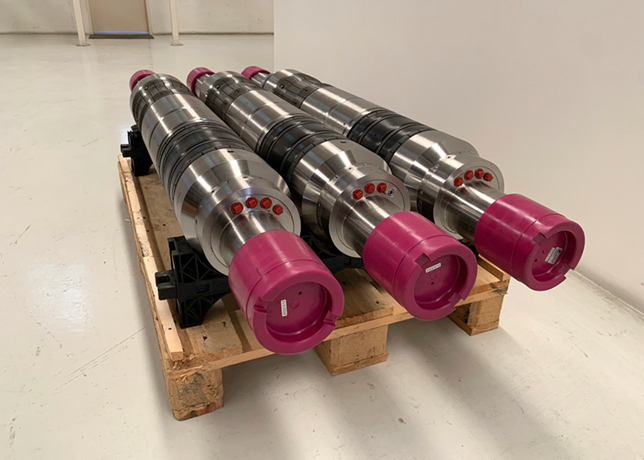
Advanced EZR and V0-R designs enable easy retrieval, gas-tight integrity, and rapid custom supply, slashing workover costs while boosting run times and well performance in evolving ESP completions
In the energy industry, it is understood that the number of wells being completed with an electric submersible pump (ESP) packer in the Middle East is significant, with more than 1,000 wells annually.
These are predominantly systems that run in 9-5/8-inch casing with 3-1/2-inch or 4-1/2-inch tubulars, requiring a 5,000 psi, or less, rating and utilising standard L80 or 13 per cent Cr materials.
Thus, they can be considered a standard ESP completion.
The ESP completion contracting model is typically turnkey, where the original equipment manufacturer (OEM) ESP provider packages everything up to the end user, utilising a variety of critical third-party equipment suppliers, who provide components, such as penetrators, cables, and ESP production packers.
A key performance metric is the ESP run time, which, on average, is three to four years. At this point, the supplier is responsible for working over the well with a new ESP completion.
The longer the ESP completion can operate, the better it is for both the end user and the ESP provider.
The converse is true; therefore, ESP production packer performance (well integrity) is critical to mitigate premature workovers and the associated loss of production and cost.
ESP completion designs and applications have been evolving for several years, and this has led to the need for a range of ESP production packers solutions with different attributes and higher performance.
Companies like Viking Completion Technology (Viking) are often at the forefront of this progression due to the need to react, design, and validate equipment to suit evolving requirements.
IMPROVED ESP WORKOVERS WITH ADVANCED PACKER DESIGN
In many standard ESP completions, working over the well cannot be performed as planned because the packer cannot be released by pulling the completion.
This is more common in wells that require packer performance to be at the higher end of the working envelope.
As in these applications, the packers’ release value is very high.
The physics involved affects all suppliers, of which there are many in terms of packers for standard ESP applications.
In simple terms, the amount of force required to pull out a standard ESP packer can easily exceed what the tubing string is capable of, taking into account string weight and friction arising from various factors.
In the Middle East, wells using standard ESP production packers regularly have to be retrieved by cutting and fishing, rather than the intended pulling.
Viking first addressed this problem five years ago with the introduction of its Novel EZR ESP packer, which can have a significantly lower release value vs a standard design.
As the issue being solved relates to the end of the ESP completion lifecycle, it took around three to four years (the ESP runtime) to establish real-world data for releasing the packer successfully, which operationally validated the EZR ESP packer design.
To date, 100 per cent of ESP completions with the improved EZR ESP packer design have been retrieved successfully, leading to a significant shift in its utilisation.
The time and cost savings to both end users and the ESP supplier are significant, and the loss of production during planned workovers is reduced to a minimum.
MANAGING GAS BUILD UP (SAP) WITH API 11D1 V0 PRODUCTION PACKERS
The majority of ESP completions are for oil wells, and until more recent times, no API 11D1 Packer validation was required.
This then evolved to an API 11D1 V3 requirement (the highest level for fluids), becoming more common.
Many wells experience gas build-up below the packer, which manifests itself in a loss of well integrity and sustained annulus pressure (SAP).
This is a result of a leak over the packer’s element, which has not been designed or proven for use with gas.
This has led to an increase in the requirement for API 11D1 V0 / V0-R validation (the highest level for gas) of ESP packers.
The need to revalidate packers to a new level means that ESP providers, including major service providers who supply packers themselves, are increasingly working with companies like Viking to reduce the supply time from months or years to weeks.
MAINTAINING WELL INTEGRITY OF ESP PACKER BYPASS
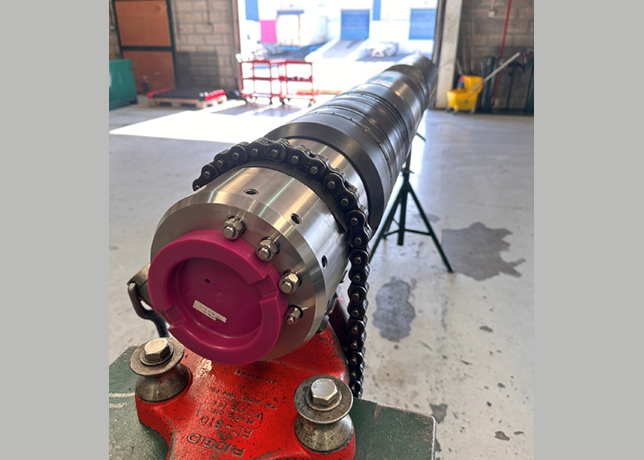 |
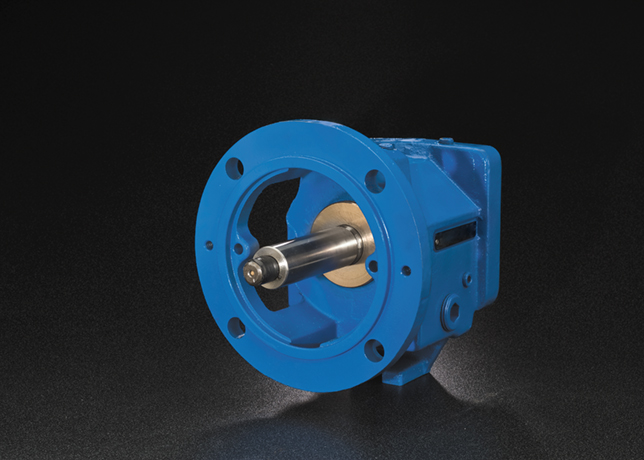
Viking’s 10,000-psi API 11D1 V0-R triple leg cut to release feed in flow wetted inconel 925 |
The packer’s element and elastomers are only part of the story.
In an ESP packer, regardless of type, there are numerous requirements for bypass of cables and lines, all of which are potential leak paths.
The ESP penetrator requires bypass through the packer, and this introduces adapters with connections, through which gas can leak.
Historically, these connections have not been chosen for performance with gas, but where the packer supplier is able to react, this issue can be mitigated by incorporating premium threads and by performing additional testing of the connections.
It is also common for bypass ports for chemical injection, permanent gauges, and other control line-operated equipment to be required.
Historically, the control line was sealed into the packer using an NPT x control line type fitting, which is not testable at the rig location where they are made up.
Viking has addressed this by providing the option to supply packers with a proprietary 10,000 psi gas validated Vikolok Testable Fitting that is simple to install and test on the rig location using commonly available make-up and test equipment.
GOING BEYOND 5KPSI WITH CUT TO RELEASE SOLUTIONS
All the previous information is still within the conventional ESP application space. Another growing concern for the ESP market is the requirement for API 11D1 V0 validated packers with a working pressure rating of 10,000 psi.
Viking has provided packers in this space in multiple Middle East countries.
Higher-pressure ESP systems like this are relatively new but are increasing in demand as the environment in which these systems are applied continues to evolve.
The physics involved in pull-to-release packers necessitate a different solution, which Viking has addressed with the use of cut-to-release packers.
These are increasingly common in naturally produced wells, but the required designs to accommodate ESP Completions are not.
As the requirements venture further from the standard, SME suppliers are critical in the supply chain thanks to their ability to design, validate, and supply equipment in a matter of weeks, meeting overall well planning requirements.
For many major service companies, the volumes are too low to justify doing the design and validation work, and even if they did, it could take years to complete.
The variation of bypass requirements, tubing connections, and materials within the ESP packer market is vast, more so than any other type of application.
Accommodating vast potential options in niche ESP applications is an area that makes it much more suited to a dynamic and specialised packer provider.
LITHIUM EXTRACTION IN 10KPSI RATED WELL COMPLETIONS
Taking things a step further to the pinnacle of ESP completions are very new applications, such as producing water with an ESP for the purposes of energy transition applications, including lithium extraction and gas compression.
Viking was approached in Q3 2025 to provide a suitable packer design for one of these applications by a major Middle East operator.
Having already supplied a variety of packers for the applications, this was a reasonably straightforward step as the application required a 9-7/8-inch 68.4# x 4-1/2-inch 10,000-psi API 11D1 V0-rated packer with testable bypass fittings made entirely out of Inconel 925.
Viking takes a building block approach to its packer design, so incorporating all the required features was a simple process.
Supplying equipment in CRA metallurgy is also very commonplace for Viking, and as such, the process from initial specification discussion to firming up the order, then supplying the equipment, took less than four months, aligning with the operational timing of the end user.
The ESP completion business is comprised of several moving parts, and many of the OEM ESP suppliers are not themselves in the packer design and manufacture business.
Even the major service providers segment their businesses between product lines, that is, artificial lift and completions, and don’t always package the two together.
This is why companies like Viking are a critical facet within the ESP completion supply chain.
The ESP provider can focus on the wider picture to support their customer, the end user, while the packer supplier provides a fit-for-purpose solution.
The wide variation of packer design and specification required to service this market necessitates the involvement of SME’s who can adapt and deliver to the evolving demands of the ESP business.
Well integrity is primarily linked to packer performance and therefore underpins the operational performance and life cycle of these wells.
This, therefore, plays a key role in maximising the financial performance of the ESP business, where the cost of failure is often borne by the ESP turnkey supplier.
As the limits continue to be pushed and higher performance and reliable quality are increasingly important, suppliers like Viking Completion Technology will continue playing a role in the ESP completion supply chain and the success of the ESP business.