


























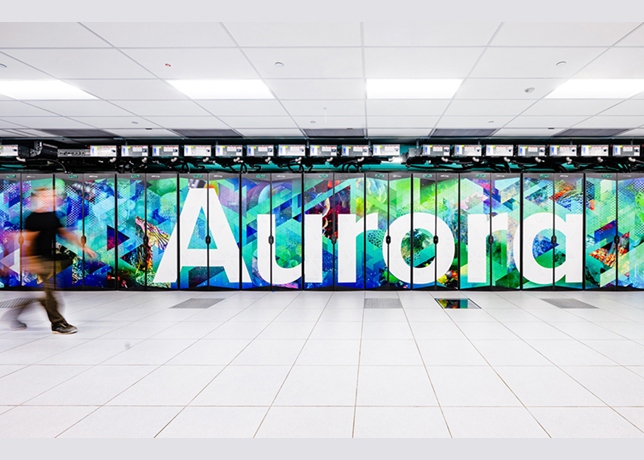
To harness fusion energy, which requires precise control over the unstable reactions that power stars, scientists are turning to the Aurora supercomputer at the US Department of Energy’s Argonne National Laboratory.
Opened to global researchers in 2025, Aurora is one of the world’s fastest supercomputers, performing a quintillion calculations per second.
Its exascale power enables simulations crucial for fusion energy, quantum computing, and medical research.
Fusion relies on plasma confined in tokamaks, doughnut-shaped reactors where nuclei combine to release energy.
While theoretically safe and fueled by water-derived deuterium, the process is fragile, prone to disruptions that can extinguish reactions or damage reactors.
Researchers use Aurora to model plasma behaviour under extreme conditions and employ artificial intelligence (AI) to predict disruptions in milliseconds, training algorithms on historical data from facilities like DIII-D and the Joint European Torus.
Scientists such as William Tang and Choongseok Chang focus on edge plasma dynamics, tungsten impurities, and divertor interactions to optimise future ITER operations in France.
Aurora’s immense speed and memory allow high-fidelity simulations that previously took days.
The facility also supports private fusion companies, enhancing their device design and plasma control strategies.
While supercomputers accelerate discovery, experts emphasise that skilled scientists remain essential to unlocking fusion energy’s promise.