







































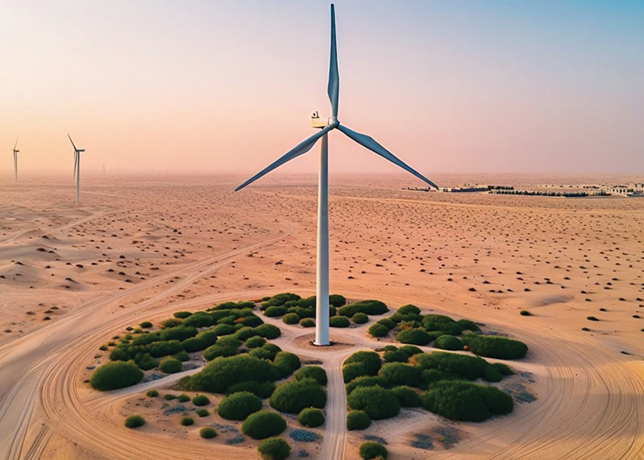
 Image: WINDCOLORS/Shutterstock
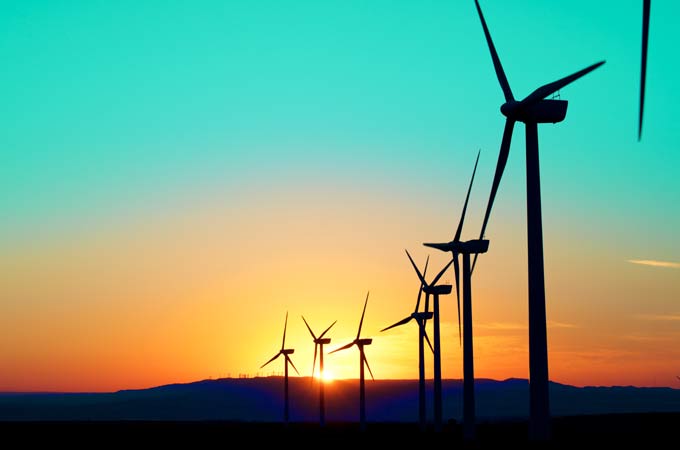
Global wind capacity reached 1,299 GW by the end of 2025, with 138 countries now powering their economies with wind power, says GWEC's 2026 Global Wind Report.
The Asian market, led by China and India, commissioned 131 GW of new capacity (80% of the global total), while Europe, North America, Africa and the Middle East defied expectations to install significant volumes of new wind projects.
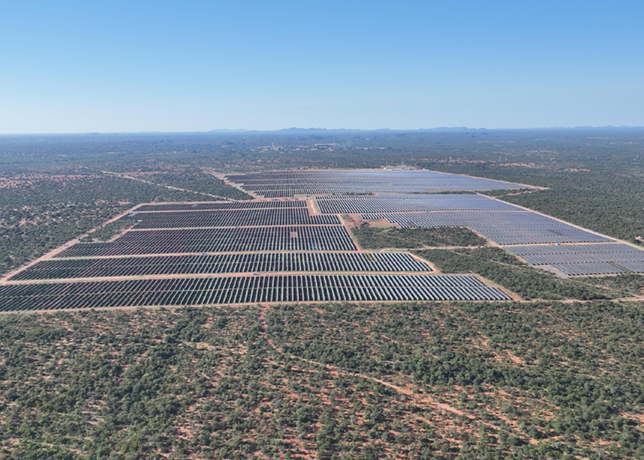
Africa & the Middle East saw another record year for installations in 2025, primarily driven by renewed growth in South Africa and unprecedented growth in Saudi Arabia. The 1,500 MW Dawadmi windfarm in Saudi Arabia set a new world record in 2025 for the lowest-cost wind project at just $1.338/kWh. With new manufacturing facilities planned in Saudi Arabia and Oman, the Middle East is now expected to add more than 18 GW of onshore wind capacity between 2026 and 2030.
“The steep increase we have seen in global wind installations sets a new benchmark for an industry which is rapidly accelerating and responding to heightened demand for homegrown, affordable and resilient renewable energy,” said Ben Backwell, CEO of GWEC.
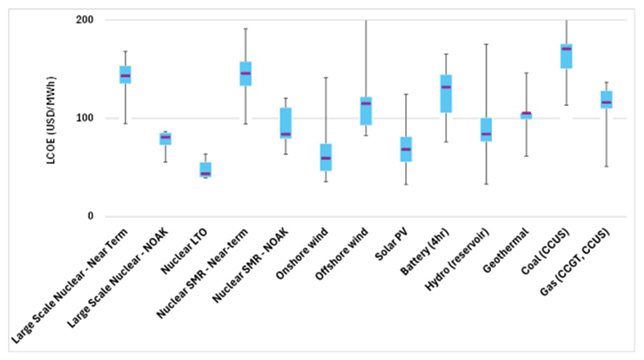
“At a time when skyrocketing oil and gas prices and supply shocks are once again causing disruption to economies around the world, the wind sector has demonstrated its ability to scale at speed. Accelerated growth led by Asia is enabling the rapid transition of fast-growing energy markets to electro-state economies, and showing that, where wind is built at scale, it can successfully compete with all alternatives, from coal to nuclear,” he said.
The Global Wind Report reveals that the two largest markets in Asia, China and India together added more than 126 GW in 2025. China alone added more than 120 GW, while India almost doubled annual installations to build a record 6.3 GW of new capacity in 2025.
In Europe, total installed wind power capacity passed the 300 GW threshold. The continent installed its second highest volume of new wind capacity, at 19.1 GW (up 16% on the previous year), driven in part by strong growth in Germany and Türkiye. The EU-27 installed 15.1 GW (up 17%) – although this is still lower than the annual average growth needed for the EU to meet its 2030 energy and climate targets.
In the United States, annual onshore wind installations increased by almost 7 GW – demonstrating the strength of an industry underpinned by strong economic fundamentals.
"Even as the wind industry growth is accelerating, there is no escaping that global growth remains uneven, and the world is still not on track to triple renewables by 2030," said Backwell.
"Bureaucratic red tape and slow roll-out of grids is stopping badly needed projects from being built in many areas of the world. However, by acting decisively to address the blockages, policymakers can quickly access a huge pipeline of ready to invest projects.”
Last month, GWEC published a Wind Action Plan to Break the Cycle of Energy Crises setting out emergency policy measures for governments to accelerate wind energy deployment and strengthen their energy resilience. The plan calls on countries to fast-track permitting, address grid blockers, mobilise finance, expand electrification, and scale up supply chains.
“A 40% phenomenal growth across 138 countries demonstrates the accelerating role of wind in the global energy transition. The top five markets – China, the United States, India, Germany and Brazil – accounted for 86% of new capacity additions in 2025 reflecting a powerful convergence of policy alignment, scale and investment," said Girish Tanti, Vice Chairman of Suzlon Group and Vice Chair of GWEC.
"These markets also represent nearly 75% of the world’s total installed wind capacity, reinforcing their leadership in shaping the future of the sector. With this sustained momentum, we are firmly on track to potentially surpass wind’s global potential of 2 TW by 2030.”
The Asia Pacific region further consolidated its leading position in wind power development, with an 80% global market share. China added a record-breaking 120.5 GW of new wind capacity in 2025. Such explosive growth signals China’s long-term commitment to its ‘30-60’ targets of peak emissions by 2030 and carbon neutrality by 2060.
India, which has pledged to scale non-fossil fuel capacity to 500 GW by 2030, added the third highest wind capacity last year, just behind the USA and overtaking Germany. India’s record growth saw annual additions rise from 3.4 GW in 2024 to 6.3 GW in 2025: a staggering 86% increase. -TradeArabia News Service