






























Robust revenues, global fleet expansion, and AI-enabled operations reinforce the company’s ability to support energy flows amid increasingly complex and volatile market conditions worldwide
ADNOC Logistics & Services (ADNOC L&S) delivered a year of accelerated growth in 2025 while reinforcing the operational resilience of its integrated maritime logistics platform, positioning the business to sustain performance amid increasingly complex global market conditions.
Revenue rose 41 per cent year-on-year to $5.02 billion, with EBITDA increasing 32 per cent to $1.51 billion at a margin of 30 per cent, and net profit reaching $863 million.
The scale of this performance reflects not only expansion across core segments, but also the strengthening of a model built around reliability, utilisation efficiency, and diversified operations.
According to the company’s 2025 annual report, this performance is anchored by a high proportion of long-term contracted revenues, with more than 60 per cent of income secured under multi-year agreements and approximately $25 billion in forward-contracted revenue providing sustained visibility over future earnings.
A central development in 2025 was the integration of Navig8, in which ADNOC L&S acquired an 80 per cent stake, adding 32 tankers and significantly extending its global operational footprint. The acquisition expanded the company’s presence to offices in 19 cities and strengthened its commercial capabilities across shipping pools, bunkering, and vessel management.
As a result, ADNOC L&S now operates and charters more than 600 vessels, reinforcing its position as the second-largest integrated maritime logistics provider in the energy sector by market capitalisation.
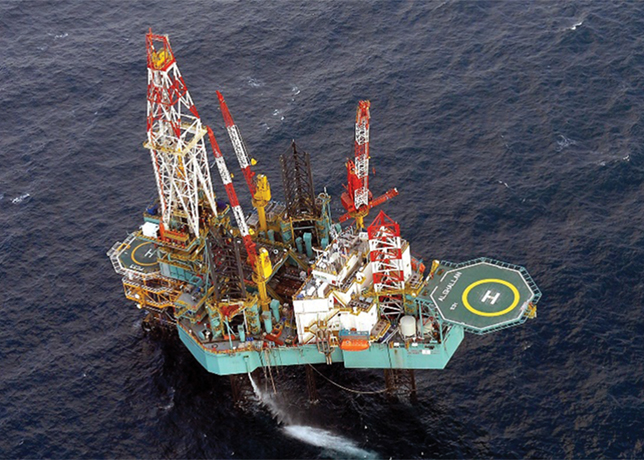
Segmental performance reflected both scale and diversification. Shipping revenues increased by 122 per cent year-on-year to $2.1 billion, driven by fleet expansion and the integration of Navig8’s assets and systems.
Integrated Logistics generated $2.5 billion in revenue, up 11 per cent, supported by higher offshore activity, improved vessel utilisation, and the delivery of major engineering, procurement and construction projects.
The Services segment contributed $362 million, an increase of 16 per cent, reflecting higher port throughput and the deepening of long-term partnerships.
BUILDING RESILIENCE ACROSS A GLOBAL ENERGY LOGISTICS NETWORK
ADNOC L&S’s operations now extend across more than 50 countries, serving over 100 energy sector customers through a fully integrated model spanning shipping, offshore logistics, and onshore services.
The company’s global expansion is closely aligned with ADNOC’s broader growth trajectory, with logistics capacity scaled to support increased production, trading activity, and international market engagement.
Investments in new-build vessels, including LNG carriers and very large ethane carriers, are designed to enhance fleet efficiency while expanding capacity in key transport segments.
These additions are complemented by long-term infrastructure commitments that extend the company’s role beyond transportation into integrated industrial logistics.
Among these are a 50-year agreement to build, own and operate a dedicated chemicals port at the Ta’ziz Industrial Chemicals Zone in Al Ruwais, and a 15-year partnership with Borouge to support the expansion of petrochemical exports.
OPERATIONAL AGILITY THROUGH TECHNOLOGY & EFFICIENCY GAINS
Digitalisation and AI-enabled systems played an increasingly central role in enhancing operational performance and responsiveness across ADNOC L&S’s activities.
The deployment of the Smart Port solution across petroleum port operations reduced service sourcing time from three hours to 45 seconds, while increasing jetty utilisation by 20 per cent and improving vessel turnaround times.
These efficiencies support faster coordination of marine services and more effective use of port infrastructure.
Further enhancements to the Integrated Logistics Management System introduced predictive cargo routing, AI-driven vessel optimisation, and redesigned container configurations that increased cargo capacity by up to 40 per cent.
Across the year, the company handled more than 2.1 million tonnes of cargo and facilitated nearly 255,000 passenger transfers, reflecting the scale of logistics activity supported by these systems.
The integration of Navig8 has also enabled the deployment of advanced analytics platforms such as ShipWatch, which has been rolled out across more than 20 tankers.
By aggregating and analysing real-time vessel data, the system supports improved voyage execution, fuel efficiency, and emissions tracking, contributing to both operational performance and environmental management.
Decarbonisation progress remained a key component of the company’s operational strategy, with a reported 58 per cent reduction in carbon intensity compared to the 2019 baseline.
This was supported by investments in energy-efficient vessels and optimisation technologies across the fleet.
At the same time, safety performance reached industry-leading levels, with a Total Recordable Injury Rate of 0.09 per million manhours, achieved alongside a 19 per cent increase in total exposure hours.
Efficiency initiatives also contributed to overall performance, with the Value Efficiency Initiative delivering $119 million in 2025, exceeding its target and prompting an increase in expected annual contributions to an average of $90 million through 2030.
These gains were driven by cost optimisation, operational integration, and targeted improvements in asset management.
Workforce capacity expanded in line with operational growth, with more than 12,000 employees and contractors supporting global activities.
Investments in training, digital capability development, and organisational integration were aligned with the deployment of AI-enabled systems and the company’s broader strategy of building a scalable, integrated logistics platform.
The combination of contracted revenue visibility, diversified global operations, digital optimisation, and financial discipline reinforces ADNOC L&S’s capacity to sustain performance and maintain operational continuity across a complex and evolving energy logistics landscape.