















By Abdulaziz Khattak
More than 30 engineers, operations managers, and technology leaders from across the GCC brought with them a question that is reshaping boardrooms from Riyadh to Abu Dhabi: What happens when a flowmeter becomes an entry point for a cyberattack?
The experts, who were from Saudi Chevron, MEC Globe, TMS Oman, Saipem, and KROHNE, were participating in KROHNE Middle East’s cybersecurity webinar, the opening instalment of the company’s newly - launched Resilient Technology Webinar Programme.
The engagement was striking not just in its breadth, but in its depth: Q&A exchanges extended well into the session, with professionals from Saudi Chevron and MEC Globe pressing for detail on IEC 62443 compliance pathways, vendor assessment frameworks, and the practical steps for hardening OT environments against an escalating threat landscape.
That engagement reflects a broader shift in how GCC operators are thinking about their instrumentation estate.
Flowmeters, level sensors, and pressure transmitters — the devices that have quietly governed process control for decades — are now connected nodes in a digital architecture that extends from the well-head to the enterprise network; and their vulnerability is no longer theoretical.
INNOVATION AS THE ENGINE OF REGIONAL RESILIENCE
Jay Gadhavi, General Manager of KROHNE Middle East, has spent the past several years watching the region’s industrial priorities crystallise around a single concept: Resilience.
Not the resilience of the past — redundant pipes and manual failsafes — but a new, intelligent resilience built from connected measurement, predictive analytics, and AI-enabled decision-making.
“AI-enabled analytics, digitisation, and smart connectivity are transforming how operators extract value from every measurement point,” Gadhavi tells OGN.
His perspective draws on a region that is simultaneously running the world’s largest hydrocarbon operations and building from scratch the digital infrastructure to power its AI ambitions.
These are not separate agendas.
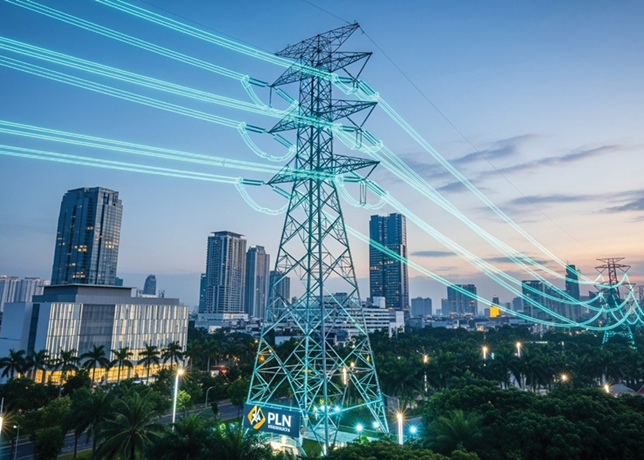
Smart connectivity is transforming how value is extracted from measurement points
The same measurement intelligence that improves hydrocarbon recovery also feeds the digital twins that will underpin the next generation of industrial assets.
The flow computer that monitors a desalination plant feeds the same data architecture as the AI platform optimising a hyperscale data centre cooling loop.
For Gadhavi, this convergence is not incidental. It is the defining opportunity for companies like KROHNE that sit at the intersection of physical measurement and digital intelligence.
“AI, digitisation, smart connectivity, and efficiency are no longer discrete technology themes,” the company’s press release states.
“They are converging into the operating logic of the region’s next generation of industrial assets.”
Pipeline security, hydrogen export infrastructure, data centre buildout, water stewardship, and the digitalisation of custody transfer is each a national priority, and each is a domain where measurement technology is no longer peripheral.
The aforementioned cybersecurity session made that case in concrete terms.
Participants left with a clearer understanding of where IEC 62443 sits in the broader OT security architecture, what a vendor’s cybersecurity posture should look like at the point of procurement, and how the region’s regulatory frameworks, such as UAE NESA and Saudi NCA, are shaping the requirements that operators will soon need to meet as standard.