





















By Abdulaziz Khattak
The pace at which the world’s largest energy companies are committing to artificial intelligence (AI) and digital transformation has shifted from deliberate to urgent.
Across the Gulf and beyond, national oil companies (NOCs), integrated majors, and energy technology specialists are forging partnerships with global IT and cloud providers, not as exploratory pilots, but as core strategic commitments designed to reshape how energy assets are planned, operated, and optimised at industrial scale.
Nowhere is this acceleration more visible than in Saudi Arabia. In February 2026, Aramco signed a non-binding memorandum of understanding (MoU) with Microsoft to explore a series of digital initiatives targeting industrial AI adoption, digital infrastructure, and workforce development.
The agreement encompasses four focus areas: Digital sovereignty and data residency, operational efficiency, an industry alliance framework to broaden AI adoption across the Kingdom’s industrial value chain, and co-innovation of industrial AI intellectual property.
The MoU includes programmes to build Saudi capabilities in AI engineering, cybersecurity, data governance, and product management.
This is an explicit acknowledgement that technology partnerships must translate into domestic human capital, not merely imported solutions.
Microsoft’s Brad Smith framed the collaboration as moving industrial AI from pilot status into core operations, with a particular emphasis on sovereign-ready infrastructure aligned with Saudi Arabia’s Vision 2030 objectives.
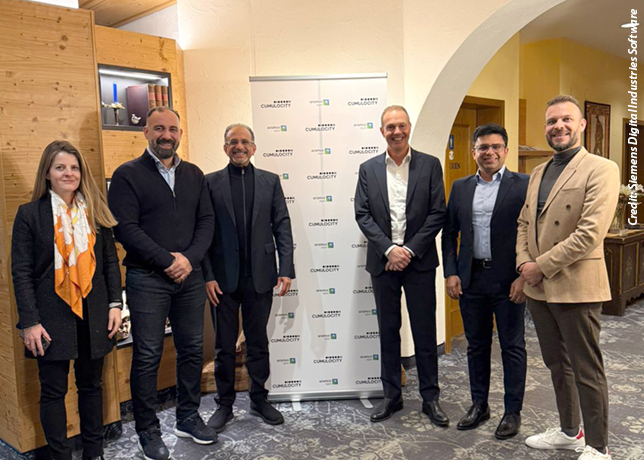
Aramco Digital, the technology subsidiary of Aramco, has simultaneously operationalised a separate strategic agreement with Cumulocity, a global industrial AIoT platform provider, to jointly deliver industrial AI-of-Things solutions across the GCC.
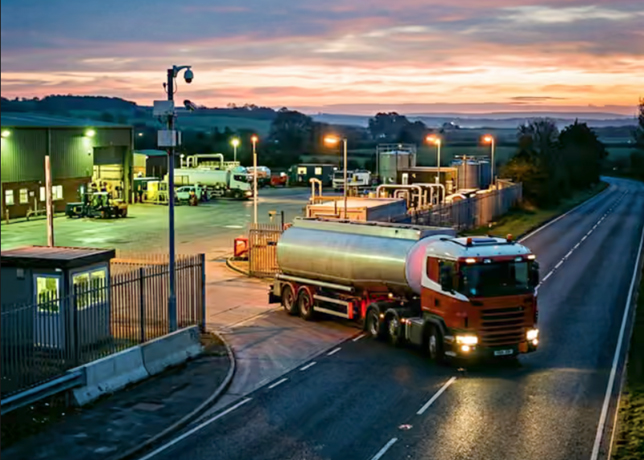
The first deployment sees Aramco Digital implementing Cumulocity as the core platform for an advanced fleet management programme supporting Aramco’s operations in the Kingdom, delivering real-time visibility and intelligent management of connected vehicles and industrial assets.
The partnership is designed to accelerate enterprise-scale digitisation across asset-intensive sectors including transportation, logistics, energy, and infrastructure, with Aramco Digital providing localised integration and lifecycle support capabilities.
CONVERGENCE OF ENERGY & DIGITAL STRATEGY
In the neighbouring state of the UAE, the Abu Dhabi National Oil Company (ADNOC) has pursued a parallel trajectory.
Under a strategic agreement announced in November 2025, ADNOC, Masdar, XRG, and Microsoft committed to co-developing and deploying AI agents across ADNOC’s value chain to drive autonomous operations and reduce emissions, while simultaneously delivering clean energy solutions in support of Microsoft’s global AI and data centre expansion.
ADNOC’s digital maturity is already considerable: The company was the first energy firm to roll out generative AI enterprise-wide in November 2023 using Microsoft Copilot, and has since recorded over 70,000 hours per month in productivity gains, with AI utilisation rates exceeding 90 per cent across more than 40,000 trained employees.
The expanded agreement introduces Masdar and XRG as energy infrastructure providers to support Microsoft’s data centre growth, establishing a reciprocal model in which energy companies both consume and supply the resources required by the AI era.
The logic driving these alliances is grounded in operational and financial necessity as much as strategic ambition.
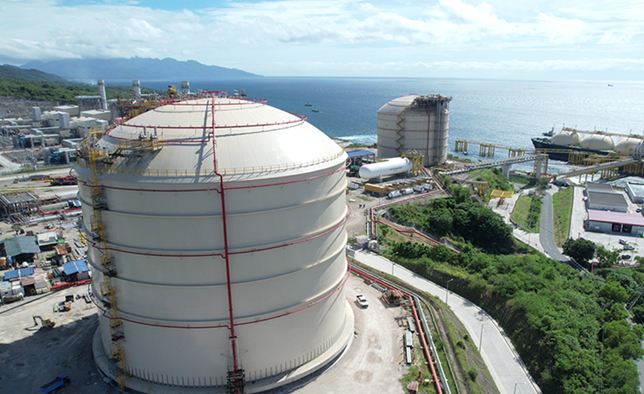
Industrial operators across the region manage vast, geographically distributed asset bases, such as fleets, pipelines, refineries and power systems that generate enormous volumes of data, which legacy systems are ill-equipped to process in real time.
Cloud-native platforms, AI-driven analytics, and digital twins provide the architecture to convert that data into operational intelligence, reducing downtime, extending asset life, and improving decision-making across complex value chains.
DIGITAL TWINS AND INDUSTRIAL AI RESHAPE INFRASTRUCTURE
The transformation traverses across the energy sector. Siemens and NVIDIA this year announced a significant expansion of their strategic partnership aimed at building what the companies term an Industrial AI Operating System.
This includes a full-stack integration of NVIDIA’s accelerated computing infrastructure with Siemens’ industrial software, hardware, and data assets.
The collaboration targets the entire industrial lifecycle, from electronic design automation to adaptive manufacturing and supply chain management.
A concrete output is the planned deployment of the world’s first fully AI-driven adaptive manufacturing site, beginning in 2026 at the Siemens Electronics Factory in Erlangen, Germany, with the Siemens Digital Twin Composer.
Due on the Xcelerator Marketplace in mid-2026, the composer enables physics-accurate virtual modelling of products, processes, and plants in real time.
PepsiCo’s early deployment of the platform has already demonstrated a 20 per cent increase in throughput on initial rollout.
In grid infrastructure, both Schneider Electric and GE Vernova have advanced AI-driven modernisation frameworks for utilities.
Schneider Electric’s One Digital Grid Platform, launched in November 2025 on Microsoft Azure, integrates planning, operations, and asset management with AI-enabled capabilities including real-time outage restoration estimation and automated network model tuning.
A Forrester Consulting study of utilities using the platform’s core ADMS component recorded a 184 per cent return on investment, $62 million in business benefits, and a 16-month payback period.
GE Vernova’s GridOS partner ecosystem, which includes Accenture, is addressing the parallel challenge of integrating exponentially growing renewable capacity into a grid that, according to Schneider Electric’s Sustainability Research Institute, must add between 1,000 and 2,000 terawatt hours (TWh) of electricity per decade to meet demand from AI computing, manufacturing, and electrification alone.
Baker Hughes, meanwhile, announced in March 2026 a collaboration with Google Cloud to develop AI-enabled power optimisation and sustainability solutions specifically for the data centre sector, combining the company’s turbomachinery and power systems expertise with Google Cloud’s AI analytics to address the energy intensity of global AI infrastructure.