
























Namibia expands energy investment
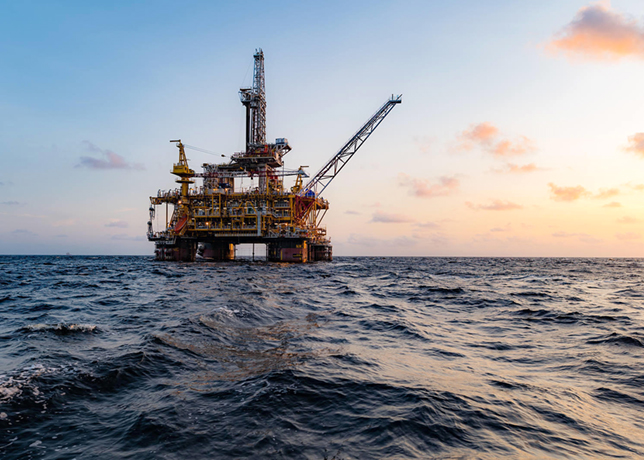
Sintana Energy’s planned secondary listing on the Namibia Securities Exchange signals growing financial maturity in Namibia’s oil and gas sector.
It aims to give local investors large-scale access to offshore assets like PEL 83 and PEL 87.
As projects near final investment decisions, capital is shifting toward domestic market development and local ownership.
Backed by the African Energy Chamber, the move aligns with efforts to expand participation, strengthen financing institutions, and integrate Namibians into the upstream value chain while supporting long-term, inclusive sector growth.
Small-scale mining worth $8.5trn
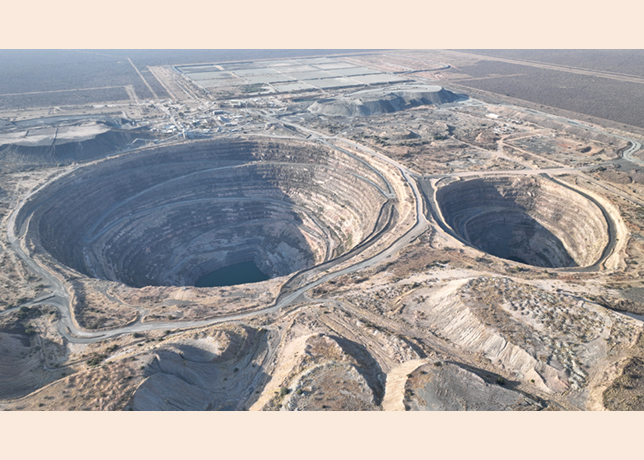
Africa is accelerating the formalisation of artisanal and small-scale mining to unlock an estimated $8.5 trillion in mineral resources and expand inclusive economic growth.
Governments are integrating ASM operators into formal supply chains through regulation, financing and technology-driven programmes, particularly in critical minerals such as cobalt, copper and gold.
Congo and Zambia are introducing legal frameworks, funding mechanisms and partnerships to support small miners, while Ghana is boosting gold production through digital tools and cooperative schemes.
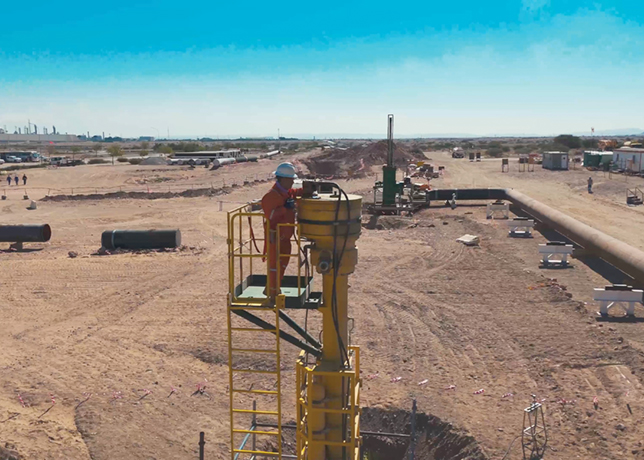
Assala starts Grand N’Gongui production
Assala Gabon has begun production from the Grand N’Gongui field, marking its shift from appraisal to development after decades of evaluation.
The project, inaugurated with government and industry stakeholders present, follows drilling in 2022 and completion of appraisal work in 2025.
A phased 60-well development plan is underway, targeting peak output of over 10,000 barrels per day (bpd) from an estimated 350 MMstb of oil in place.
Delivered within 12 months despite logistical and supply chain challenges, the project reflects advanced engineering execution and supports Gabon’s broader energy development goals.
Ghana balances oil-green growth
Ghana is advancing a dual energy strategy focused on boosting offshore oil production while accelerating its clean energy transition.
The government has secured a $3.5 billion investment to revitalise key offshore fields and increase exploration activity under recent regulatory reforms.
At the same time, renewable energy deployment is expanding, including 200 MW of battery storage to stabilise the grid and support wider clean energy integration.
Initiatives such as rural electrification programmes and renewable scaling efforts aim to improve access. Ghana is also exploring nuclear power, with early site assessments completed as part of long-term baseload diversification plans.
Brazil-Angola energy ties
Petrobras is strengthening its renewed engagement with Angola’s oil and gas sector, reflecting growing South Atlantic cooperation in deepwater exploration.
The company recently signed agreements with Sonangol and Angola’s upstream regulator to advance joint studies, research and exploration of offshore blocks.
These partnerships mark a broader shift toward South–South energy collaboration, supported by wider government-to-government cooperation between Brazil and Angola on energy planning and capacity building.
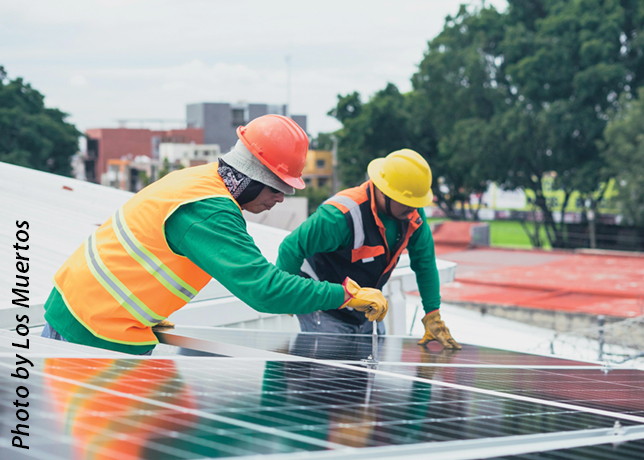
AFC funds solar project
Africa Finance Corporation (AFC) reached financial close and disbursed €43 million ($50 million) under €65 million dual-currency euros and CFA francs (EUR/XOF) green bond, first project finance green bond in Côte d’Ivoire and West African Economic and Monetary Union.
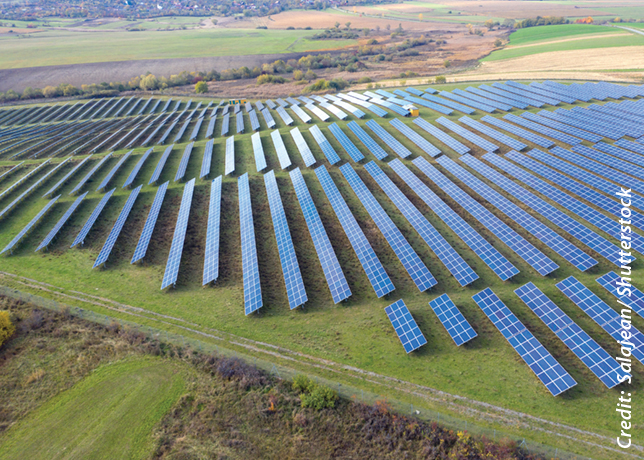
It will finance a 66-MW solar plant in Korhogo, operational 2027, set to be Côte d’Ivoire’s largest solar facility.
AFC acted as lead underwriter and co-arranger structuring an African-led funding model mobilising regional capital into infrastructure.
The project avoids 72,000 tonnes carbon yearly, powers 100,000 households, and supports Côte d’Ivoire’s 45 per cent renewables target by 2030, nationally significant.
Gabon attracts energy investors
Gabon is becoming a major upstream investment hub, with strong interest in deepwater exploration, new discoveries, and production.
In 2025, ExxonMobil and bp signed MoUs for offshore blocks, ahead of 2026 licensing rounds covering most unexplored acreage.
Recent finds, like Assala’s Magoga-A well, and seismic work by ReconAfrica highlight exploration potential.
Meanwhile, Vaalco’s Etame drilling campaign is boosting output.
With existing infrastructure lowering costs and active government outreach, Gabon offers attractive opportunities for both frontier and near-field energy investors.
Mauritius grid expansion
Mauritius is advancing its energy transition with 405 MW of new capacity planned over three years, announced by Minister Patrick Gervais Assirvaden.
Projects include solar, wind, floating PV, battery storage and home solar systems, alongside private sector hybrids.
The initiative aims to reduce energy crisis risks, boost renewables and strengthen grid stability.
Africa’s clean energy shift
African energy markets are building diversified, investment-ready renewable pipelines. Senegal advances hybrid solar-storage projects and offshore wind potential under its €2.5-billion ($3 billion) transition plan.
The DRC scales distributed solar and mini-grids to close major access gaps.
Djibouti expands solar and geothermal, Zambia accelerates solar after hydropower shortfalls, while Guinea develops regional hydropower and large-scale solar capacity.
Senegal’s hydrocarbon growth
Senegal is strengthening its hydrocarbons framework with 2026 local content reforms to boost national value retention.
Output from Sangomar and GTA is rising, while new exploration and Yakaar-Teranga development target domestic gas use.
Plans include a 250-MW gas plant and solar standards, aiming to cut costs, improve energy security and support industrial growth. n