
























By Abdulaziz Khattak
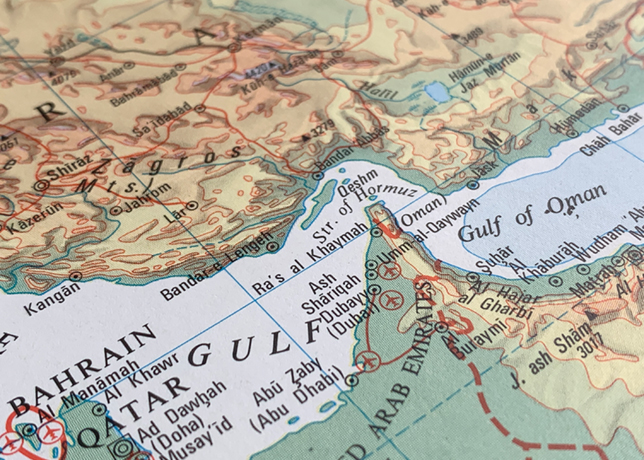
The Middle East is positioning itself at the intersection of two of the most capital-intensive structural shifts in modern economic history: The global AI infrastructure buildout and the regional diversification of sovereign energy economies.
This is in the backdrop of a burgeoning annual data centre investment worldwide that has surpassed $770 billion, and the race to secure compute capacity intensifies across every major market.
Rystad Energy’s Data Center Report 2026 places the global data centre pipeline at 627 gigawatts (GW) across 15,232 facilities above one megawatt (MW), with 64 per cent of announced capacity targeting artificial intelligence (AI) and high-performance computing applications.
On a risked basis, global installed capacity is forecast to reach 262 GW by 2030, consuming close to 1,300 terawatt-hours (TWh) of power annually, equivalent to 4.5 per cent of current world power demand.
Within that global picture, the Middle East is emerging as one of the fastest-growing regional markets, backed by sovereign capital, accelerated permitting frameworks, and structural energy advantages that increasingly differentiate it from constrained markets in Europe and North America.
Risked installed capacity across the Middle East is forecast to grow from approximately 3 GW in 2025 to around 6 GW by 2030, with the unrisked pipeline pointing to meaningful upside beyond that base case.
Growth is concentrated in two markets, including the UAE and Saudi Arabia, each benefiting from government-backed digital strategies, substantial fiscal capacity, and national development programmes that are compressing permitting timelines in ways that counterparts in Europe and the US have struggled to replicate.
Saudi Vision 2030 and the UAE’s National Strategy for Advanced Technology are the primary policy frameworks driving this acceleration, providing both the regulatory architecture and the sovereign investment appetite to underpin hyperscale commitments at a pace that grid-constrained Western markets cannot currently match.
STRUCTURAL ADVANTAGES & HYPERSCALE OPPORTUNITY
The Middle East’s appeal to hyperscale operators rests on a combination of factors that are becoming increasingly scarce in mature data centre markets.
Abundant and low-cost energy supply, available land at scale, and shorter grid connection timelines collectively address the three constraints that are most acutely limiting deployment in Northern Virginia, Frankfurt, London, and other established hubs.
In those markets, interconnection queue timelines in the US have more than doubled since 2005 to between three and six years today, and grid capacity for new projects is largely committed through 2030.
European power markets are forecast to fail reliability standards in 68 per cent of cases by 2028 under current assessments.
Against that backdrop, the Middle East’s structural proposition is increasingly compelling for operators seeking to expand compute capacity within commercially viable timelines.
The operator landscape across the region reflects this dynamic.
National development programmes are deploying sovereign capital directly into domestic AI infrastructure, with the UAE and Saudi Arabia leading commitments that are designed not merely to attract foreign hyperscale investment but to build indigenous digital capacity aligned with broader economic diversification objectives.
This dual mandate, serving both international cloud demand and domestic AI ambition, gives Middle Eastern data centre markets a strategic depth that purely commercial markets lack, and provides a degree of demand visibility that supports long-term infrastructure investment at scale.
Oilfield service companies with established regional networks are among the early movers capitalising on this convergence.
Baker Hughes has secured an agreement with Datavolt covering data centre development in Saudi Arabia, leveraging its power generation expertise and existing infrastructure relationships in the Kingdom.
Halliburton is pursuing data centre development across the Middle East through VoltaGrid, deploying its established operational networks in a market where its energy sector presence provides a material competitive advantage over technology-sector entrants without regional infrastructure experience.
These moves signal a broader recognition within the energy services industry that the data centre buildout represents a structural demand opportunity, not a cyclical one.
POWER PROCUREMENT, COOLING CONSTRAINTS & EMISSIONS PRESSURES
Despite its structural advantages, the Middle East faces two material near-term constraints that require active management from both operators and policymakers.
Extreme ambient temperatures across the region materially increase cooling costs relative to temperate markets, with thermal management representing the largest individual line item within facility infrastructure capital expenditure globally, a pressure that is disproportionately acute in high-heat environments.
As rack densities rise and AI workloads intensify, cooling is shifting from a background utility cost to a capital-intensive strategic variable, and the engineering and operational implications of deploying high-density AI infrastructure in extreme heat require solutions that are still maturing across the industry.
Elevated geopolitical risk, specifically associated with the ongoing Iran conflict, represents the second near-term constraint identified in the analysis, introducing a risk premium for operators and financiers evaluating long-term capital commitments in the region.
The combination of sovereign backing and accelerated permitting partially offsets this risk premium, but it remains a material factor in site selection and investment structuring for international operators whose capital allocation processes require explicit risk-adjusted return assessments.
On emissions, the global data centre buildout carries consequences that are directly relevant to the Middle East’s positioning.
The risked build-out of global data centres could produce close to 300 million tonnes of CO2 annually from power consumption by 2030.
This is broadly equivalent to current CO2 emissions from flaring in the upstream oil and gas sector, with the unrisked pipeline approaching 600 million tonnes.
Hyperscalers operating in the region carry some of the most aggressive carbon neutrality targets in the corporate world, and their procurement decisions are increasingly sensitive to the carbon intensity of local power supply.
The Middle East’s abundant energy resources are predominantly fossil-fuel-based, which creates a structural tension for operators with net-zero commitments seeking to expand regional capacity whilst maintaining progress against scope 2 emissions targets.
Closing that gap will require deployment of renewable power purchase agreements, carbon capture technology, and voluntary carbon removal mechanisms at a scale that regional energy policy frameworks are only beginning to address.
SUPPLY CHAIN DYNAMICS & LONG-TERM TRAJECTORY
The equipment constraints shaping global data centre deployment timelines apply with equal force to Middle Eastern projects, and in some respects with greater urgency given the ambition of the capacity targets being pursued under national development programmes.
High-voltage power transformers face average lead times of 2.5 years, with large units requiring up to four years.
Gas turbines in the heavy-duty range of 400 to 500 MW carry lead times of three to five years, with manufacturers reporting multi-year backlogs driven by simultaneous demand from data centres and legacy energy sectors.
Semiconductor supply chains present additional pressure, with leading-edge chip production concentrated at a handful of manufacturers whose output is substantially allocated under multi-year contracts through 2026 and beyond.
These constraints are reshaping development sequencing across the industry, with operators now securing power, equipment, and grid interconnection commitments before selecting sites, a fundamental inversion of the traditional real-estate-first model.
For Middle Eastern projects operating under sovereign-backed timelines, this equipment-first discipline is becoming a critical determinant of whether ambitious national capacity targets can be realised within the timeframes that policy programmes have established.
The broader economic stakes are substantial: Rystad Energy’s modelling indicates that the five major Western hyperscalers’ current capital expenditure trajectory requires $3.4 trillion in annual end-user AI spending by 2030 to achieve a 12 per cent return.
The revenue requirement underscores the systemic importance of ensuring that infrastructure deployment, including in high-growth markets such as the Middle East, keeps pace with the demand forecasts on which these investment decisions are predicated.