




















By Abdulaziz Khattak
When more than 53,000 energy professionals converge on the Oman Convention and Exhibition Centre this May, they will do so at a moment of acute strategic consequence for the Sultanate’s hydrocarbon economy.
The Oman Petroleum and Energy Show (OPES), scheduled for May 18-20 under the patronage of the Ministry of Energy and Minerals, will bring together over 280 exhibiting companies from more than 25 countries, drawing upwards of 1,500 conference delegates and a speaker faculty exceeding 300.
Against a national oil and gas market valued at $4.36 billion in 2024 and projected to reach $4.93 billion by 2029 at a CAGR of 2.40 per cent, the event arrives as a substantive forum at which decarbonisation, digital transformation, and production sustainability are expected to dominate commercial and technical discussion alike.
Salim bin Nasser Al Aufi, Oman’s Minister of Energy and Minerals, has described OPES as an important platform for oil and gas companies, industry professionals, and practitioners to engage, network, and capitalise on new business opportunities.
That framing reflects the structural role the event occupies within Oman’s energy calendar, as the only gathering in the Sultanate that serves the entire oil, gas, and energy value chain, including the upstream, midstream, downstream, and the sustainability vertical.
The event functions simultaneously as an investment gateway, a technology exchange, and a policy dialogue forum, with the energy sector’s status as the primary contributor to Oman’s GDP and government income amplifying the stakes attached to each edition.
BUILT AROUND OPERATIONAL REALITIES
The programme for 2026 reflects the dominant concerns of an industry navigating an accelerating energy transition without sacrificing production performance.
The Society of Petroleum Engineers (SPE) Conference at OPES will centre on an Industry Dialogue themed around balancing efficient production growth with emissions reduction and zero harm, while the Executive Plenary Session will examine the deployment of artificial intelligence, robotics, and data sharing for safer, more integrated operations.
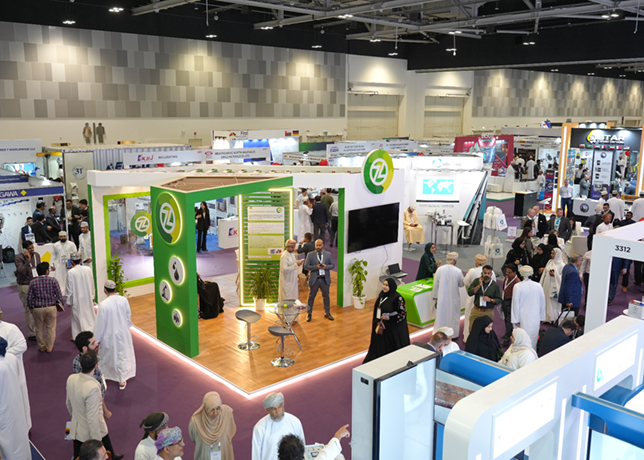
OPES 2026 is expected to see over 53,000 visitors
A dedicated C-Level Roundtable, convening senior government officials and chief executives, will address four focus areas: innovation and digital transformation, cost competitiveness, production growth, and carbon competitiveness.
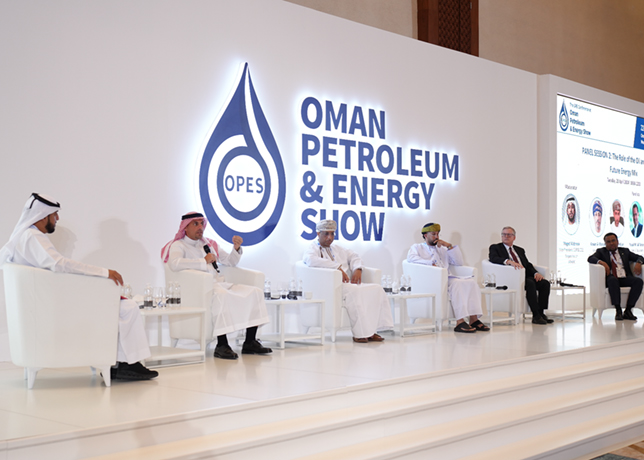
Running alongside these sessions are CPD-certified OPES Talks. The free-to-attend and free-to-participate conference brings together key industry leaders and government officials to address the most critical trends in the energy sector.
The co-location with Oman Sustainability Week (OSW) reinforces the event’s dual mandate, bringing policymakers and sustainability practitioners together with conventional energy operators in direct support of Oman Vision 2040.
For Daleel Petroleum, a mature onshore operator active in Block 5, OPES provides what Guan Shuo, Managing Director, characterises as a strategic national platform bridging innovation, competitiveness, digital transformation, and sustainable growth, with In-Country Value objectives and direct engagement across operators, service providers, and regulators cited as distinguishing features.
TECHNOLOGY DEPLOYMENT: FROM CONCEPT TO FIELD EXECUTION
The exhibition floor will showcase technologies with established operational credentials in Omani reservoirs.
Special Oilfield Services (SOS), a joint venture between TAQA and Mohsin Haider Darwish, will present a portfolio spanning advanced multistage hydraulic fracturing systems, radial drilling for mature well recovery, non-radioactive multiphase flow meters, and TAQA’s Mechanical Thruster, which has recorded the longest single-run section drilled in hard rock wells.
The company will also highlight its Autonomous Inflow Control Device (AICD) technology, whose performance record in Omani fields has been published as technical paper SPE-218695, co-authored with Petroleum Development Oman (PDO).
The paper was a study of 28 Omani producers, including 14 AICD-equipped wells against 14 conventional stand-alone screen completions.
It recorded a 217 per cent improvement in oil production and a 52 per cent reduction in water production in favour of AICD wells, alongside a 51 per cent reduction in carbon intensity, a 47 per cent reduction in greenhouse gas emissions, and a 110 per cent reduction in energy consumption.
The AICD is a self-regulating valve that autonomously limits unwanted fluid ingress once breakthrough occurs, reducing water treatment and reinjection volumes, cutting the number of pumps in operation, and shrinking the surface processing footprint accordingly.
SOS will also present geothermal and CCUS developments, alongside flare gas recovery systems that convert otherwise wasted emissions into usable energy.
CC Energy Development (CCED), a joint sponsor of both OPES and OSW, brings case studies from Blocks 3 and 4 in central eastern Oman.
The company’s Gas to Power programme redirects associated gas to generate field electricity in place of diesel generators as part of a structured flaring reduction roadmap.
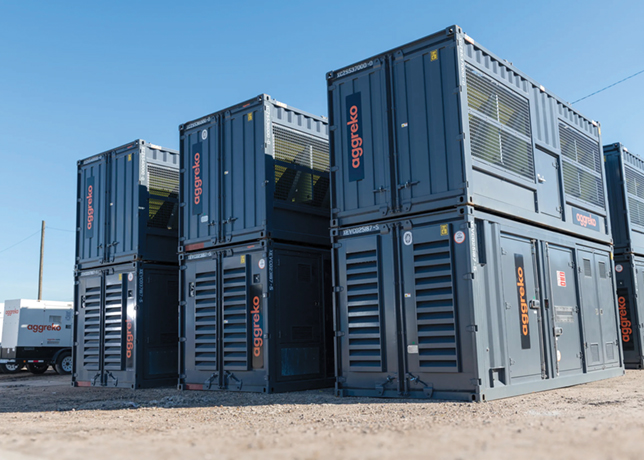
In collaboration with United Engineering Services, CCED’s Advanced Modular Power Systems implementation cut generator run time by over 50 per cent and reduced diesel consumption and CO2 emissions by 30 per cent.
Its digital infrastructure includes Mawrid, a coordination platform providing real-time situational awareness between field teams and technical functions, supported by a collaborative working environment integrating operations, subsurface, production, and facilities data onto a shared architecture.
INVESTMENT SIGNALS & FORWARD AGENDA
Moutaz Al Riyami, Managing Director, CCED, identifies three trends expected to define the sector through 2026 and beyond: Operational decarbonisation shifting from target-setting to measurable delivery; AI and digital tools accelerating reliability and reducing unplanned downtime; and greater system integration between conventional energy, renewables, and flexible capacity options.
For Al Riyami, the most consequential innovations will be those that are practical, measurable, and scalable under real operating conditions, a standard that aligns with the SPE conference’s thematic emphasis on efficiency gains achieved without compromising safety or environmental compliance.
Meanwhile, Shuo points to an acceleration in AI adoption for production optimisation, real-time digital monitoring across upstream operations, enhanced cybersecurity frameworks for operational technology environments, and the integration of decarbonisation initiatives into field workflows as the trends that shaped OPES 2025 and are expected to deepen in 2026.
The Omani government’s stated commitment to exploration investment, infrastructure modernisation, and production enhancement provides the macroeconomic backdrop against which that activity takes place, with the market trajectory through to 2029 offering exhibitors and investors a defined window within which to translate convention-centre dialogue into contracted field activity.