


























Abu Dhabi has launched major initiatives to boost its oil and gas production and reaffirm its key role in the global and regional markets.
The emirate plans to boost its natural gas production to six billion cubic feet per day by 2008 from 4.5 billion cubic feet now, a senior official said.
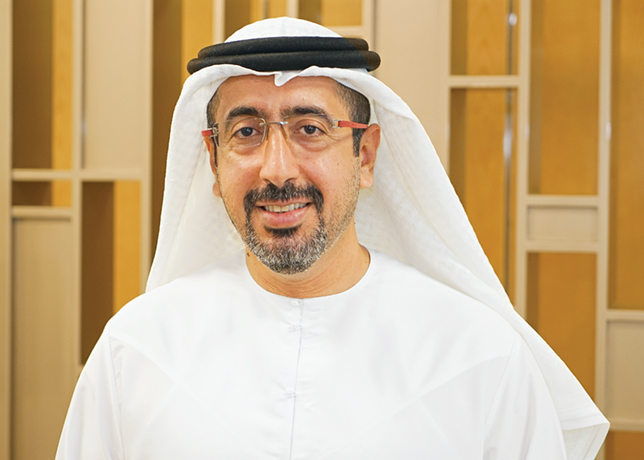
“During the few coming years, Abu Dhabi emirate will be among the top global producers and exporters of natural gas,” Yousef Omair Bin Yousef, chief executive of state-run Abu Dhabi National Oil Co (Adnoc), said.
“Exploration and production plans are ongoing to increase gas reserves and production in the coming stage,” he said.
Yousef said Abu Dhabi’s liquefied petroleum gas production was expected to increase to 13 million tonnes per year in the next two years from seven million tonnes a year now.
Gas reserves in Abu Dhabi are estimated at around 200 trillion cubic feet, he added.
Yousef said the UAE’s crude oil and condensates production stood at between 2.9 million to three million barrels per day (bpd) and was expected to rise to four million bpd in the next few years.
The oil minister of the UAE said in May that the Gulf state’s crude oil production should average 2.7 million bpd this year and that the country aimed to increase output capacity to 3.5 million bpd in the next five years.
The UAE is also seeking to develop its gas reserves to meet growing local demand.
Adnoc officials have said the firm is seriously evaluating the development of sour gas reserves in Abu Dhabi.
The emirate is also pushing ahead with plans to increase its crude oil production capacity to four million bpd by 2010, said a senior official at Adnoc.
It has also completed projects to expand its crude oil production capacity to nearly 2.8 million barrels per day (bpd), he was quoted as saying.
Abdullah Nasser Al Suwaidi, Adnoc’s deputy chief executive and exploration and production director, said Adnoc was undertaking a number of projects with its group of companies to maintain its position as a key player in the global oil market.
He said Adnoc would continue to be a major contributor to the oil and gas industry.
Besides oil, new projects cover expansion of production of natural gas, petrochemicals and urea, he said.
“Abu Dhabi National Oil Company is one of the leading companies in the world as it possesses vast oil and gas reserves. It has always been a key player in the world oil market and the focus is to build on its achievement,” Al Suwaidi said.
“Its production has increased by 25 per cent over the last two years and is currently developing new fields with the objective to increase the daily oil output from 2.8 million bpd to four million bpd by 2010.
“This is our commitment to the world market that will define Adnoc’s role in satisfying the increasing world demand for hydrocarbon products.”
Al Suwaidi said said some of Adnoc’s main projects involve increasing oil production capacity to meet global demand, expanding gas production capacity to meet increasing local demand and increasing urea production.
Last May the UAE energy minister said the country would produce 3.5 million bpd of crude oil by 2010-11.
Demand for energy in the UAE has been rising rapidly due to population growth and an ecocomic and construction boom funded by record oil revenues.
Meanwhile, Abu Dhabi plans to set up a four billion dirham ($1.09 billion), tax-free zone for the energy industry, a newspaper reported.
The “Oil & Gas City”, to start operations by the end of 2007, seeks to attract offshore firms that offer services such as consulting, financing, project management, and engineering, procurement and construction.
Marine and supply base services company Esnaad, a subsidiary of Adnoc, has ordered five new vessels from Singapore at a cost of $60 million as part of its fleet replacement, said a report.
The fleet replacement process is to meet the expansion needs of the company, the official said.
“The five new vessels two anchor handling vessels and three work boats will be built by Singapore-based Labroy Shipbuilding and Engineering. Deliveries are expected to be in 2008,” general manager Darwish A Al Qubaisi said in remarks in the report.
“We are constantly replacing our fleet and adding new vessels and by 2010 we will have a moderately new fleet. The fleet replacement will be done in a phased manner by chartering, building or purchasing outright vessels.”
In another development, Foster Wheeler Ltd has announced that subsidiary the Foster Wheeler International Corporation (Abu Dhabi branch), part of its Global Engineering and Construction Group, has been awarded the front-end engineering design (FEED) by the Abu Dhabi Company for Onshore Oil Operations (Adco) for the Sahil, Asab and Shah (SAS) oilfield development project.
The Foster Wheeler contract value was not disclosed and will be included in the company’s third-quarter 2006 bookings.
Adco plans to undertake the full field development of the SAS maturing fields, not only to increase production, but also to enhance the environmental aspects of the fields and to provide adequate facilities for their operations.
Foster Wheeler’s UK operations will execute the FEED and will update the basis of design, develop the technical data, specifications and requisitions and provide a detailed cost estimate in order to define the engineering, procurement and construction (EPC) scope of work to enable an invitation to bid for the EPC phase to be prepared and issued.
Foster Wheeler will also prepare material requisitions for long lead items and obtain estimated prices from vendors.
The FEED is scheduled for completion in mid-2007, after which an EPC contractor will be appointed by Adco.
Commissioning of the project is expected in 2010.
Adco has also awarded contracts worth $70 million to Halliburton for cementing and related services, a top company official said.
Earlier this year, Adco said it would bring onstream 110,000 barrels per day (bpd) of crude from its North East Bab fields by mid-2006 taking its sustainable crude oil production capacity to 1.4 million barrels per day.
Adco’s crude output averaged 1.2 million bpd in 2005, which is less than half the UAE’s production of 2.7 million bpd.
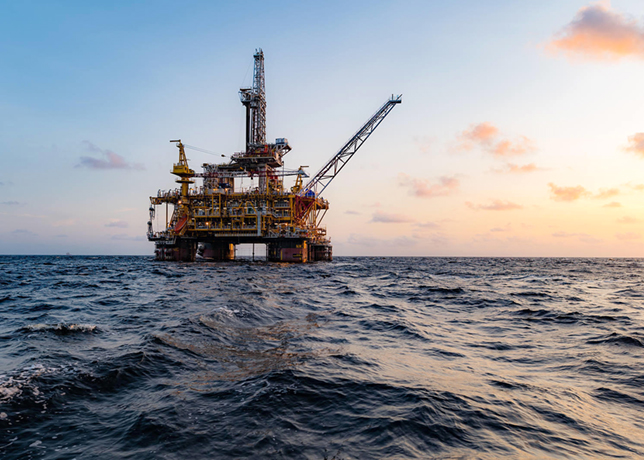
Abu Dhabi has also finally moved forward with a years-old project to boost production at an ageing offshore oilfield by awarding a $1.6 billion construction deal to Hyundai Heavy Industries Co Ltd.
Hyundai Heavy, the world’s top shipbuilder, said that it had signed a letter of award with ADMA-OPCO, Adnoc, to build a fixed platform weighing 40,000 tonnes, undersea pipelines and bridges at the Umm Shaif oilfield by 2010.
The plant near Abu Dhabi is expected to produce one billion cubic feet of natural gas and 300,000 barrels of crude oil per day, with Hyundai Heavy handling the entire construction project, from design to manufacturing to test operations.
A Hyundai official said the planned new plant would replace an existing facility and boost production, although he did not know the existing plant’s current production rate.
Industry sources pegged current output at Umm Shaif, in which BP and Total both have shares, at around 200,000 bpd. It was unclear how much the new facility would lift output.
Umm Shaif was Abu Dhabi’s first offshore field, discovered in 1958.
The platform was first envisaged at the beginning of the decade as a $1.2 billion project to stem declining production at the Umm Shaif oilfield by injecting natural gas from the Khuff reservoir far below it, preserving pressure and raising output. It was originally targeted to be completed by 2005. Khuff is one of the world’s biggest natural gas fields, but the gas is costly to produce due to a high sulphur content.
Topaz Energy and Marine Ltd said that its Abu Dhabi subsidiary, Adyard LLC Abu Dhabi has been awarded a contract from Black and Veatch to supply Claus Reactors and CBA Reactors for the Jamnagar Export Refinery Project undertaken by Reliance Petroleum Limited.
Meanwhile, Abu Dhabi’s investment arm IPIC and ConocoPhillips have signed deals for a new 500,000 barrels per day oil refinery in the UAE and to cooperate on energy projects, they said.
The cost of the export-orientated refinery in Fujairah was not disclosed, but neighbouring Saudi Arabia plans to build two 400,000 bpd refineries at a cost of $6 billion each.
After completion of a feasibility study, US oil company ConocoPhillips and International Petroleum Investment Co (IPIC) would form a joint venture to own and operate the refinery. It would be 51 per cent owned by IPIC and 49 per cent by Conoco, a statement said.
Petrochemical maker Borouge said it was considering expanding its complex in the UAE to produce and market base chemicals.
Borouge - a joint venture between Denmark-based petrochemical group Borealis and Adnoc - said a feasibility study would be completed towards the end of 2007 and the target start-up date was 2012.
Borouge and Borealis have also announced the establishment of a major innovation centre in the UAE. The centre represents a significant investment in Borouge’s research capabilities to meet customer needs in the Middle East and Asia Pacific regions.
The innovation centre, jointly developed by Borouge and Borealis, will concentrate on developing practical solutions for plastic material applications and be fully operational in 2009. It will be located in Abu Dhabi City and is expected to employ up to 45 technical staff in the initial phase.
The cost-effective and environmentally friendly fuel E-plus (Octane) is now available at all Adnoc Distribution service stations in the UAE.
In another development, the 415,000 barrel-per-day Ruwais refinery will close for 28 days of planned maintenance in from November 1, European oil products traders said.