












The global business agenda remains overshadowed by energy concerns.
Yet simultaneously worldwide demand for plastics is increasing at an ever-faster rate.
This demand is stemming not just from industry, but also from consumers, who are continuing to realise that only advanced plastic materials adequately meet the needs of modern life.
Plastics are finding uses in ever more applications and are becoming increasingly sophisticated. In response, the polyolefin industry continues to expand at break-neck speed. In particular, downstream industries are broadening and deepening, especially in Abu Dhabi and the UAE.
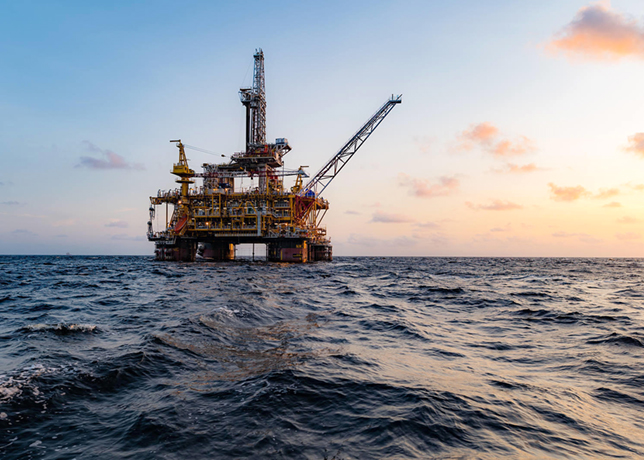
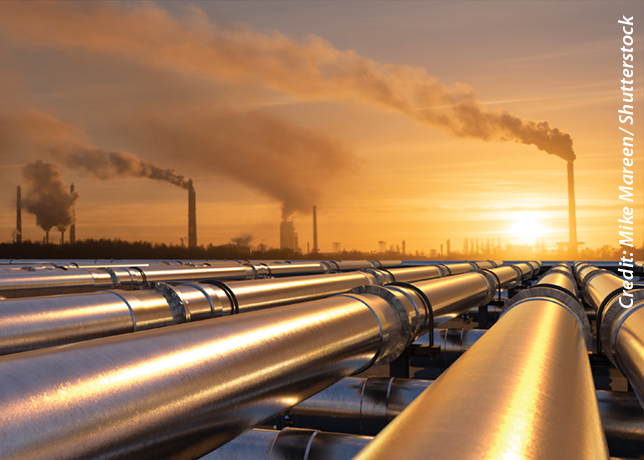
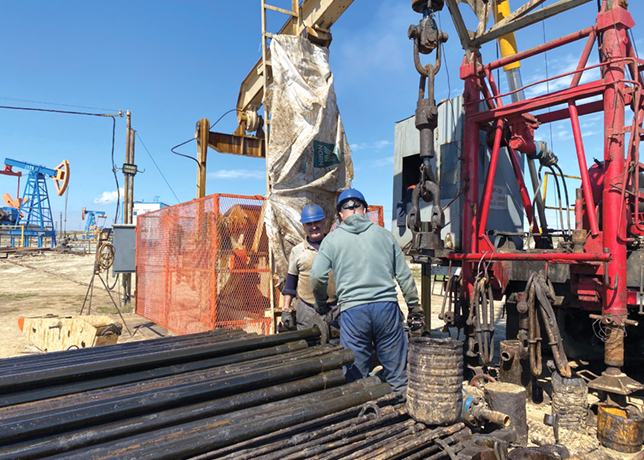
Oil and gas prices have, however, had an effect on feedstock costs. This, combined with energy jitters and the increasing pressure on feedstock suppliers, has caused renewed thinking about energy globally and posed challenges to the polyolefins industry.
The outlook for oil prices look certain to remain high, which will mean continued high feedstock costs which will be passed down the value chain.
The increasing scarcity of fossil fuels has led many here in the Middle East to seek to reduce dependency on oil and gas production, and diversification issues are increasingly prominent in Gulf business affairs.
Again, this will pose a challenge to the petrochemical industry over the coming years.
But just as countries seek to diversify away from hydrocarbons, worldwide demand for polyolefins, driven by strong consumer confidence and the fast growing economies of the region and Asia, is increasing rapidly.
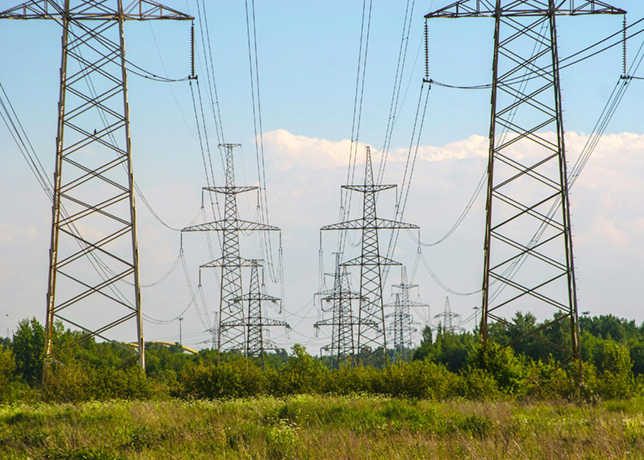
Important applications such as medical devices and automotive components are increasingly being made using advanced plastics. Equally, the wire and cable industries are utilising the improved properties that plastics offer over traditional materials.
Water, gas and industrial pipe systems are also benefiting from the longer lifetime, improved processing and installation costs and increased safety that advanced plastic materials afford.
With the voracious economic growth of Asia showing no sign of abating, the geography of the polyolefins industry is shifting incrementally eastwards. The Asian market is the global growth engine and demand for polyolefins is increasingly outstripping supply. The plastics industry is naturally gravitating towards the Gulf, where the largest feedstock reserves reside and where access to Asia is easiest.
The rise of the UAE
It will be a challenge for Gulf states to meet the explosion in demand from Asia.
But the UAE has positioned itself ideally to do just this. The UAE’s world-class oil production infrastructure continues to be improved, and its enormous technological advances in recent times in particular have created an ideal environment for polyolefins production.
At the same time, Abu Dhabi’s downstream industry is growing at an especially rapid rate, and its economy generally is increasing in its depth and breadth.
Borouge – shaping the future with plastics
Borouge, headquartered in Abu Dhabi and one of the leading providers of plastics solutions in the Middle East and Asia Pacific, is ideally positioned to build on the technical advances made by the emirate.
It recognised long ago that oil and gas resources provide the ideal platform for lateral diversification. Combining the most advanced technologies with world-class production facilities, Borouge provides solutions that make a real difference to everyday life – from the pipes that deliver precious drinking water to the cables that make global communication possible. The company’s state-of-the-art petrochemical complex is located in Ruwais and serves customers throughout the Middle East, Asia-Pacific and Africa.
Established in 1998 as a joint venture between the Abu Dhabi National Oil Company (Adnoc) and Borealis, one of Europe’s leading providers of plastics solutions, Borouge is a unique company that brings together the very best of Europe and the Middle East.
A groundbreaking international partnership at the forefront of plastics innovation, Borouge has made enormous strides since its inception.
Borouge provides a range of differentiated products for high-value applications, from water, gas and industrial pipe systems, power and communication cables and advanced packaging, to medical devices and automotive components.
In partnership with Borealis, Borouge employs unique Borstar(r) technology in the production of their products.
The advantages of Borstar are well known in the industry and are central to Borouge’s success – the technology facilitates the manufacture of high-performance, high-value plastic products that are vital to modern living.
Borouge 2 – another step in evolution
Borouge is an example of a Gulf company that is responding innovatively to the ever-increasing worldwide demand for plastics.
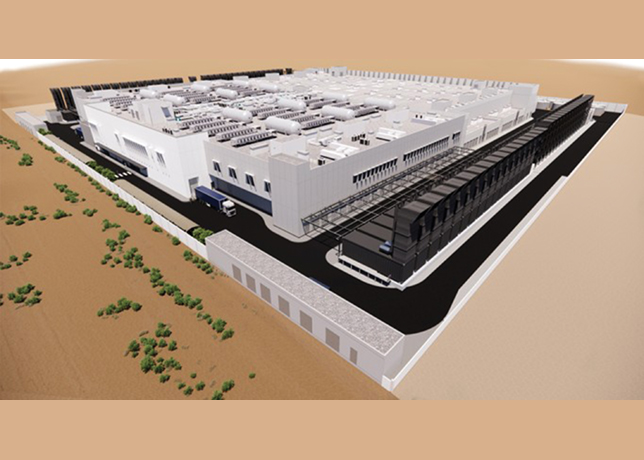
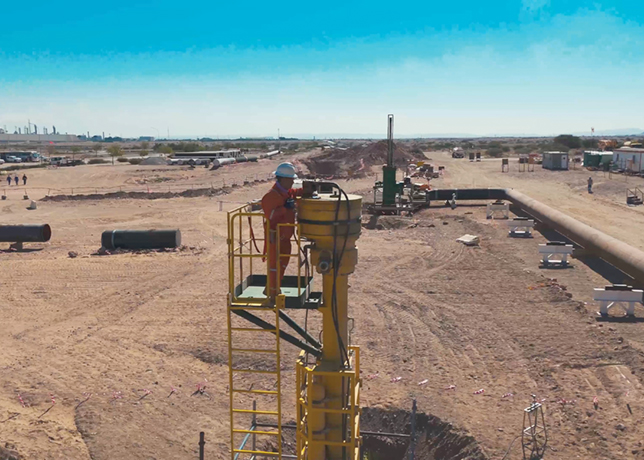
The company is currently implementing a multi-billion dollar expansion at Ruwais.
The project, ‘Borouge 2’, is due to commence production in 2010. This world-scale project will triple existing production capacity to two million tonnes per year, including, for the first time, polypropylene.
The government of Abu Dhabi has given its unequivocal backing to Borouge 2 as part of its strategy to diversify the oil and gas based economy and extend the Emirate’s downstream industrial base. The Borouge 2 expansion will see the construction alongside the existing facilities of one of the world’s largest ethane crackers, producing 1.4 million tonnes of ethylene per year, the world’s largest olefins conversion unit, a 540 kilotonnes per year Borstar polyethylene plant and two 400 kilotonnes per year Borstar polypropylene plants.
The polypropylene sector is growing dramatically, and the expanded production in Ruwais will open new markets to Borouge.
The expansion will also be of great significance to the downstream industry in the region – the increase in production of polyethylene and introduction of polypropylene will present opportunities to local businesses, who will benefit from the proximity of the plant and the ability to source material locally.
In particular the automotive industry will benefit through the local availability of polypropylene. In time the regional Gulf economy as a whole and the local community stand to gain from Borouge’s expansion.
Borouge has invested in excess of $1.5 billion to date in the existing Ruwais facility.
The complex, the first such development in the UAE, was completed on budget and on time and has become a benchmark for operational excellence in the region.
It was the first bimodal polyethylene plant in the Middle East. Since inception, the Borouge operation has in a short time become synonymous with consistent, first-time-right products, reliability and the highest safety standards.
Making a difference to everyday life
Plastics are integral to the advancement of living standards around the world; the future of the industry rightly stimulates debate at all levels of society. In the future, the plastics sector will become increasingly inseparable from the development of modern society as a whole – the industry is poised to become one of the key drivers of sustainable development.
Borouge is constantly looking for ways to improve everyday life by providing sustainable, affordable product solutions. By combining know-how with vision, breakthroughs in plastics technology will be facilitated.