





































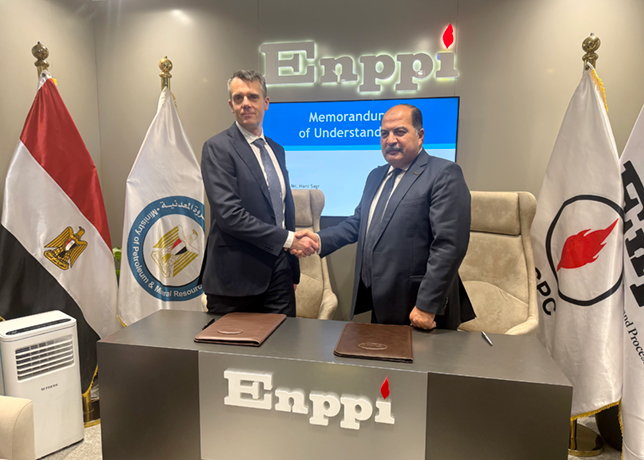















Japan and the UAE signed an accord to strengthen economic ties, including a deal for Japanese banks to extend a multibillion-dollar loan to Adnoc.
Japan hosted high-level economic talks with the UAE in the face of growing competition for energy from the fast-growing Chinese and Indian economies.
Japan, which has virtually no natural energy resources of its own, is stepping up efforts to secure stable supplies of crude oil to feed its economy, the second-largest in the world.
Under the agreement, the two countries will strengthen their partnership in the field of energy, jointly boost support for small businesses and speed up talks on legal arrangements to avoid dual taxation.
As part of the accord, the Japan Bank for International Co-operation (JBIC) agreed to team up with private-sector banks to provide loans of $3 billion to Adnoc, officials said.
“The Japan Bank for International Co-operation signed the deal with the Adnoc,” said the bank’s spokesman Ryutaro Nishizaki.
The loans will be provided on the condition that the UAE ensures long-term oil supplies for Japan, a source close to the deal said.
Industry sources said Japan Bank for International Co-operation signed deals to co-finance multi-billion dollar loans to Adnoc and a UAE power project.
JBIC signed the deal in Tokyo to co-finance up to $3 billion in loans to Adnoc, on top of a $2.2 billion loan to the UAE’s power and water desalination plant project, in which Japan’s Marubeni won a stake earlier this year.
The signing, which coincided with the visit by UAE Crown Prince Mohammed bin Zayed Al Nahyan, came after the two nations pledged to further promote co-operation in energy.
The state-backed Japanese bank signed a strategic partnership with Adnoc earlier this year in a bid to deepen bilateral ties in the oil and gas sector and secure long-term crude oil supply deals for Japanese oil firms.
Adnoc will get the proceeds as a form of an advanced payment for crude oil sales to Japanese oil firms, and return it via the long-term crude exports to Japan, the sources said.
Among other bilateral deals signed this month, Cosmo Oil said it and the UAE would co-develop an electric power generation system using solar heat.
Japan’s top oil refiner Nippon Oil also agreed on a memorandum of understanding to conduct a joint survey on whether it would be economically feasible to manufacture material similar to concrete by recycling sulphur from oil fields.
On the sidelines of the talks, the Abu Dhabi Crown Prince held a series of meetings with Japanese leaders, including Prime Minister Yasuo Fukuda.
“Our co-operative relations in the field of energy is a base of the bilateral relations, and extremely important,” Fukuda told Sheikh Mohammed, according to a Japanese government official.
Fukuda also said Japan was ready to transfer energy-saving technology to the Arab state and provide support for the country’s effort to improve its education system.
“The crown prince told our prime minister that relations between the UAE and Japan are ideal, and he said he hopes the bilateral relations will make further progress,” the official said.
The UAE is the second-largest supplier of oil to Japan, Asia’s biggest economy.
The one-day economic meeting between Japan and the UAE was the first of its kind and came amid increased efforts between the two countries to strengthen ties following a visit earlier this year by then prime minister Shinzo Abe.
The economic talks, chaired by Japan’s Foreign Minister Masahiko Komura and his UAE counterpart Sheikh Abdullah bin Zayed Al Nahyan, also called for progress in free trade negotiations between Japan and Arab nations.
Japan and the GCC nations – Bahrain, Kuwait, Oman, Qatar, Saudi Arabia and the UAE – began free trade talks last year with the intention of concluding an accord in 2008.
Japan, which relies for almost its entire energy needs on imports, has been keen to strengthen ties with countries in the Middle East, in the face of fierce competition for resources.
Japan is keen to ensure that if there is a war in the Middle East, for example, and supply is cut, oil exporters will give priority to supplying Japan, says Hidetoshi Shioda, analyst at Mizuho Securities in Tokyo.
The recent talks come as UAE investors, flush with petrodollars, show increasing interest in Japan.
Cosmo Oil said in September that it would sell a 20 per cent stake in its business to the Abu Dhabi-owned International Petroleum Investment Company (IPIC).
A senior official said the purchase by IPIC of shares in Cosmo Oil will aid the Japanese refiner in smoothly renewing its contract to buy crude oil from the UAE.
“It is a good thing not only for Cosmo Oil but also for Japan” in terms of stable crude oil supplies, said Fumiaki Watari, chairman of Nippon Oil, Japan’s largest refiner by capacity.
He made the comments during a meeting with journalists as the chairman of the Petroleum Association of Japan.
“UAE is a major oil exporter for Japan... The oil industry is welcoming this move,” he said.
Cosmo Oil, Japan’s fourth-largest refiner by capacity, said it will sell 176 million of its newly issued common shares to International Petroleum Investment, also called IPIC, for about Y89.18 billion ($787.5 million).
After the purchase, IPIC will become the largest single shareholder in Cosmo Oil with about a 20 per cent of stake.
Although IPIC handles overseas investment business rather than crude oil sales, the move is perceived as a deal with the Abu Dhabi government, which owns IPIC, analysts and the media said.
Japan imports about 4.2 million barrels a day of crude oil, and the UAE provides roughly a quarter of it. Cosmo Oil buys 140,000 barrels a day of crude from the UAE, some 13 per cent of all UAE’s exports to Japan.
The contract is due to expire in 2012, and Cosmo Oil has been negotiating hard with state-owned oil company Adnoc, according to Watari.
Murban crude, UAE’s flagship crude oil, is ultra light, with an API gravity of around 41.
Prices of lighter crudes have been high in recent years due to strong global demand.
Watari, however, said he hasn’t heard of any other discussions on share purchase plans between Japanese refiners and foreign energy companies.
“Japan is not very attractive as a market given that demand is falling. Rather, it would be interesting for possible investors in teaming up with Japanese refiners for new businesses overseas such as development of oil fields,” Watari said.


