










































By Abdulaziz Khattak
The electricity consumed by the world’s data centres reached roughly 1.5 per cent of global electricity demand, to approximately 415 terawatt-hours (TWh) in 2024, and the International Energy Agency (IEA) projects that figure will more than double to around 945 TWh by 2030, before potentially climbing as high as 1,200 TWh by 2035 in the base case.
These numbers represent nothing less than the most significant structural shift in energy demand since the industrialisation of developing economies.
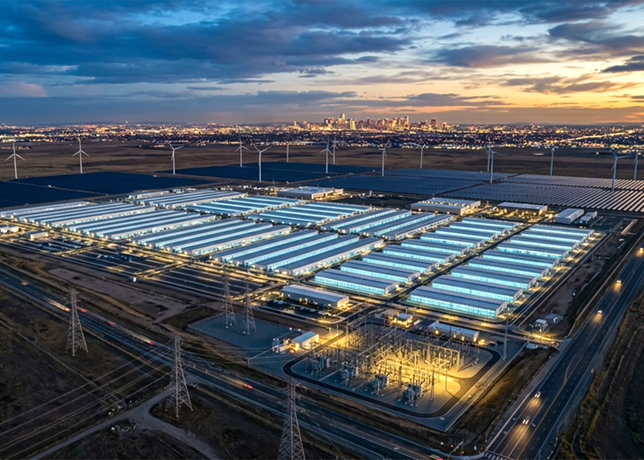
A single hyperscale, AI-focused data centre today consumes as much electricity annually as 100,000 households. The largest facility currently under construction could match the consumption of 2 million households.
The full scope of these dynamics, and of artificial intelligence’s (AI) simultaneously disruptive and potentially transformative role across the energy system, is set out in the IEA’s landmark ‘Energy and AI’ report.
The report’s framing is deliberately dual. AI is both a voracious and growing consumer of electricity and a sophisticated instrument for managing, decarbonising and securing the energy systems on which all modern economies depend.
ANATOMY OF ENERGY-HUNGRY TECHNOLOGY
AI’s rise from an academic discipline to an industry with trillions of dollars at stake has been underpinned by three compounding forces: A dramatic decline in the cost of graphics processing units; an exponential growth in the scale of training datasets; and successive algorithmic breakthroughs.
Of the $16 trillion increase in the market capitalisation of S&P 500 companies since 2022, $12 trillion has come from AI-related firms.
These computational gains are not free as training the largest AI models requires infrastructure of formidable scale.
For example, GPT-4 was trained on 25,000 GPUs drawing a combined rated power of roughly 22 megawatts (MW) over a 14-week period and consuming an estimated total 42.4 gigawatt-hours (GWh).
The largest model in the IEA’s dataset of 283 large AI models drew a maximum training power of around 154 MW, with total training electricity consumption estimated at approximately 310 GWh.
Collectively, large AI models trained since 2020 are estimated to have consumed around 1,700 GWh.
The geography of this demand is highly concentrated, with the US having consumed around 180 TWh from data centres in 2024.
The US and China together account for nearly 80 per cent of global data centre electricity demand growth to 2030, with US per-capita consumption projected to exceed 1,200 kWh by the decade’s end.
On the supply side, renewables are projected to provide the largest single contribution to meeting that growth, adding over 450 TWh to 2035, while natural gas expands by around 175 TWh, concentrated primarily in the US.
The broader ICT sector, encompassing data centres, telecommunications networks and end-user devices, consumed over 1,000 TWh of electricity in 2023, roughly 4 per cent of global electricity use. Data centres accounted for approximately one-third of that total.
The IEA notes that around 20 per cent of planned data centre projects to 2030 could face delays due to grid connection queues and supply-chain constraints on critical components including transformers and gas turbines.
AI AN INSTRUMENT OF ENERGY OPTIMISATION & INNOVATION
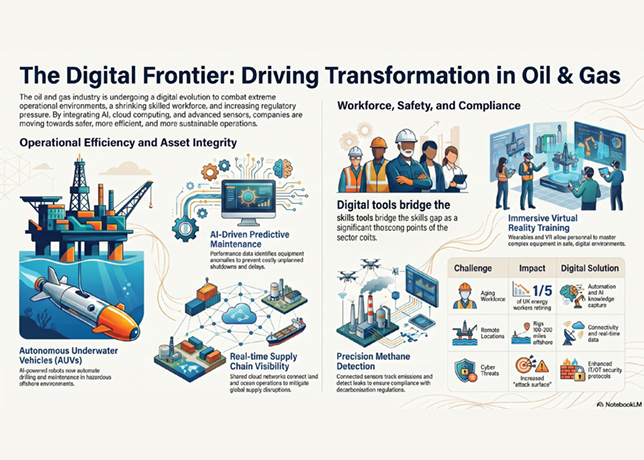
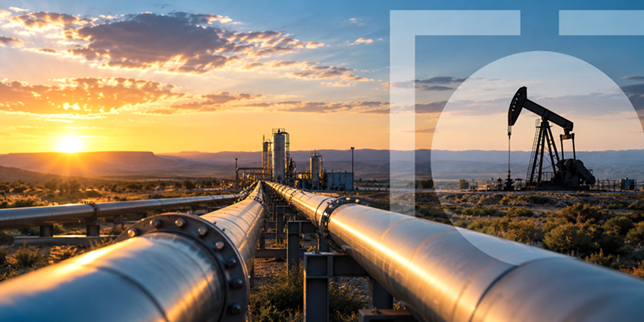
The oil and gas sector has been among the earliest and most systematic adopters of AI in the energy industry.
Between 2000 and 2024, the number of oil and gas companies with supercomputers ranking among the world’s 500 fastest grew from 11 to 24, with total computing capacity expanding at nearly 70 per cent annually, outpacing the broader supercomputing industry.
Applications span the full production cycle, such as AI-assisted seismic processing has been shown to improve subsurface classification accuracy by up to 90 per cent, while geological models that once took months to produce can now be generated in hours.
ADNOC’s 90-day trial of an AI agent based on a 70-billion-parameter large language model improved seismic processing accuracy by 70 per cent.
In the IEA’s widespread adoption scenario, AI-led interventions could reduce the full-cycle costs of a new deepwater offshore development by up to 10 per cent, through more efficient drilling, reduced labour requirements and leaner materials supply chains.
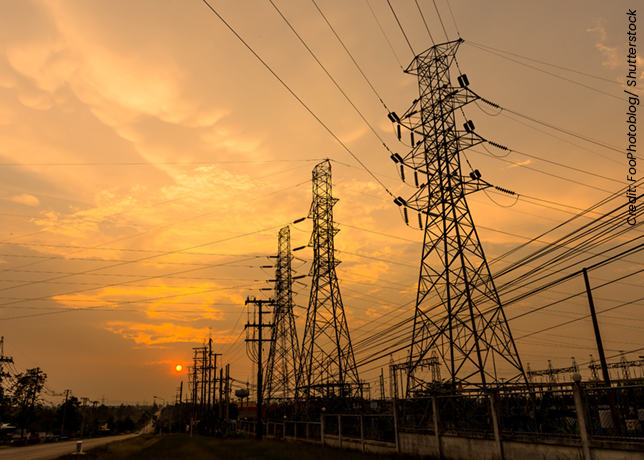
On grids and power systems, the potential scale of AI-driven optimisation is striking.
The IEA estimates that applying AI-based fault detection and grid management tools to transmission infrastructure could unlock the equivalent of several gigawatts of additional transmission capacity, without constructing a single new line.
That increment exceeds the increase in power load attributable to data centres themselves, pointing to a net systemic benefit if deployment is sufficiently widespread.
Taken together, the IEA’s widespread adoption case estimates that existing AI applications in end-use sectors could deliver 1.4 gigatonnes of CO2 emissions reductions in 2035.
That is three times larger than total projected data centre emissions in the high-demand scenario, and nearly five times larger than those in the base case.
AI’S IMPACT ACROSS THE ENERGY SUPPLY CHAIN
In the domain of energy innovation, AI’s most consequential near-term impact may be in materials discovery.
The report details AI’s application across four critical technology areas: Next-generation battery chemistries, synthetic fuel catalysts, carbon capture materials and low-emissions cement.
In battery research, AI is already being deployed by manufacturers, such as CATL for image-based defect detection on production lines, and is being applied to materials discovery workflows that could reduce the time required to identify viable new chemistries by as much as a factor of ten.
In CO2 capture, AI has been used to generate 120,000 candidate metal organic framework materials in a single automated workflow, and the IEA estimates that AI-assisted development could reduce overall time-to-market for new carbon capture materials by around 30 per cent.
For synthetic fuel catalysts, AI tools have accelerated catalyst performance calculations by a factor of almost 200, from hours to seconds, though the report is careful to note that scaling these laboratory advances into commercially viable industrial processes remains a formidable challenge that AI alone cannot resolve.
SECURITY, EQUITY & POLICY IMPERATIVE
The supply chains underpinning data centre infrastructure are among the most geographically concentrated in the global economy.
China currently accounts for around 99 per cent of global refined gallium supply, a mineral increasingly critical to cutting-edge semiconductor designs.
The IEA estimates that by 2030, demand for gallium from data centres alone could represent a significant fraction of current global output.
Chip design is dominated by US-headquartered firms, while manufacturing is concentrated in TSMC’s facilities in Taiwan, which held a 65 per cent share of foundry revenue in 2024.
These dependencies represent systemic vulnerabilities that require dedicated policy attention alongside traditional energy security considerations.
On the other side of the ledger, AI is strengthening energy security capabilities.
Satellite monitoring systems guided by AI can now detect methane leaks in oil and gas infrastructure more accurately than ground-based methods at high spatial resolution, enabling faster repair and reducing one of the sector’s most significant near-term emissions sources.
AI-powered cybersecurity tools are improving the resilience of critical energy infrastructure against an evolving threat landscape, while enhanced demand forecasting and predictive maintenance reduce the frequency and duration of unplanned outages.
REST OF THE WORLD STRIVING TO CATCH UP
Emerging market and developing economies other than China account for approximately half of the world’s internet users but less than 10 per cent of global data centre capacity.
High capital costs, unreliable grid infrastructure and limited digital skills all constrain AI adoption.
However, the IEA report also identifies a genuine leapfrog opportunity, and it says that countries with more recently built industrial and commercial infrastructure may find it easier to equip facilities with sensors and AI management systems than advanced economies burdened by legacy assets.
India’s data centre capacity has doubled in four years to 2 GW, with a further 2 GW in the pipeline, though coal provides 74 per cent of current electricity generation.
Government AI R&D expenditure grew from $2.6 billion in 2018 to more than $7 billion in 2023, with the US, European Union and China the primary contributors.
National policy frameworks are also evolving from broad AI strategies to sector-specific energy and AI governance tools.
Beijing banned the construction of data centres with a power usage effectiveness above 1.5 since 2018, while the Netherlands and Singapore imposed temporary moratoriums as they assessed grid capacity.
South Korea offers a 50 per cent discount on electricity facility levies for data centres located outside the congested Seoul metropolitan area.
The IEA argues that governments must go further, mandating energy consumption reporting, supporting data production for AI-driven energy innovation and developing cross-border frameworks to manage semiconductor supply chain dependencies.
Data centre indirect CO2 emissions stand at around 180 million tonnes today, rising to an estimated 300 million tonnes by 2030 in the base case.
That is still below 1.5 per cent of total energy sector emissions, but among the fastest-growing emission sources in the global economy.