
























The seventh UN Environment Assembly (UNEA-7) concluded with 11 resolutions, three decisions, and a Ministerial Declaration, aimed at advancing global environmental solutions.
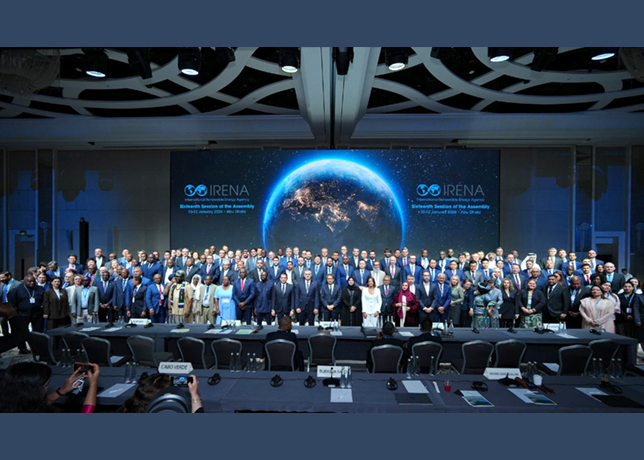
The 16th Irena Assembly took place on January 11-12, 2026, in Abu Dhabi, UAE, drawing a record participation of over 1,500 ministers, officials, CEOs, and partners, underscoring Irena’s central role in global energy discussions.
Opening the Assembly, Francesco La Camera, Director-General, emphasised that the energy transition is irreversible, urging countries to strengthen renewable energy strategies not only for climate action but also for economic resilience, security, and competitiveness.
He noted that future economic advantage will depend on delivering clean, affordable energy efficiently, with early movers gaining lasting benefits.
The high-level dialogue, "Reimagining Energy Futures: Bold Visions for Shared Prosperity," provided members a platform to discuss overcoming traditional energy challenges and harnessing renewables for inclusive development, structural transformation, and global resilience.
La Camera also highlighted energy’s critical role in national security amid geopolitical tensions, supply-chain disruptions, and climate risks.
The Assembly featured nearly 20 side events and ministerials on geothermal energy, green industrialisation, AI and digitalisation, renewable energy for agri-food systems, and sustainable aviation fuels.
Members endorsed Irena’s mandate, approved the Medium-Term Strategy 2023–2027 evaluation, and adopted the 2026–2027 Work Programme and Budget.
Concluding the session, La Camera highlighted Irena’s growth to 171 members as proof of its relevance and the shared commitment to a secure, inclusive, and sustainable global energy future.