






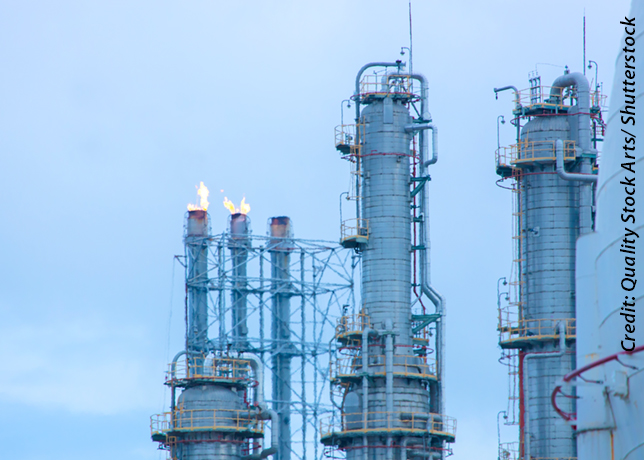








AS PART of its $170 million drilling campaign for 2008, UAE-based Dana Gas’s Al Tawil-1 exploratory well commenced drilling in September and reached a total measured depth of 3,163 metres in the Qawasim formation.
The well is located in the West Manzala concession, approximately 15 kilometre south of Dana’s El Wastani gas processing facilities.
A statement said that the Al Tawil-1 well encountered 34 metres of net hydrocarbon pay in the Qawasim sandstone reservoirs with excellent porosity and permeability.
On testing, the well flowed at a daily rate of 23.5 million standard cubic feet of gas and 1,027 barrels of condensate. The added recoverable reserves, resulting from the successful drilling of the well are currently estimated at 90 billion cubic feet of gas in addition to 4 million barrels of associated condensate, representing a 20 per cent increase to the current reserves of Dana Gas in Egypt.
Plans are under way to determine the optimum development scheme for the new discovery. Additional exploratory wells targeting similar objectives will be drilled in the West Manzala and the West Qantara concessions in 2008 and 2009.
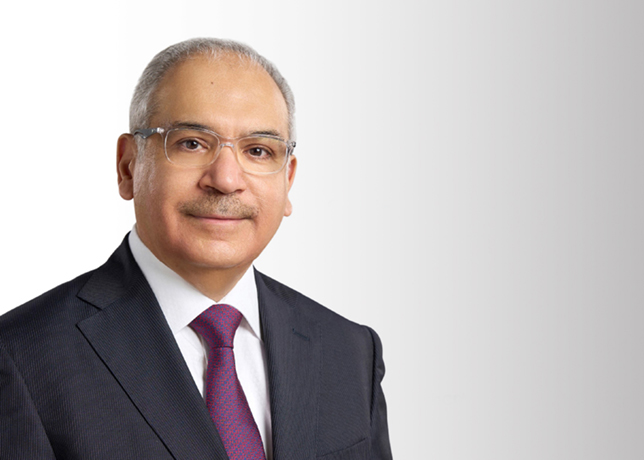
Ahmed Rashid Al Arbeed executive director of upstream at Dana Gas says: “This is an important discovery which proves the high potential of the Qawasim formation, resulting in significant reserves addition to the company.”
Meanwhile, the UAE’s Crescent Petroleum and affiliate Dana Gas have begun supplying gas in Iraq’s Kurdistan region after completing the first stage of a $650 million project, the companies say.
Gas was flowing at 75 million cubic feet per day (cfd) from the revamped Khor Mor field and supply will rise to 300 million cfd in the first half of 2009, the companies say.
The first gas will supply a power plant in Arbil, the capital of the semi-autonomous Kurdistan region. Supplies coming on stream later will go to another power plant in Sulaimaniya. The two plants will have total electricity generation capacity of 1,250 megawatts.
Supply was initially planned to begin in mid-2008, but was held up as construction of the power plants took longer than expected.
“We are very proud of this historical milestone as the first companies from the Middle East to invest in Iraq’s oil and gas sector,” says Arbeed.
Dana and Crescent signed the service contract in April 2007 with the Kurdistan regional government (KRG) to redevelop the Khor Mor and Chemchemal fields. The Khor Mor field was shut after the first Gulf War in 1991.
The deal with Dana and Crescent is a service contract, rather than a production sharing agreement (PSA). The Kurdistan government’s PSAs have attracted criticism from some politicians in Baghdad, including the oil minister. The KRG says its deals are in line with the constitution.
Crescent says it has no doubts over the legality of its deal and that other regions of Iraq have shown interest in contracting the companies for similar projects.
“We are absolutely certain of the moral, legal and economic correctness of our contract with the KRG and the work we are doing,” Majid Jafar, Crescent executive director, says.
“This benefits the Kurdistan Region and all of Iraq... we have already been asked by local officials to replicate similar projects in other regions of Iraq.”
The plants will save Iraq over $2 billion annually in fuel costs — cash the government currently spends on oil products for small power generators.
The project was the largest private-sector investment in Iraq since the US-led invasion of 2003, the companies said. Aside from redeveloping Khor Mor, appraising Chemchemal and building gas processing facilities, the companies constructed a 180 kilometre pipeline that required clearance of some minefields.
Crescent and Dana each have a 50 per cent stake in the project. The two companies also signed up last year to evaluate the region’s gas reserves and to build a large gas-fed industrial complex called Kurdistan Gas City.
Initial investment in the basic infrastructure for the complex would be $3 billion. Dana and Crescent are leading the development and looking to attract partner companies.
Eventually, they hope the complex will attract more than $40 billion in foreign direct investment and will house at least 20 large petrochemical and heavy manufacturing plants with output that will mostly be consumed in Iraq.