




























 DSC1285.jpg)
Bahrain will forever be able to claim the glory of being the first country in the Gulf to strike oil. The discovery of crude in 1932 in the remote patch of desert that today hosts the modern infrastructure of the country’s crucial Awali field remains a matter of pride almost eight decades later.
However, in the intervening years there had been a frequent tendency to understate the country’s leading role in the development of the oil and gas industry in the region. While Bahrain was the first to discover oil, the country’s reserves would prove to be smaller than subsequent discoveries made by its Gulf neighbours.
Some took the view that as the production rate of the Awali field fell over time Bahrain should start to turn its back on the industry that has underpinned its entire modern development and settle for a policy of managed decline. They also stressed that initiatives such as exploration belonged firmly in the oil museum which stands on the site of the country’s first oil well.
Fortunately wiser heads prevailed, and Bahrain’s oil and gas sector can today boast a dizzying array of initiatives that amount to a wholesale rejuvenation of the industry.
Under the directives of Bahrain’s political leadership and the steady stewardship of Minister for Oil and Gas Affairs Dr Abdul-Hussain bin Ali Mirza, the country is leaving no stone unturned in its efforts to forge innovative solutions to the rising demand for energy that Bahrain has in common with other Gulf states.
Since the formation of the National Oil and Gas Authority (Noga) at end of 2005, Bahrain has initiated a wide-ranging programme featuring key projects both onshore and offshore. Its carefully calibrated strategy is multi-faceted and involves a number of firsts for the kingdom, and the revisiting of previous plans and established facilities with renewed vigour.
This transformation is visible both in the country’s increasing presence internationally, as Bahrain courts international partners more eagerly than ever before, and in the hive of activity locally as the country gears up to start work on its ambitious slate of projects.
In 2008 alone, Noga, which is chaired by Dr Mirza, signed a letter of intent with the likes of Russian giant Gazprom – the world’s largest gas company – as part of an international push that has seen officials stage well-attended road-shows in many of the world’s energy capitals.
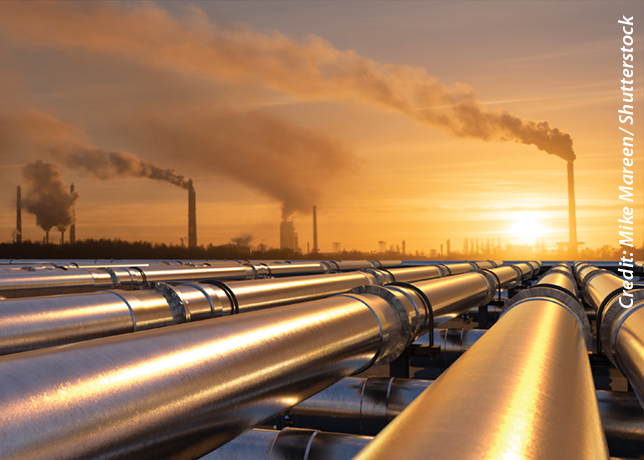
The country has had much to showcase for curious IOCs – new projects currently being worked on simultaneously include: A round of offshore oil exploration; efforts to double the production of the 34,000 barrels per day (bpd) Awali oil field; an upcoming hunt for reserves of the so-called ‘deep gas’ at depths never before reached in Bahrain; a project to build a new plant to produce the base component for high-performance lube oils; studies into gas tie-ups with neighbouring countries; and an upgrade which will significantly increase the capacity of both the country’s oil refinery, and the AB pipeline from Saudi Arabia which supplies much of its feedstock.
Or as Dr Mirza himself says simply: “We are getting to the exciting time.”
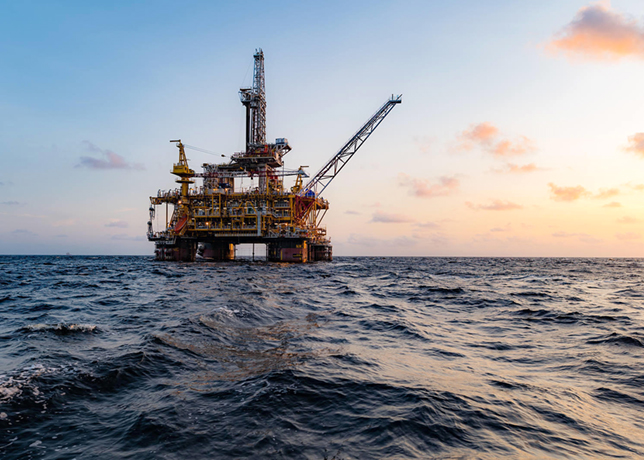
One of the highest profile initiatives currently under way in Bahrain is the search for commercial quantities of oil off the island nation’s shores. Since dividing its entire offshore acreage into four blocks and conducting a bidding process praised for its transparency, Bahrain has watched eagerly as US oil major Occidental (three blocks) and Thailand’s state oil firm PTTEP (one block) progressed with technical studies designed to assess the likelihood of finding new deposits of crude.
“Occidental had one year to do a geological and geophysical study and they completed that now in February 2009. That process provided them with much more in-depth information about the possibility of finding oil and gas and they then had the option to withdraw – but they have given us notice in writing that they want to continue, which is a good sign,” Dr Mirza explains.
The US firm will be drilling its first exploration well in Block 4 by the end of this year, with PTTEP set to follow that example and do likewise in its solitary exploration block sometime in 2010.
“So we can say 2010 will be an important year for us in offshore exploration to find if there is the possibility for new commercial discoveries of oil and gas,” says the minister.
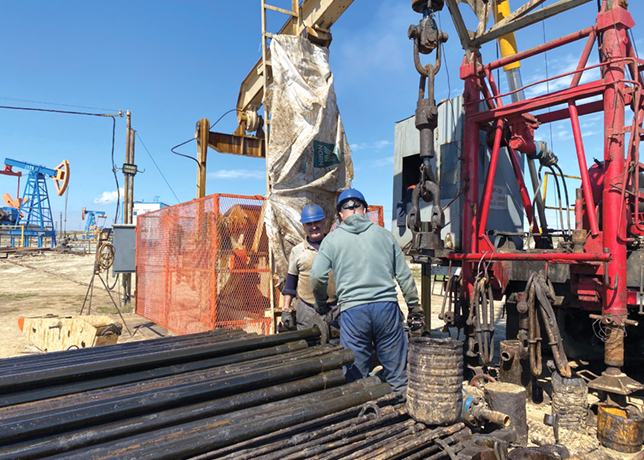
Not that Noga is sitting on its hands while this particular round of exploration takes its natural course, having simultaneously authorised the Bahrain Field Development project. After taking soundings from several IOCs, the decision-makers in the country’s oil and gas industry are now more convinced than ever that, new advanced recovery techniques will allow it to significantly increase production from its onshore Awali field.
Securing its second major project in Bahrain, Occidental beat off competition from ExxonMobil and Maersk to win the contract for this onshore initiative. Dr Mirza says that Noga hopes to sign a Development and Production Sharing Agreement (DPSA) with the firm by the end of the first half of this year – the anticipated extra production to be a welcome fillip for the country no matter what the outcome of the current offshore exploration.
“They will increase our oil and gas production significantly which will bring in additional revenues to the government of Bahrain. So even if the offshore exploration is not successful the Bahrain Field development is good news for the kingdom,” he says.
Highlighting the growing momentum evident in the Noga-led push to maximise all of its potential oil and gas resources, Bahrain will also be embarking on a search for onshore deep gas, which will see invited partners go deeper than ever before in the hunt for a precious resource increasingly crucial to Bahrain’s continued industrial development.
“Bahrain has drilled to various depths over the years – first 2,000 feet below the earth and 5,000 feet below the earth and then 7,000, then 10,000, then 15,000 and then 16,000 – but we haven’t drilled deeper than 16,000 feet,” explains Dr Mirza.
Now an independently commissioned study carried out by contractor Schlumberger has shown good prospects for exploration depths at greater depths, and a new search is likely to go as deep as 20,000 feet underground.
Eighteen major oil companies have already indicated their interest in the project by registering for access to the data room in Bahrain which holds the seismic information of the proposed search area, a number that Dr Mirza considers quite good.
In addition to these sterling efforts to make the most of its domestic supplies, Bahrain is vigorously seeking to secure its energy security by talking with other countries.
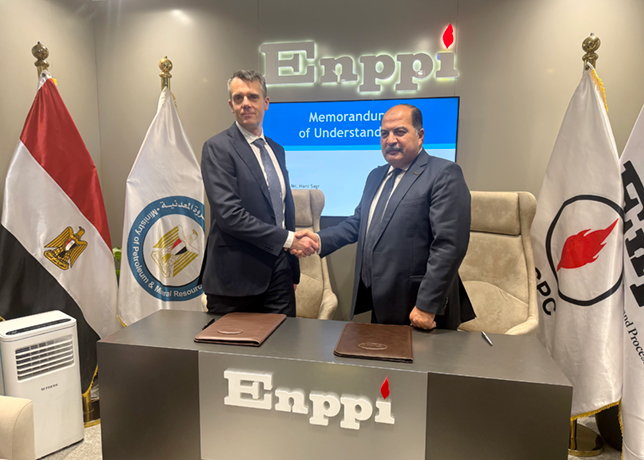
A newly signed memorandum of understanding (MoU) with Shell will explore a number of possibilities including comparing the viability of the building of facilities to receive liquefied natural gas (LNG) from suppliers versus pipelines from neighbouring countries.
The upgrade of the onshore Awali field and the potential discovery of reserves of deep gas will give the country what Dr Mirza calls “breathing time” to assess its best option in terms of a partnership with another country.
This multi-layered approach has “saved the country” from gas supply shortages and will continue to support the industrial development of Bahrain which includes ambitious expansion plans by firms such as the state-controlled aluminium producer Aluminium Bahrain (Alba).
The LNG option has some obvious attractions, he reveals.
“What that does is give you the flexibility – you are not tied to the country with which you have a pipeline. You can bring it from anywhere. For example, in future you can import gas from wherever you want like say Kyrgyzstan or any other country discovering huge quantities of gas. You don’t need to be tied to your neighbours with the pipeline.
“We are looking at how feasible that is, and it requires building receiving facilities and making sure of what the costs are compared to pipeline gas...but we have opened the door of cooperation with Shell and will await the results of their studies.”
Such a packed schedule of negotiations and agreements on a wide variety of initiatives may provoke some onlookers to ask why the country does not tackle one project at a time. The answer is the minister believes simultaneous initiatives have added benefit for Bahrain.
“Some people may ask ‘why are you talking to all of them?’ What we are doing is so that if one option doesn’t work, another may work. Also these people know there is a fair competition between them, so we get the best for Bahrain, and for our self sufficiency.”
Elsewhere, the kingdom is progressing with a new lube base oil plant which will be built at a cost of more than $400 million in partnership with Finnish firm Neste Oil.
The deal will see a new firm – Bahrain Lube-based Oil Company – come under the umbrella of Noga, in addition to its existing enterprises like Bapco, Gulf Petrochemical Industries Company (GPIC), Bahrain National Gas Company (Banagas) and Bahrain Aviation Fuelling Company (Bafco). Bahrain’s 55 per cent stake in the lube base project will be split between Bapco and Noga Holding.
Dr Mirza says that the global financial crisis has not affected the progress of such an ambitious number of developments.
“If you look at the projects we have gone into, on all the main projects we don’t bear one cent of the cost. For instance, in exploration the international oil companies bear the cost and we only share the fruits with them if they are successful, if they are not successful they absorb all the cost.”
In the meantime, the industry continues its invaluable contribution to Bahrain’s economy, with oil receipts making up more than 75 per cent of government revenues, and providing an immeasurable boost to the local economy in providing jobs for over 5,000 people locally, as well as a significant number of contractors who work on its many projects.
“With the formation of Noga, the political leadership as part of the economic reform has now put Bahrain on the international oil map,” says Dr Mirza.
“Bahrain now is becoming a focal point for the international oil companies which was not the case before. There has been a rejuvenation of the oil and gas sector.”


