








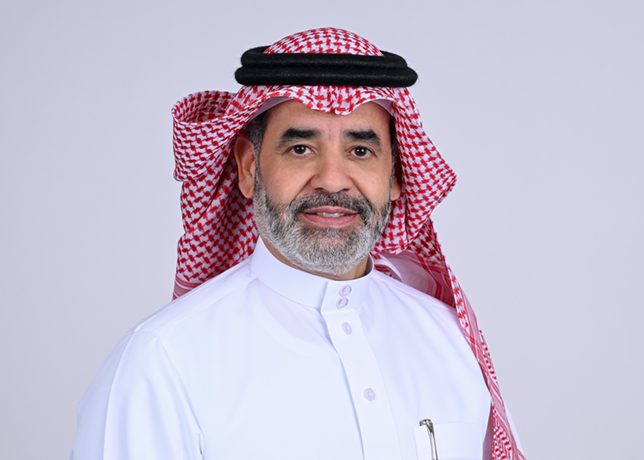







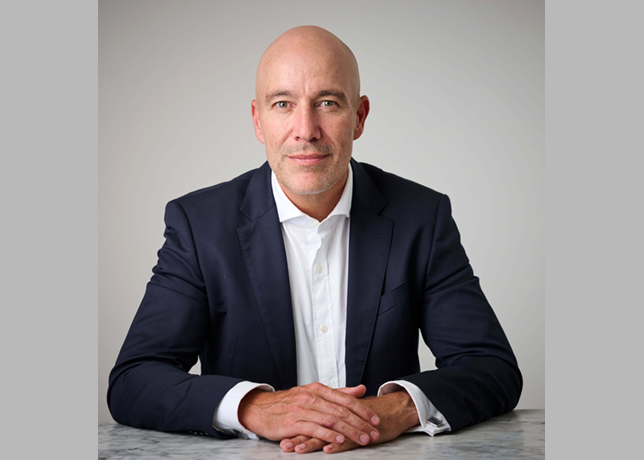

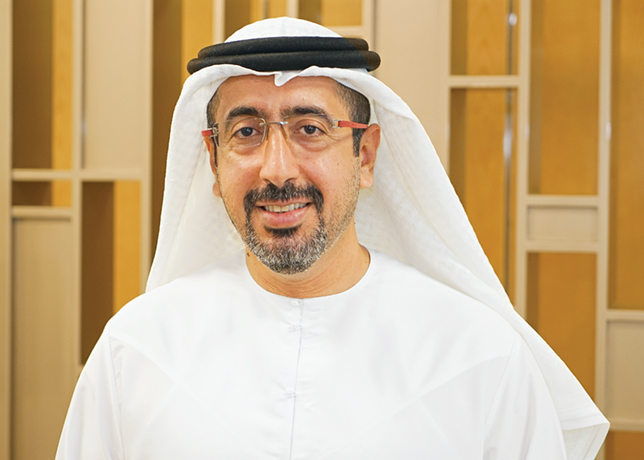









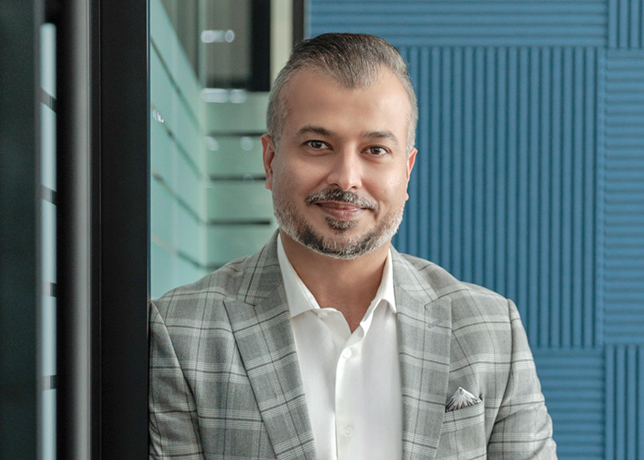


Abdulkarim Al-Sayed, chief executive of Bapco, is in a confident mood as he surveys a significant year of achievement for the national oil company, which remains a powerhouse for Bahrain’s national economy and continues to implement strategies for sustainable long-term growth.
Bapco’s increasing stature as a reliable and long-term supplier of quality petroleum products is reflected by exports to more than 40 countries, with the company intensifying efforts to maintain its leading position in global markets.
Al-Sayed is confident that as a result of the strategic investment programme set in train more than a decade ago, Bapco can take a leadership role in refining and process technology. The company is now entering new export markets, particularly since the commissioning of its export-led low sulphur diesel production plant (LSDPP) in 2007.
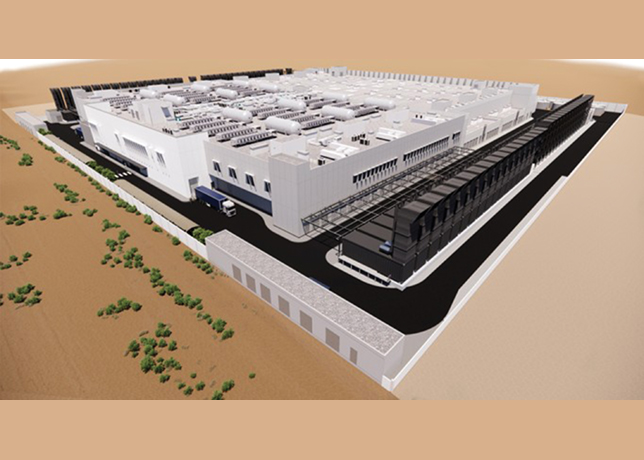
One of the most complex projects ever undertaken by Bapco, the $725-million cutting-edge LSDPP is one of the cornerstones of Bahrain’s strategic investment plans. The completion of the state-of-the-art LSDPP after three years of intensive construction and engineering works came at the perfect time to meet increasing demand for ultra-low-sulphur diesel. The first shipments went out from Bahrain in May 2008 with the LSDPP providing 100,000 barrels per day (bpd) of competitively-priced low sulphur diesel for the global markets.
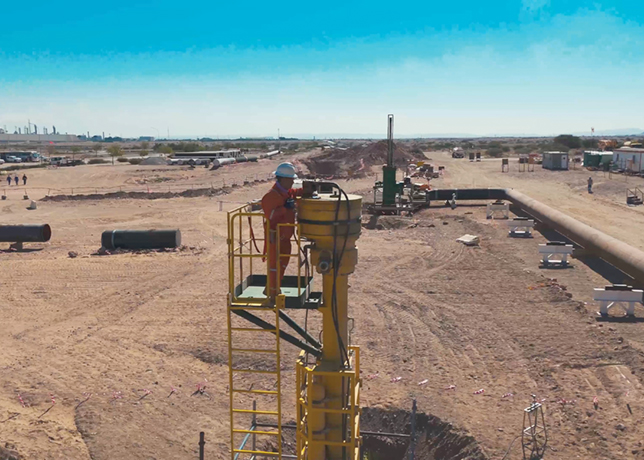
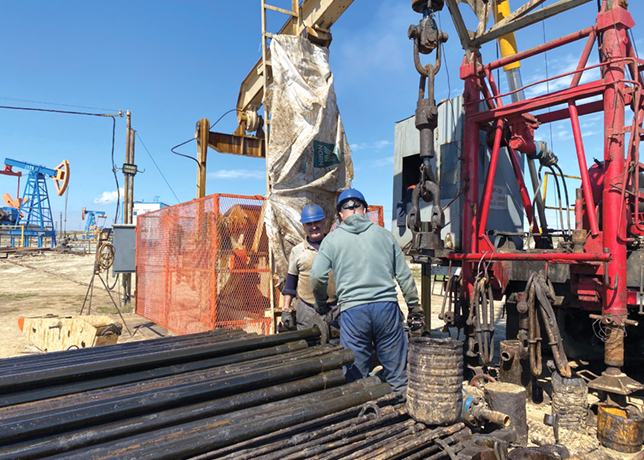
Bapco, in conjunction with Noga, continues to spearhead a raft of initiatives across all its integrated operations from enhancing yields on its onshore field reserves to the exploration and development of all four offshore oil blocks. An ‘in principle’ agreement is under discussion to replace and reroute the over 60-year-old A-B crude pipeline between Saudi Aramco and the Bapco refinery with project cost estimated at $350 million and completion within three years.
Bapco’s rigorous implementation of environmental management systems, integral to the company’s operational culture for decades, is further underlined by the recent ISO14001 certification. This third-party award by Bureau Veritas recognises Bapco’s proactive culture of comprehensive environmental compliance reducing the impact of its operations on land, water and in the air.
In January 2009, Bapco commissioned the $151-million refinery gas desulphurisation project (RGDP), one of Bahrain’s most important environmental projects and integral to the company’s ongoing commitment to the effective management of the environment and health and safety compliance, The RGDP and other planned projects reflect Bapco’s absolute commitment to excellence in environmental protection.
Bapco employees have worked more than 4.5 million hours with out a single lost-time accident. Its innovative training schemes led to 618 Bahrainis graduating from the Skills for the Workplace initiative. International scholarship programmes for Bahrainis in chemical, petroleum engineering, geology and geophysics have recently been announced to meet the challenges of offshore and onshore production. Other academic study programmes are also ongoing.
Since Al-Sayed assumed the top position in late 2007, he has decisively taken the company forward re-energising it with a host of internal and external initiatives. As well as ensuring that Bapco’s operational performance maintained its competitive edge with an increasing product array, Al-Sayed’s commitment to the personal development of Bapco’s staff is paramount. A new award, the Chief Executive Award for Excellence, recognises employees who live and champion Bapco’s corporate values and outstanding initiative.
Bapco’s leadership role in process technology and as a global supplier is illustrated by about 93 per cent of its refined products being destined for the global markets.
Agreements are in place with international oil companies (IOCs) for offshore exploration projects. Ground works will start this April on the new world-scale $430-million lube base oil manufacturing plant next to the LSDPP.
“IOCs including Occidental (Oxy) and companies like Neste Oil are investing in Bahrain. The indications are that in spite of the fact that oil prices are down now, investors and partners look long-term. Working with Noga, agreements are now being concluded with Oxy for the development of the onshore Bahrain Field with the aim of enhancing production.
“Oxy is also awarded the exploration of three blocks out of the total of four, with the other block under PTTEP of Thailand. Another key initiative is launching the deep gas development. We are working closely with Noga to develop the gas potential and of course a number of companies have already shown interest. All indications are positive and there is strong interest by IOCs and other interested parties. The deep gas has still to be allocated as both Noga and Bapco have decided it should be a separate and exclusive agreement. The official launch will be when we will invite and give appointments to those companies that are willing to attend the data room and register their interest,” says Al-Sayed.
According to Al-Sayed, recent initiatives from Noga and Bapco highlighting the initiative in Houston resulted in strong interest with up to 30 companies looking to register their involvement.
“There is definitely good interest and it is especially encouraging that when the whole world is going through recession one finds companies interested in coming to Bahrain,” he adds.
For the investment plans at the refinery, Al-Sayed confirms that there is no change in the long-term strategy.
“We have not changed anything and the projects that are currently active already have finance in place. For projects that are coming in to the development phase, we will not require any specific funding other than the current allocations during the year. For the planned replacement pipeline for the refinery and Saudi Aramco, we are estimating a cost of around $350 million, but as yet we have not arranged any finance because our project is not yet approved. What we are actually doing is that we are working with Saudi Aramco on the front-end engineering design (Feed) and by the end of 2009 we will know the exact cost of the project. We will then submit it to the authorities concerned to give us the green light to go ahead. Only after that we will be talking about who wants to finance it,” adds Al-Sayed.
For the project, a new 30-inch diameter pipeline is planned, running 115 km avoiding residential areas. The pipeline capacity will be increased to 350,000 bpd from 235,000 bpd.
“We do not expect this pipeline project to take more than three years in total for the design engineering and construction. There are other refinery upgrade projects, but again we do not want money in 2009 as we are proceeding from whatever is already approved, as is the case with the lube base oil plant at $430 million which is a world-scale facility,” he continues.
Bapco has a history of managing its investment strategies well, having secured the LSDPP at a competitive price.
“Yes we secured a good price at $725 million for the LSDPP even by today’s depressed market conditions. If we were building that plant again it will likely cost twice what we paid now. Today, the LSDPP will cost around $1.5 billion,” says Al-Sayed.
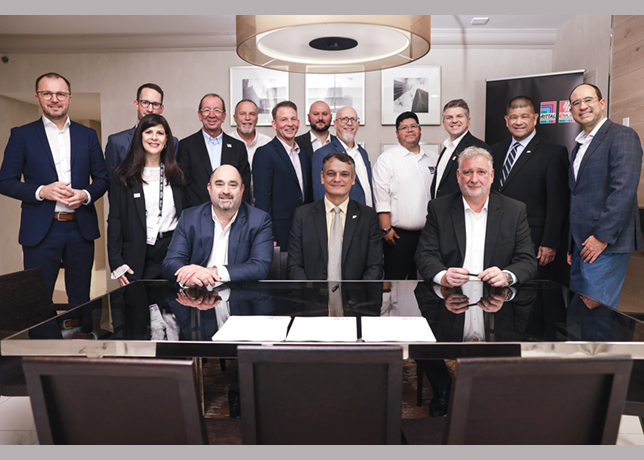
In June 2008, Bapco, Noga and Neste Oil of Finland signed a joint venture for the lube base oil plant that will be built at a cost of $430 million next to the LSDPP, which provides the feedstock from its hydrocracker.
Al-Sayed emphasises the strategic importance of this downstream capability for producing high quality sulphur-free base oil for top-tier lubricants.
“Neste Oil has a very strong presence globally and in Europe in terms of market share. For Neste Oil this a very strategic project because the feedstock is available next door coming from one plant to another. Our operational expertise and Neste Oil’s marketing strengths make the lube plant a fantastic opportunity to meet increasing global demand. These high-quality lubricants meet the most stringent environmental standards. Production is scheduled for late 2011,” he adds.
Al-Sayed mentions several other projects including the residue upgrade project.
“We have in mind new units coming in the future that can take the residue, typically fuel oil, and further re-process it for the market. Fuel oil sells at a much lower price than other products like diesel. So the more of this we can convert into lighter products the more profits for the refinery. Our strategy is to build a plant to convert this 15 per cent fuel oil into lighter products like diesel and gasoline. This is going to be a big project, even bigger than the LSDPP.
“This year we are developing the master plan looking at all the opportunities in the refinery in terms of expansion, modernisation, cost reduction and profitability enhancement. Then we will rank the master plan accordingly in terms of project profitability as we sharpen our technological focus for long-term growth,” he concludes.


