















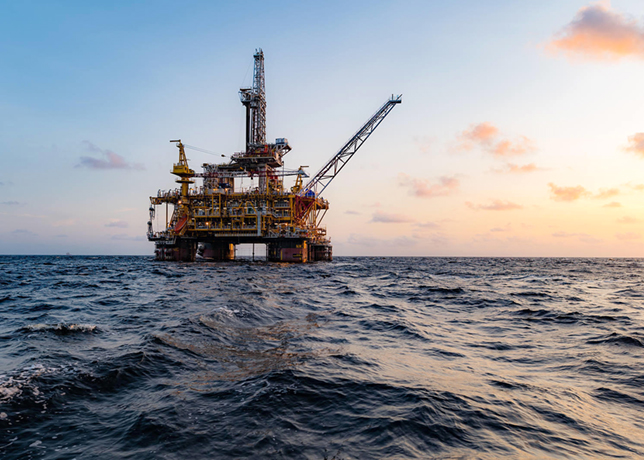












SAUDI Arabia has been a trendsetter in the development of the region’s oil, gas and petrochemicals industry and today the kingdom continues to invest billions of dollars to further develop and sustain the sector for generations to come.
Despite the financial downturn, Saudi Arabia is planning to spend SR1.5 trillion ($400 billion) on energy projects during the next five years with the aim of increasing the benefit it derives from its hydrocarbon mineral resources and to strengthen the infrastructure for its development projects. The kingdom’s flagship firm Saudi Aramco, the world’s most powerful oil company, says it has completed a $100 billion investment programme undertaken over the past few years to expand the kingdom’s hydrocarbon industry.
The funds were channelled into oil and gas output capacity expansions, petrochemicals, refining and associated projects, the state-owned firm said. The investment programme has added nearly 3.8 million barrels per day (mbpd) to the kingdom’s crude output capacity, including around two mbpd in 2009 alone, says Saudi Aramco president and chief executive officer Khalid Al Falih.
These projects have been initiated and would be coming on stream during the next few years in different fields. It is imperative that the projects should be supported by necessary sources of power at competitive prices so that they should be more profitable and should be able to compete on the international market. Sources of information suggest that the kingdom is proceeding in its energy policy in two directions.
The first is the discovery and development of oil and natural gas fields for the sake of continuing crude oil supplies to the world markets, as the kingdom has the main role in this regard in the world’s economy, being the largest oil producer and having 23 per cent of the world’s crude oil reserves or 260 billion barrels of proven reserves.
The kingdom intends to spend about $60 billion on the development of its oil sector and continues to increase its production capacity above 12.5 mbpd now and up to 15 mbpd during the next five years. Saudi Arabia intends to cope with the world’s increasing demand for oil and contribute towards achieving a balance between demand and supply and to stabilise oil prices.
The second direction is to concentrate on the development of secondary energy industries such as construction of refineries and petrochemical plants, extension of pipelines and development of natural gas processing plants with the aim of catering to the local demand for refined petroleum products and clean fuel.
The kingdom is aiming for increasing profits from these projects through cutting costs and operational expenses and thus increase revenues. At present there are projects being implemented by Saudi Aramco that would add about 1.6 mbpd to production capacity of refined petroleum products.
After completion of these projects, the total production capacity of the kingdom’s refineries would reach about 3.7 mbpd. Some of these projects are being developed with the participation of international oil firms. For the sake of producing and using clean fuel in the factories in Saudi Arabia, the kingdom is working to expand investments in the field of natural gas.
 |
|
Al Falih ... Aramco plans to |
The kingdom is in the fourth position internationally in terms of the volume of natural gas reserves. These reserves are expected to be further enhanced by 40 per cent by the year 2018.
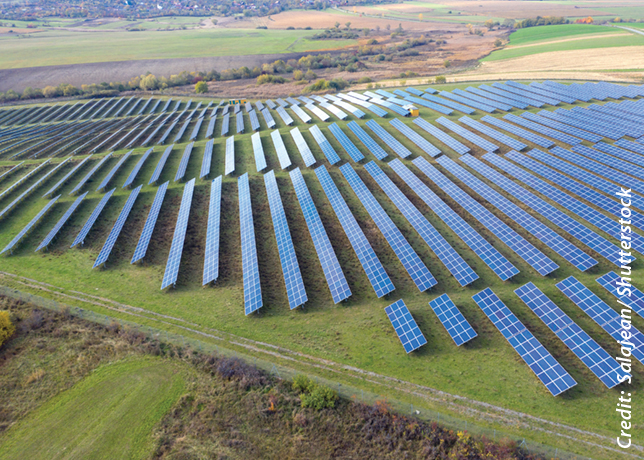
The government’s energy strategy is also concentrating on capital projects in the field of electric power, solar power, renewable energy research, environmental programmes and utilising oil revenues in pushing the wheel of development further and provision of an optimum investment environment for industrial projects, especially in economic cities.
Al Falih says the company anticipated an annual rise in demand of 1 mbpd to 2030. Most of the expected demand growth will come from Asia and the Middle East, he says.
“In the long term, we do not expect energy demand growth in the industrialised countries known as the OECD countries,” he says. However, the kingdom expects growth from the Asian continent and in particular from China, India and the Middle East.
Demand is expected to rise to 105 mbpd in the next 20 years from an average 85 mbpd currently, he says, adding that however Saudi Artabia expects a fall in supply from other countries to the tune of maybe 30 mbpd, during the same period. This would require new production capacity of 50 mbpd by 2030, he adds.
“This requires long-term investments,” Al Falih says, adding that Saudi Aramco was prepared to discuss the necessary investments to achieve this target.
Saudi Aramco’s capacity stands at a “record” 12 mbpd, says Al Falih adding that the state-owned oil company’s annual investments have been running at between $10 and $16 billion.
But the global financial crisis of 2008-09 has not spared the kingdom and Saudi Aramco finds its downstream plans in a spot of trouble in 2010.
All of Aramco’s downstream plans were in place till ConocoPhillips decided to quit the $10 billion Yanbu project in late April 2010, which sent shockwaves around the oil and gas industry and set the tone for the problems the national oil company now faces.
“It is a little bit late in the process for ConocoPhillips to be rediscovering itself and changing its strategy like this,” says John Sfakianakis, chief economist at the local/French Banque Saudi Fransi. “Many would find it surprising that a company of this size decides at the eleventh hour to pull out of the project. It was to do with Conoco’s strategy, not the economics of the project.”
ConocoPhillips says that the decision was in line with its strategy to move out of refining and concentrate on upstream hydrocarbons projects. The margins on offer in refining are no longer enough for the company, whose roots lie in the upstream sector.
Unfazed by the setback, Saudi Aramco has signed several contracts with local and international contractors for the detailed engineering, procurement and construction (EPC) of the Yanbu Export Refinery Project.
The newly incorporated Red Sea Refining Company will be responsible for the execution and operation of the project.
The project will build a new “grassroots” refinery on a site of about 5.2 million sq m. The new refinery will process 400,000 bpd of Arabian Heavy crude and produce 90,000 bpd of gasoline, 263,000 bpd of ultra-low-sulphur diesel, 6,300 metric tonnes per day (tpd) of coke and 1,200 tpd of sulphur.
The new refinery will use existing Saudi Aramco facilities to receive crude oil and export the refined products.
“We have taken many steps along the way to ensure the Yanbu project will pioneer many firsts for the kingdom in the areas of detailed engineering, human resources development, and support of local equipment and material manufacturers,” says Fahad Al Helal, the designated president and CEO of the Red Sea Refining Company.
'Approximately 70 per cent of the total project value will be spent within the kingdom.
“We have mandated that more than one million man-hours in detailed engineering must be executed in the kingdom,” he says. “That includes the full execution of the detailed engineering of the refinery’s sulphur recovery unit in the kingdom, which is the first time a major process unit of this size will be fully executed in-kingdom.
“In addition, several in-kingdom lump-sum turnkey packages will be executed covering cross-country pipelines, communication and electrical work. We will also make maximum use of the Saudi work force during the detailed engineering and construction phases,” he says.
The Yanbu project was not the only scheme to be affected by the financial crisis as Aramco has also moved a planned joint venture refining and petrochemical plant in Ras Tanura to Jubail.
Sources close to the Dow joint venture say that a combination of costs, profitability and demand for petrochemicals products have led the partners to make a series of changes to the scheme, which will in turn impact $30 billion-worth of projects. The partners have now decided that the scheme will be moved to Jubail, where it will sit alongside the Satorp refinery.
The project will now be largely fed by ethane gas provided by Aramco and to a lesser extent liquid feedstocks provided by the Jubail refinery. The location change will cut the cost of building the complex by up to 40 per cent, one adviser on the scheme says, while the use of ethane will significantly improve margins.
“Dow was quite concerned by the cost of the plant, and the returns it would get,” the adviser says. “In a lot of ways, this is a bit of a U-turn for Aramco, but it means that the project goes ahead, and after a lot of delays, they need it to move ahead.”
The site change has caused Aramco to cut back its own plans for new refining capacity. The Ras Tanura expansion has been cancelled, as it is now surplus to requirements in terms of both feedstocks for the petrochemicals scheme and supply for international fuel markets.
Domestic demand will be met by both the Jubail and Yanbu projects, along with another $7 billion refinery scheme at Jizan in the south of the country.


