















TOP engineering procurement construction (EPC) contractor Petrofac expects to cash in on the Middle East EPC market as it gains more prominence in the coming years.
The regional leader, which has big-ticket Middle East contracts worth over $7 billion and a $3.4 billion mega-deal in Turkmenistan, has made a successful entry into Iraq. The firm won a competitive tender of a $240-million deal from Shell for the development of the southern Majnoon field.
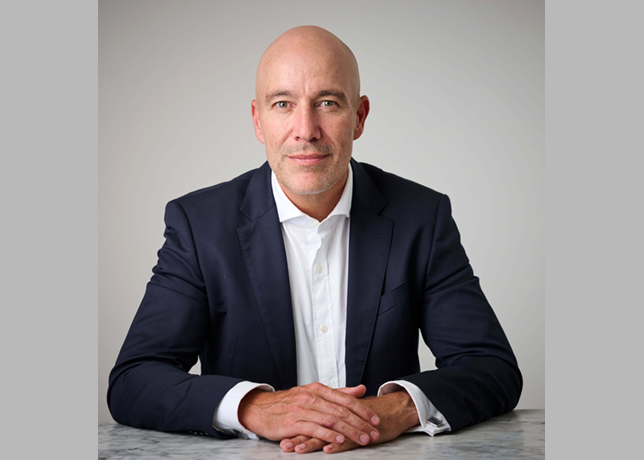
Group chief operating officer Maroun Semaan predicts like-for-like net profit growth in 2011 of “at least 15 per cent” for the company, despite the EPC contracting environment remaining “highly competitive”.
In the Middle East, Petrofac is currently working on eight EPC projects, all in various stages of engineering, procurement and construction, Semaan tells OGN in an interview.
In March, Petrofac bagged a $600 million contract for gas sweetening facilities at Qatar Petroleum’s Massaieed and Dukhan industrial districts and August saw two big wins in Kuwait: a $400 million contract for gas and oil pipelines from Mina Al Ahmadi to the Azzour and Shuaiba power stations, and a $430 million award for effluent water and sea water injection facilities, which will increase recovery in the Raudhatain and Sabriyah oil fields.
Excerpts from the interview:
How many EPC projects are you currently executing in the region? Which are the parts of the region that you have a major presence?
In the Middle East we are currently working on eight EPC projects, all in various stages of engineering, procurement and construction. Petrofac has a strong presence throughout the Middle East and will always seek to strengthen that capability where we can and we have a good visibility of future opportunities.
In Abu Dhabi we have two major ongoing projects, each in excess of $2 billion as well as our large operational centre, Petrofac Emirates, a joint venture company with Mubadala. Regionally, we also have ongoing EPC projects in Oman, Saudi Arabia, Qatar, Iraq and Kuwait notwithstanding the many projects we are executing elsewhere such as Turkmenistan and Algeria.
What is the total value of these projects?
In the Middle East region, Petrofac is executing ongoing projects with a combined original contract value of around $7 billion.
To put this in context alongside our other EPC activities, during 2010, Petrofac’s Engineering & Construction business achieved an order intake of $6 billion, which included the company’s largest award of $3.4 billion for the EPC phase of a contract with Turkmengas on the South Yoloten project in Turkmenistan.
How long have you been in the Middle Eastern region?
During 2011 Petrofac celebrated its 30th year of business operations and its 25th year in the Middle East.
How do EPC projects in the Middle East compare with other projects you have/are executed/executing elsewhere in the world in terms of 1) ease of procedure 2) material procurement and 3) skills availability?
Petrofac has a common operating platform for all its EPC projects so process and procedure is consistent wherever we are executing work. The oil and gas market in the Middle East is well established so from an external perspective, processes and procedures have evolved from experience gained over many years and, whilst it is frequently complex, we have a deep understanding of the requirements.
As far as material procurement is concerned, we operate in a global supply chain environment and procure our goods and services worldwide in order to service our project requirements. Each country we procure from has its own legislative framework and we are very familiar with the markets supporting our supply chain.
Petrofac has a large and mobile international workforce of more than 14,500 personnel. Sometimes the geographic location of a project might be challenging in terms of movement of personnel but aspects such as this is something we are very used to. Where we do see gaps -and this is certainly not a challenge unique to the Middle East – is in the development of local workforce capability. Of course there is still work to be done but I am delighted that such positive progress is now being made in this area.
How many new projects did you win in 2011? Which are they? Could you elaborate on the nature of work, the value of the projects etc?
In 2011, our engineering and construction business has secured new orders of $1.6 billion with contract awards in Algeria, Iraq and Malaysia.
In January, we were awarded a $1.2 billion lump-sum EPC contract by In Salah Gas (ISG), an association between Sonatrach, BP and Statoil, to develop southern fields in the In Salah development. The fields to be developed are Garet el Befinat, Hassi Moumene, In Salah and Gour Mohmoud. The 50-month project, to be completed in phases, will support the maintenance of plateau gas production rates of 9 billion cubic metres per annum beyond 2013.
Also in January, we signed a Risk Service Contract to lead the development of the Berantai field, offshore Peninsular Malaysia, for Petronas. Petrofac has a 50 per cent interest in the RSC, alongside local partners Kencana Energy and Sapura Energy Ventures both of which hold a 25 per cent interest (together the ‘Berantai partners’). The Berantai partners will develop the field and will subsequently operate the field for a period of seven years after first gas production. As part of the fast-track development, a wellhead platform will be installed to support the drilling of eighteen wells, with a second wellhead platform expected to be installed in a subsequent phase. Both platforms will be connected to a FPSO vessel which will be jointly owned by the partners. Produced gas will be exported by subsea pipeline via the Angsi Field, while oil will be offloaded via shuttle tanker.
In March, Petrofac announced the award of a contract in excess of $240 million by Shell Iraq Petroleum Development for developments in the Majnoon Field, Southern Iraq where Petrofac is providing engineering, procurement, fabrication and construction management services for the development of a new early production system comprising two trains each with capacity for 50,000 barrels of oil per day, along with upgrading of existing brownfield facilities.
Which is the largest order win by you so far? Could you give the details?
Our largest project award to date was in December 2010 in Turkmenistan. Following successful completion of the first phase of the South Yoloten project for Turkmengas, the state-owned national gas company of Turkmenistan, Petrofac commenced work on the second phase of the project, worth $3.4 billion.
When complete, this project, which is situated approximately 400 km south east of the capital Ashgabat, is expected to export 20 billion cubic metres per annum (bcma) of gas. It is scheduled to last 31.5 months and Petrofac will provide engineering, procurement and commissioning work on a lump-sum basis for a 10 bcma gas processing plant along with the infrastructure and pipelines for the entire 20 bcma development. The feed gas from the field contains up to 6 per cent H2S, and the development will include gas treatment and sulphur handling facilities, along with well pad facilities, gathering facilities, infrastructure and utilities, condensate processing, storage and export. South Yoloten has recently been announced as the second largest gas field in the world, with over 700 tcf of gas reserves.
Whilst we have substantial experience of working in the region, Turkmenistan is a new market for us, albeit one with considerable potential, where we would like to build a sustained presence. Delivering this contract successfully will underpin our endeavours in this respect and I look forward to developing our relationship with Turkmengas as we move into the second phase of our work on this important development.
How was the EPC market for you last year? Do you expect a rise in profits in the current year? If so, by how much?
2010 was a very successful year for Petrofac with the group recording record results. Whilst we cannot speculate on the exact numbers, we remain confident that we will achieve like-for-like net profit growth in 2011 of at least 15 per cent.
In the highly-competitive EPC market, what are the major challenges being faced by you? How do you propose to tackle them?
In a dynamic industry such as ours, we cannot be complacent, we need to keep looking for differentiated opportunities, and keep a close watch on the competitive arena. However, with a deep understanding of our customers and markets we are comfortable that we can plan for and mitigate for changes in the macroeconomic environment.
Specifically, this year has seen movement in the political landscape within which there have been and continue to be significant changes across the Middle East and North Africa regions. However from a Petrofac perspective, managing country risk has always been an important part of operating in the region and we continue to monitor the evolving political situation closely to ensure that the interests of our employees, stakeholders and investors are safeguarded.
What are the prospects for the EPC market in the coming years? Do you see an increase in the number of oil and gas projects awarded in the coming years?
The Middle East is strategically important to Petrofac: we have a long history and strong track record in the region. From the visibility we have of our prospects and the publicly available information we have no reason to doubt that the region will gain more prominence.
To cite a specific regional example, the commencement of our first major project in Iraq for Shell where we are undertaking the engineering, procurement, fabrication and construction management services for the development of a new early production facility was very important to us. Today, we continue to strengthen our in-country team to service the local economy and would hope to be closely involved in Iraq’s future development plans.


