























Gas-rich Qatar is putting the final touches on an export deal for 3 million tonnes a year of liquefied natural gas to Taiwan’s Chinese Petroleum Corp, the first gas export deal between the two countries, which is the latest in a series of LNG maneouvres, a senior Qatari official said.
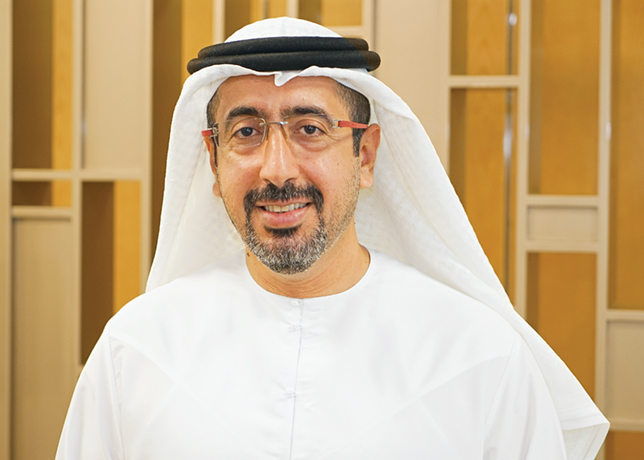
Ras Laffan Liquefied Natural Gas Co, or Rasgas, will sign a contract with the Taiwanese firm no later than September for a 25-year contract worth between $500 million and $600 million a year, said Rasgas Vice chairman Ibrahim Ibrahim.
The expected agreement, which extends previous negotiations over a 1.7 million ton a year deal, will provide free-on-board delivery of the cargoes to Taiwan from 2008, said Ibrahim.
A Taiwanese shipping company, in which Qatar will hold a 25 per cent stake, will transport the cargoes of LNG produced by Rasgas’ gas-processing trains four and five.
Rasgas will offer an equity stake to CPC once the deal is sealed, said Ibrahim, who is also a senior economic adviser to the government.
State-run Qatar Petroleum owns 63 per cent of the company, ExxonMobil Corp has 30 per cent, with the remainder held by South Korean and Japanese firms.
Ibrahim said Qatar hopes to raise its LNG exports to around 70 million tonnes a year by 2010, up from current exports of around 16 million tonnes a year.
Adriatic terminal
Italy’s antitrust authority has approved plans submitted by a joint venture between ExxonMobil, Italy’s Edison and Qatar Petroleum to install and manage an offshore LNG terminal in the Adriatic, according to the regulator’s bulletin published.
The company, Terminale GNL Adriatico, was created after ExxonMobil and Qatar took over the project from Edison in November. The two companies stepped in and each acquired a 45 per cent project stake, after Edison became bogged down by project costs and delays. Edison still holds a 10 per cent share. Delays in obtaining project approvals from local officials stalled work for three years, escalating costs and causing backers to revamp designs for the 8 billion cu m per year capacity terminal in Italy’s North Adriatic.
In this week’s decision, the authority noted that Italian Eni maintains a dominant position in Italy’s gas sector and that the project will not impede or restrict competition.
The companies have said that startup is planned for 2007. Gas for the terminal will come from Qatar’s giant North Field.
Exxon expands
ExxonMobil Corp plans to expand its liquefied natural gas business around current and future projects in Qatar that will turn the nation into the world’s largest supplier by the decade’s end, a senior executive in charge of the developments said.
Rich Kruger, ExxonMobil Production Company’s vice president for Asia Pacific/Middle East, said Qatar is the “cornerstone” of the company’s LNG business, which is being grown to meet future demand for natural gas.
“LNG and Qatar, particularly, will be a huge part of our business going forward,” Kruger said.
Already, ExxonMobil, the world’s largest publicly traded oil company, and its partners provide a fifth of the world’s LNG.
Besides the tiny Persian Gulf nation, ExxonMobil is working on LNG projects in Indonesia, Australia, Angola and Nigeria.
“Today, LNG is less than 5 per cent of the gas that is marketed,” Kruger told Reuters in an interview. “Our outlook would say that in 15-16 years’ time, LNG would be approaching 20 per cent of the gas that is traded.”
ExxonMobil is a partner in all of Qatar’s existing LNG developments, holding between 10 and 30 per cent interests in each.
By the end of the decade, ExxonMobil and its Qatari partners expect to provide 60.8 million tonnes of the nation’s annual production forecast of roughly 70 million tons, Kruger said. That would make Qatar the world’s largest LNG exporter.
About half of that will come from two new Qatar projects that are each designed to deliver 15.6 million tonnes a year, scheduled for completion in 2008 and 2009.
The first to be finished will ship LNG to the United Kingdom and Western Europe, and the second to the United States. Kruger said that will “be the largest LNG import project planned for the US.”
To bring the LNG to market, ExxonMobil is investing heavily throughout the world in re-gasification terminals, where the super-cooled liquid gas is brought back to its natural state for sale.
The company is also looking at the best ways to meet its need for the costly, specially-outfitted tankers required to move LNG across the globe. Whether it will build the boats or lease them is not clear yet, Kruger said.
“I suspect it would be a mix. We’d have significant chartering and perhaps some equity ownership,” he said.
The traditional long-term contracts that typify the LNG business today will remain, but Kruger foresees the opportunity to sell LNG on a spot basis in larger markets like the United States and United Kingdom on a spot basis.
The LNG, once re-gasified at a major terminal, could be introduced into the infrastructure and sold to a variety of buyers on a short-term basis.
“Price-wise, it can compete with whatever the market price is,” he said. “That, to me, is part of the evolution of LNG.”


