
















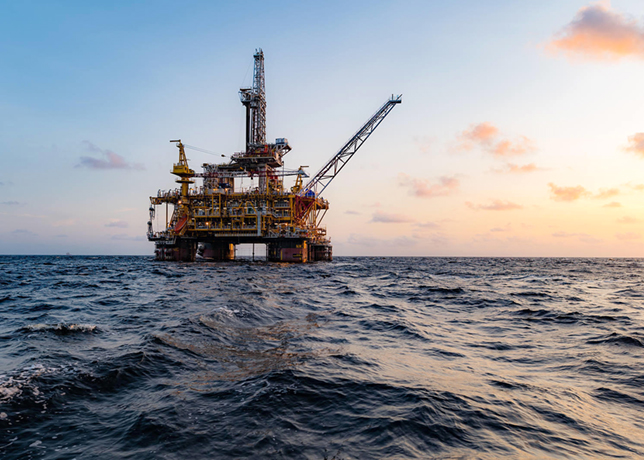






















China’s dominant offshore oil and gas producer China National Offshore Oil Corp Ltd (CNOOC) said it may exceed domestic oil production targets this year to take advantage of soaring prices.
“We are very bullish about our ability to meet and exceed potentially this year’s production target,” Mark Qiu, CNOOC’s chief financial officer told Reuters.
However, any increases would likely be only “incremental,” Qiu said, after addressing a gathering of business groups in Sydney discussing the potential for a China-Australia free trade agreement.
CNOOC produces about 85 per cent its oil and gas from China’s offshore oil fields, the rest is produced in Indonesia.
This year it set a domestic production target of 120 million barrels of oil equivalent, up from 109 million barrels in 2003, Qiu said.
The Bejing-controlled company has doubled its capacity spending budget for exploration this year and aims to pump 140 to 145 million BOE in 2004, a rise of 7.5 to 11.4 per cent.
Total output grew at 2.9 per cent in 2003.
World oil prices stayed close to record levels of nearly $45 per barrel recently as disruptions in US and Iraqi output outweighed assurances by Saudi Arabia, the world’s top exporter, that it could immediately add supply if needed.
“At a twenty dollar (per barrel) oil prices, those marginal barrels of output, may not make sense. But today, they all make sense, even though unit costs may increases,” Qiu said.
“I think all national producers are cracking their capacity to maximum levels,” Qiu said, adding it costs CNOOC about $10 to produce one barrel of oil.
“For the offshore China part, we are trying every means to capture this extra barrel. If there is a barrel to be produced at fifteen or twenty dollars, would we produce it? Absolutely,” Qiu said.
China, the world’s second-largest user of oil behind the United States, imports about 40 per cent of its oil. Qiu said that figure would rise to 50 per cent by 2010, Qiu said.