













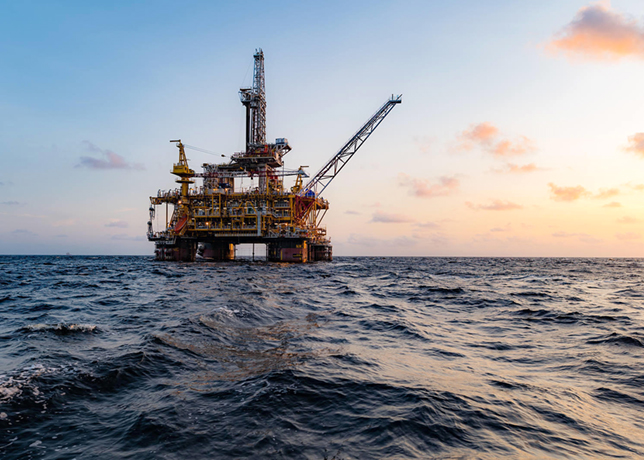


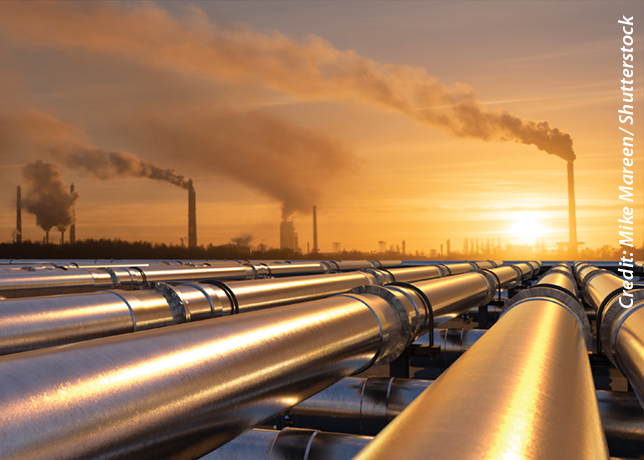













The Abu Dhabi National Oil Company (Adnoc) and its group of companies are set to receive an injection of about Dh100 billion ($27.22 billion) for projects in the oil sector in the next five years as Abu Dhabi pushes ahead with plans to boost crude output and expand its oil-related industry.
According to figures released by the Abu Dhabi Chamber of Commerce and Industry, citing government estimates, Abu Dhabi invested around Dh55 billion ($14.98 billion) between 2001 and 2007 to develop its hydrocarbon sector. Abu Dhabi controls the world’s fifth largest oil resources.
“The oil sector accounts for a large part of Abu Dhabi’s investments. The emirate is expected to have pumped about Dh11 billion into this sector in 2007 and there are indications such investments could total Dh100 billion ($27.23 billion) between 2008 and 2012,” the chamber says in a study.
The study says such large investments have boosted the UAE’s oil sector, which has grown by an average 11.7 per cent annually over the past seven years. Its contribution to the gross domestic product grew from Dh66 billion ($17.97 billion) or 44 per cent in 2001 to a record Dh227 billion ($61.82 billion) or 55.7 per cent in 2007.
On UAE’s oil output, the president Sheikh Khalifa bin Zayed Al Nahyan says the country will continue to honour its commitment of continuous oil supply to the international oil market. The UAE believes in the need to invest more in the oil sector in order to boost production, he says adding that the emirate strongly believes in the need to ensure security of demand against the security of supply.
UAE’s oil output is expected to rise to 3.5 million barrels per day at the beginning of the next decade, while its oil refinery capacity, which currently stands at 6,00,000 barrels per day, is also expected to rise to 1.1 million barrels per day soon.
Sheikh Khalifa says throughout the last 47 years of the founding of Opec, the organisation had proved its ability to positively deal with various developments on the oil market and the global economy, adding that Opec was able to achieve a balance on the oil market, pumping adequate supplies into the market to always ensure steady global economic growth.
The UAE’s oil reserve is estimated at about 98.1 billion barrels, which is about 8.1 per cent of the world’s oil reserve, while the country’s gas reserve is estimated at six trillion cu m.
The UAE’s current oil output stands at 2.7 million barrels per day, while its gas output is at 65 billion cubic metres per annum.
It is but natural that the UAE intends to play a key role in the oil producers’ organisation. And the fact is the UAE’s success in managing its economy has been praised all over the world, so much so financial institutions and developing countries across the world are seeking to emulate the UAE as a role model.
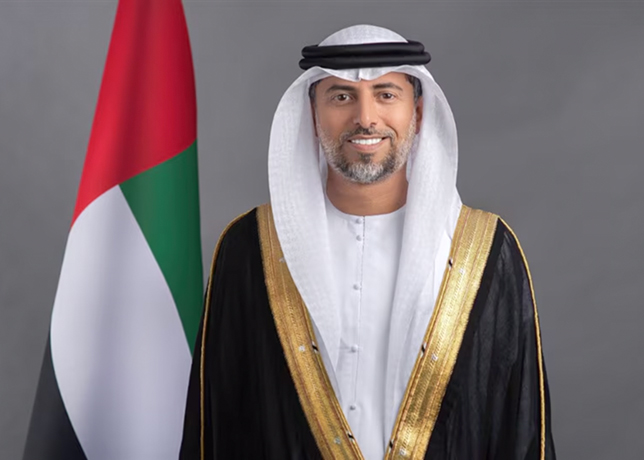
The UAE minister for Energy Mohammed bin Dhaen Al Hamli says he thought Opec was on the right path in working towards oil market stability.
“I am confident the organisation is on the right path. I see Opec continuing to work towards ensuring oil market stability, while engaging consuming nations in a continuing dialogue,” he says.
On the most challenging experience he faced while serving as the president of Opec, Al Hamli says: “Well, quite apart from having to travel so extensively throughout the world, the most challenging experience has been the need to continuously maintain the momentum in the producer-consumer dialogue.
The last few years have seen a marked increase in the level of engagement between oil consuming and producing nations, he says.
“For me personally, it has been very satisfying to see there is considerably greater mutual understanding between the two sides. Both producers and consumers understand that we need to work together to ensure stable oil markets. Continued global economic growth is the aim of both producers and consumers,” the minister explains.
Opec members have two-thirds of the estimated crude oil reserve in the world. Natural gas reserve has also increased in the last four decades as latest statistics show gas reserve is currently at about 80 trillion cu m.
Spearheading UAE’s exploration, production and distribution of oil and gas, Adnoc, one of the ten largest oil companies in the world, has been engaged in all phases of the oil industry. Adnoc manages and oversees oil production in the range of 2.5 million barrels per day oil and 6.5 billion standard cubic feet per day of gas, which makes Abu Dhabi Abu Dhabi renowned for its high production potential and large territories leading to huge opportunities for expansion, says Mohamed Juma, manager, Onshore Division Exploration and Production Directorate, Adnoc.
“In the last few years significant achievements were made in the expansion of the development of the gas fields, to meet increased demand from industry gas users and gas injection requirements, in order to enhance oil and condensate recovery from the producing fields.” he says.
Moreover, he stresses that Adnoc’s oil and gas industry foundation and strategy are based on a Win/Win relation with local and international oil companies.
“In the UAE (Abu Dhabi), the oil and gas sector enjoys open/transparent competitive tendering policy/procedures where the selection of the qualified winning bidder is based on technical qualification and best commercial offers,” he says.
Juma points out that Adnoc was seriously evaluating the development of sour gas reserves in Abu Dhabi, asserting that technical and economical studies were under way to select an optimum development scheme that could give leverage to applicable technology and best developing and operating procedures and practices to minimise the cost and improve overall quality in term of HSE, integrity and operability.
“If successful, a huge gas supply reserves would be available to support the increasing demand for gas,” he says.
With the oil sector dominating the growth and finance of the UAE, Abu Dhabi and Dubai have been the main beneficiaries of oil revenues. But Abu Dhabi’s dominance is clear with its proven crude oil reserves of 92 billion barrels comprising 94 per cent of the UAE’s total reserves and 8.6 per cent of the world’s oil reserves. According to the ministry of economy, Abu Dhabi was the main contributor to the UAE’s GDP, and almost 56 per cent of the emirate’s GDP was derived from oil. Oil’s direct share in Dubai’s GDP was only five per cent.
While oil has remained critical to the UAE’s economy, the pursuit of a liberal economic strategy away from oil dependency in recent years has contributed to a significant diversification into trade, manufacturing, real estate, tourism, financial services and banking. Today, the economy is less dependent on oil exports when compared to other countries in the Gulf.
Even so, for the last 35 years the UAE’s growth story has predominantly been an oil price story while volumes have risen from 1.26 million barrels a day in 1985 to 2.36 million barrels a day in 1995, and have remained more or less in that vicinity for the past 10 years. Fluctuations in global oil prices have significantly impacted the country’s growth pattern.
During the mid- and late-1970s, rising prices led to large current account surpluses and development picked up. Between 1975 and 1980, GDP (at constant 2000 prices) grew from $29.4 billion to $40 billion. The UAE’s per capita GDP increased from $16,200 in 1975 to $29,300 in 1980, making it one of the highest in the world. Since 1981, the dirham has been pegged to the US dollar at the rate of 3.67. With oil priced in US dollars and the UAE having huge investments in the US, it was felt that the dirham’s pegging to the dollar was the best course to achieve currency stability and to avoid macroeconomic uncertainty.
Though oil’s share of GDP has declined, it still remains substantial at about 27 per cent, up from a low of just 20 per cent in 1998 when oil prices slumped, but significantly down on the 60 per cent reported over the 1980s. This reflects the greater diversity of the economy.