
















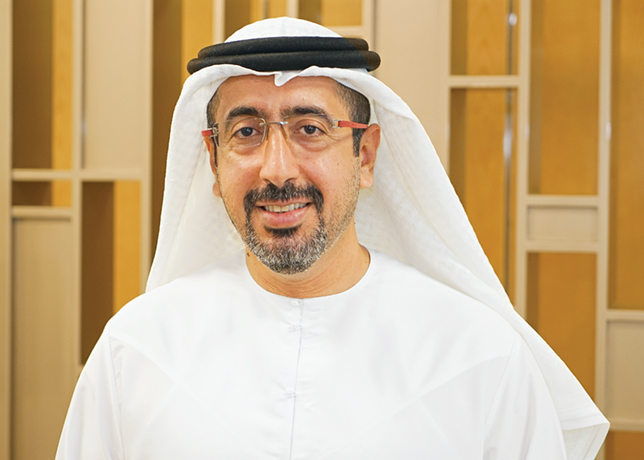









SAUDI Arabia will exploit most and possibly all of its potential oil fields in the future as the kingdom continues to invest in maintaining its production capacity, Oil Minister Ali Naimi says.
But Naimi says he doubts Saudi Arabia would ever be called upon to produce its entire current 12.5 million barrels per day (mbpd) of capacity. “There is no question that most if not all our potential fields are going to be exploited over time, but the reason for that is that we will continue investing to maintain our production capacity,” he says.
“There is what we call a decline. We need to replace that decline every year to keep our 12.5 mbpd capacity available. Even though our sales and our production now is significantly less than that. It will go up over time and it will eat into spare capacity.”
Some $20-30 billion will be spent on oil alone in the current five-year programme of Aramco, with only one-third of every dollar spent on building additional capacity and two-thirds on maintaining existing capacity, Naimi says. “The rule of thumb. which has been good for a long time, is that for every dollar of capital you spend, two-thirds of that dollar goes to maintain capacity and only one-third goes to building additional capacity. So we are done for now with the one-third,” he says.
“When I look at the five-year programme just for oil, we are going to be spending $20-30 billion, so we are going to be spending substantial money just to stand where we are.”
With current capacity having reached 12.5 mbpd, Saudi spare capacity currently stands at 4.4 mbpd, Naimi says, reiterating the kingdom’s policy of maintaining at least 1.5-2 mbpd of surplus capacity. But he says that while rising demand would reduce this volume, the kingdom would still have some 2.5 mbpd of spare capacity by 2015.
“Today we have 4.4 mbpd of spare capacity and that will probably be with us for a while. We will stick by our policy of keeping minimum spare capacity at 1.5-2 mbpd. So we will be eating into spare capacity as demand rises. But when I look at projections, the base-case call on Saudi Arabia is probably 10 mbpd by 2015. That’s what I see. If that is the case, we will still have 2.5 mbpd of spare cap by 2015,” the minister says.
On oil prices, Naimi says they would stay in the “ideal realm” of $70 to $80 a barrel, a level seen fair by consumers and producers and defended by oil market investors.
“I think that the price will stay in this ideal realm of $70-80 a barrel,” he says. “There was a general consensus (between producers and consumers) that this is a fair price.”
The targeted price had also gained acceptance among oil market investors, the minister says.
“There is much more than Opec involved in the picture,” he says. “I think investors, speculators, hedge funds, currency and commodity funds are looking at these prices very carefully and trying to keep it there.”
If the price went to around $50 then all producers would lose out on revenue, but non-Opec producers would hurt the most as they were forced to shut down more expensive oil production, Naimi says.
A price of between $50 and $60 would lead to louder calls from Opec members to comply with existing agreed curbs, Naimi says.
The producer group has kept output targets unchanged since agreeing record curbs of 4.2 mbpd in late 2008. Saudi Arabia had kept output steady at its Opec target of 8.05 mbpd, Naimi says.
“We have no reason to overproduce because we have a commitment to Opec and $70-$80 is delivering the revenue we need,” he says. “We don't want the price to be depressed, and we don't want it to shoot up. Saudi Arabia has always stood for moderation as a principle in all our affairs and transactions. Moderation is the name of the game.”
 |
|
Ras Tanura ... expansion in doubt |
Asked whether Riyadh would need to start considering the next group of long-lead capital projects around 2014 or earlier, Naimi says: “Earlier than that, probably 2012.”
He says Saudi Arabia looked at two things every year: how to maintain capacity, which required two-thirds of every dollar spent, and production capacity relative to projected demand for Saudi crude. “We are very comfortable now and I believe we will be comfortable until 2020,” Naimi says, referring to the current capacity level of 12.5 mbpd.
“Based on projections, we are comfortable up to 2015. Whether we will enjoy the same comfort in 2020 is questionable but we have almost 10 years and I am comfortable because we look at it every year. Now if all the measures being pursued worldwide on efficiency, renewables and electric cars materialise, then I doubt we will even produce 12.5 mbpd,” he says.
Turning to the Saudi downstream, Naimi confirms the relocation of a major refining and petrochemical joint venture between Saudi Aramco and Dow Chemical of the US from Ras Tanura to Jubail, saying the original location needed “far more infrastructure than we could justify.” He says the Ras Tanura site would have a low rate of return on investment while Jubail, where Saudi Aramco and Total are building a new refinery, had “all the infrastructure” needed.
“The move from Ras Tanura to Jubail saved billions of dollars and when we looked at the [rate of return], it was extremely enhanced,” he says. “So that’s the reason, we didn’t move for any other reason than that it made a lot of economic sense.”
Rumours surfaced in March that the Ras Tanura Integrated Project, which will include the world’s biggest petrochemicals complex, would be relocated. The original plan was to use feedstock from Saudi Aramco’s 550,000 bpd Ras Tanura refinery, which is to be expanded by 400,000 bpd, along with natural gas from the company’s gas processing facility in Juaymah.
But an industry source involved in the project says the project was unlikely to go ahead in its current form, with Aramco and Dow considering relocating the petrochemical complex and that Jubail was “being considered very strongly.”
This source also says that any decision on moving the petrochemical complex would put in doubt the expansion of the Ras Tanura refinery which, with a capacity of 950,000 bpd would make it the world’s largest.
Jubail, north of Ras Tanura on Saudi Arabia’s Arabian Gulf coast, is already home to state-owned Saudi Arabia Basic Industries Corporation’s Arabian Gulf petrochemical operations, as well as the 305,000 bpd refining joint venture between Aramco and Shell.
Addressing the oil giant’s plans for managing rising domestic energy demand, Naimi says a 5.5 billion cubic feet per day (bcfd) boost in gas production capacity by 2015 would go some way toward meeting the kingdom’s future needs.
“The biggest thing we are expanding is our Master Gas System. Today our capacity is 10 bcfd and we are looking at raising that by 2015 to 15.5 bcfd. That will satisfy not all but most of our energy needs,” he says.
Naimi says that Saudi Arabia would use “all types of energy” to meet domestic demand.


