




































SAUDI Aramco is conducting a thorough review of pending downstream projects worth tens of billions of dollars, and is expected to present a slimmed down refining and petrochemical programme in the coming months.
The review was initiated after Aramco’s international partners got cold feet on several giant schemes, but could be a blessing for the Saudi company as it takes the opportunity to adjust to the post-recession realities of global oil demand.
At the beginning of the year, it looked like 2010 was set to be good year for producers, bankers and contractors in the Gulf’s downstream oil and gas sectors, with a raft of construction tenders, project financings, and good company results boosting sentiment.
But the decision by the US’ ConocoPhillips’ to quit a $10 billion refinery project in Saudi Arabia, shows that the future of downstream projects in the region is far from clear.
This year was meant to be the start of a recovery in the sector after two years in which refining and petrochemicals developments came to a grinding halt as producers weighed up record high construction costs against diminishing profits for plants.
When oil prices fell from highs above $147 a barrel in July 2008 to lows of under $40 a barrel in February 2009, and US consumer petrol prices crashed from more than $4 a gallon to less than $1.60 a gallon during the same period, producers’ margins were slashed and it looked like selling oil directly into international markets would be more profitable.
Petrochemicals produced from gasoline products such as naphtha suffered similar issues. While basic plastics produced from the natural gas ethane – typically priced at $0.75-1.25 a billion thermal units (BTUs) in the Gulf as opposed to as much as $9/BTUs elsewhere, and used to make the chemical building block ethylene – faced major oversupply against a backdrop of falling demand.
 |
|
Conoco ... focusing on lucrative |
From August 2008, when plastics prices started to slip along with oil, until March 2010, 15 million tonnes a year (tpy) of new ethylene production capacity was added in the Middle East and North Africa. Global demand fell back to 2006 levels of 115 million tpy, while production – excluding the additional Gulf production – stood at more than 132 million tpy.
But with oil prices recovering to above $80 a barrel and demand for gasoline and petrochemical products slowly starting to climb after stabilising in 2009, there is a renewed optimism in the sector, especially with construction costs as much as 20 per cent lower than at their 2008 peak.
Engineering firms and their suppliers appear set to benefit the most. Construction work is due to start this year on two major new refinery developments – the $10 billion Saudi Aramco Total Refining & Petrochemicals Company (Satorp) plant at Jubail in Saudi Arabia, and the $10 billion expansion of the Abu Dhabi Oil Refining Company (Takreer) refinery complex at Ruwais in the UAE – with plenty more contracts to come.
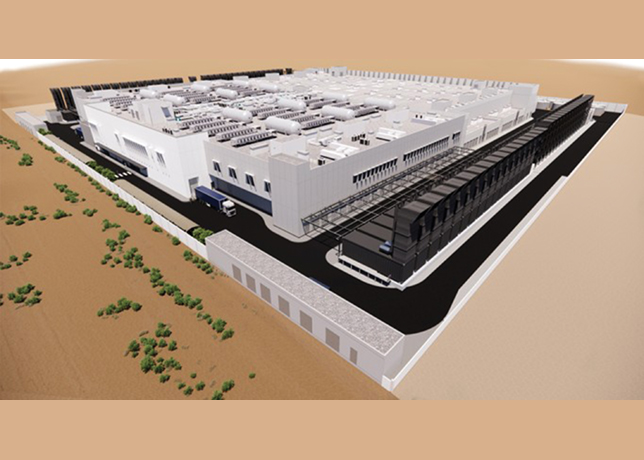
In February, final bids went in for the main engineering, procurement and construction (EPC) contracts on Aramco’s $10 billion joint venture refinery project with the US’ ConocoPhillips at the Red Sea port of Yanbu. Contractors are also preparing final bids for the last remaining EPC deals on Abu Dhabi Polymers Company’s $3 billion-plus, third-phase expansion of its Ruwais plastics complex, due in May.
At the same time, firms are gearing up to bid on front end engineering and design (Feed) deals for the Abu Dhabi Chemicals Company (Chemaweyaat) Tacaamol petrochemicals complex at Taweelah, which is due to be tendered in the third quarter of the year.
In March, sources close to the oft-stalled $17 billion joint venture Ras Tanura integrated refinery and petrochemicals project being sponsored by Aramco and the US’ Dow Chemical had said that Feed studies would finally be completed by the end of the year and that EPC deals are due in 2011. A further $1.4 billion of EPC deals for petrochemicals projects are currently under tender in the kingdom.
Boosting the positive sentiment further, first quarter results from petrochemicals producers in April, brought more good news. Regional giant Saudi Basic Industries Corporation (Sabic) turned out a profit of $1.45 billion, while the recently inaugurated PetroRabigh integrated refinery and petrochemicals plant at Rabigh, a joint venture of Aramco and Japan’s Sumitomo Chemical, made $72.4 million.
After two thin years, the industry was finally making money. Bankers, meanwhile, saw the Saudi refinery schemes as a boon as Aramco started negotiating financing deals – bank guarantees from the state energy giant are as safe as they get.
“2008-09 was extremely difficult,” says Jonathan Robinson, head of project finance for the Middle East and North Africa region at HSBC in Dubai.
“I wouldn’t say we are seeing a resurgence of the petrochemicals sector to the levels we saw in 2006-07, but nor is this just the last of the stragglers from that period. There is definitely an uptick in activity.”
But while sentiment is more positive than it has been in several years, the current recovery in downstream projects is masking longer-term concerns, suggesting that the industry could be experiencing a false dawn.
“We went through a super-cycle in 2006-08, with more new capacity being added than ever before,” says the regional business development manager of one major US engineering firm. “Now we need time for the world to digest the new capacity. The environment is still not that good for refining or petrochemicals producers and not every project that is planned can go ahead.”
Although the region’s state-owned oil and petrochemicals producers will push on with new schemes, big private companies are less likely to join in, says Paul Hodges, chairman of the UK refining and petrochemicals consultancy, International Echem.
On April 21, these concerns were brought into sharper focus when ConocoPhillips’ announced that it was pulling out of its planned $10 billion Yanbu refinery joint venture with Saudi Aramco. Conoco wants to pursue lucrative upstream oil production deals rather than try to extract profit from costly refining and petrochemicals projects.
The logic behind Conoco’s departure was understandable. The UK oil major BP reported in 2009 that it made an average of $4 for every barrel of oil it refined that year as opposed to $9.90 in 2007; refining oil simply does not make as much money as it once did.
But the company’s decision to leave a solid project just as construction awards were due and financing was being put in place shows how much it wanted to leave the development.
“The most striking thing is the sea change in the global refining sector,” says Samuel Ciszuk, Middle East energy analyst at US consultancy IHS Global Insight. “As Conoco’s decision shows, it will be quite some time before a project like this will be interesting to an oil major.”
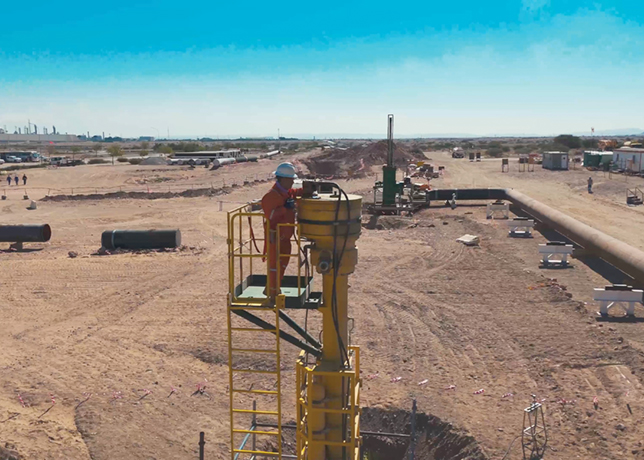
Meanwhile, Saudi Aramco has signed several contracts with local and international contractors for the detailed engineering, procurement and construction (EPC) of the Yanbu Export Refinery Project.
The newly incorporated Red Sea Refining Company will be responsible for the execution and operation of the project.


