







































DURING its first year of operations, Tatweer Petroleum, a joint venture between Nogaholding (the business and investment arm of Bahrain’s National Oil & Gas Authority), Occidental Petroleum Corporation and Mubadala Development Company, increased oil and condensate production to a new record average of 37,616 barrels per day (bpd) in December 2010 and maintained average availability of non-associated gas at 1.5 billion cubic feet per day.
But, more than anything, with a total investment in 2010 of $345 million and contractual commitments exceeding $1 billion, Tatweer is a significant contributor to the growth of the national economy.
An underlying principle of Tatweer is to give preference to local contractors, merchants and the business community for services and partnerships, and to give priority to Bahrainis in terms of employment. This will be achieved not just by investing and increasing oil production, but also by extending the productive life of the Bahrain Field for the benefit of future generations.
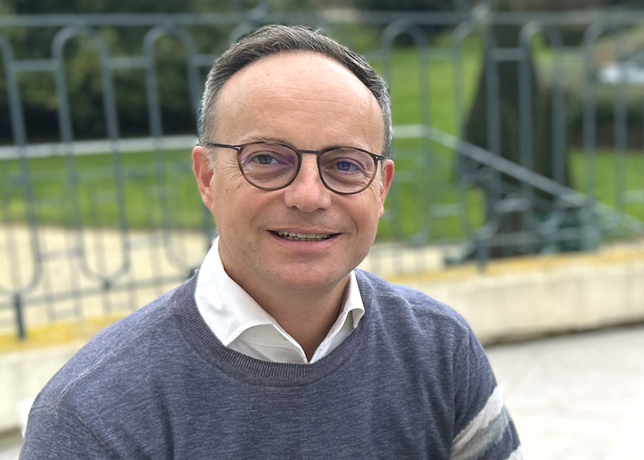
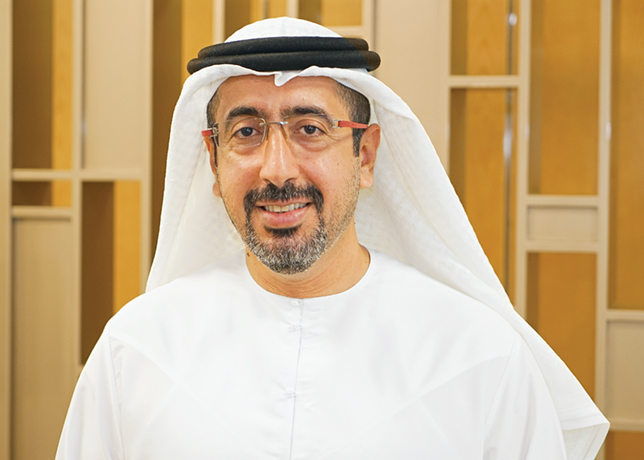
“The establishment of Tatweer provided valuable opportunity to hire Bahraini employees during the year. The company’s total workforce now numbers 624 people of different nationalities and cultural backgrounds, working together in a winning partnership based on mutual respect, shared goals and teamwork,” says Energy Minister Dr Abdul-Hussain bin Ali Mirza.
Another key contributing factor was the fast roll out of various core applications and management support systems, which enabled the company to accomplish the planned organisational infrastructures in a very short time, in order to meet its challenging oil and gas production targets for the year, he says.
Through a substantial investment over the next 20 years in redeveloping the Bahrain Field, Tatweer Petroleum will make a significant contribution to energising Bahrain’s overall economic growth and social prosperity.
 |
|
Tatweer ... delivering the goods |
Supply Chain Management (SCM), which covers procurement, and logistics and inventory management, is a critical business enabler for Tatweer. Tatweer’s total annual spend in 2010 of $345 million, involved 200 contracts and 1,300 purchase agreements. Total commitments, including contracts, purchase orders and service orders, were $1.1 billion.
During the year, the inventory inherited from Bapco at a cost of $35 million was successfully regularised, with total inventory approaching $50 million at the end of 2010. To further enhance SCM capabilities, the Tatweer Business Improvement Project (TBIP) will be introduced in 2011. This is an Oracle-based system which will integrate supply chain, financial control and other business systems, and also enable the introduction of performance management and measurement of contractors and suppliers.
Thus, Tatweer Petroleum will play an important role in the future growth and development of many of the key industries in Bahrain. The oil that the company produces is refined by Bapco, and used to meet the kingdom’s needs, as well as for exports to generate revenues for government projects. Non-associated gas is used to power many of the largest industries such as Alba and GPIC, and power and water desalination plants at Hidd and Al Dur; while associated gas is converted by Banagas into LPG products for export.
At the end of 2010, the company’s headcount totalled 624, comprising 362 secondees from Bapco, 15 from Mubadala and 58 from Occidental, and 189 new direct hires. Tatweer is committed to providing employment and career opportunities for Bahraini nationals, who currently account for 64 per cent of the total workforce. Additional recruitment will take place in 2011, with the headcount targeted at 800 people.
The company places the highest priority on training and development. A total of 49,000 training hours took place during the year, covering business and technical areas, and including 160 special workshops. Training is delivered either in-house locally within Bahrain or overseas by other specialist providers. The company adopted a ‘peer assist’ approach, drawing upon the skills, expertise and experience of staff from Bapco, Occidental and Mubadala to provide knowledge exchange and assist with problem solving.
Training is planned to increase to 70,000 hours in 2011. Priority will continue to be placed on developing Bahrainis to take an active role in every aspect of the company’s operations, and to prepare them for positions of increasing responsibility. Tatweer provides opportunities at a trainee level for university and college graduates, including students from the Bahrain Training Institute.
During 2010, there were several promotions, providing staff with career progression opportunities at a very early stage of the company’s development. Performance is recognised and rewarded, and during the year there were 232 recognition awards to individuals and teams.
SHAREHOLDER PROFILES
Oxy: An international oil and gas exploration and production company, with operations in the US, Mena and Latin America, Occidental Petroleum Corporation is the fourth-largest US oil and gas company based on market capitalisation.
The company’s wholly-owned subsidiary, OxyChem, manufactures and markets chlor-alkali products and vinyls. Oxy is committed to safeguarding the environment, protecting the health and safety of employees and neighbouring communities, and upholding the highest standards of social responsibility throughout its worldwide operations.
Mubadala: Owned by the Government of Abu Dhabi, Mubadala acts as a catalyst for economic diversification. The company manages a multi-billion dollar portfolio of local, regional and international investments, and partners with leading global organizations to operate businesses across a wide range of industry sectors. These include aerospace, energy and industry, healthcare, technology, real estate and infrastructure, and hospitality.
Mubadala Oil and Gas is a specialist business unit that pursues acquisition, exploration and development opportunities in the Mena, Caspian and Southeast Asian regions. Its portfolio includes Pearl Energy, a wholly-owned subsidiary operating in four Southeast Asian countries; and exploration and production activities in Algeria, Libya, Oman and Kazakhstan. Current net production from its participating interests in Dolphin Energy, the Mukhaizna Field, and Pearl Energy totals 300,000 barrels of oil equivalent per day.
nogaholding: nogaholding is the business and investment arm of the National Oil and Gas Authority (Noga), which is responsible for the regulation, policy and control of the oil and gas assets of the Kingdom of Bahrain.
The company acts as the steward for the government’s investment in a diversified range of energy-related companies. These comprise Bahrain Petroleum Company (Bapco), Bahrain National Gas Company (Banagas), Bahrain National Gas Expansion Company (BNGEC), Bahrain Aviation Fuelling Company (Bafco), Bahrain Lube Base Oil Company, Gulf Petrochemical Industries Company (GPIC), Skaugen Gulf Petchem Carriers (SGPC) and Tatweer Petroleum.
An year of achievements
The following are the annual highlights of Tatweer Petroleum during 2010.
• 27 new oil wells (25 producing) and 3 deep gas (Khuff) wells drilled;
• Total crude oil and condensate production 37,616 bpd in December 2010;
• Annual total production average of 31,900 bpd;
• 1.5 billion cubic feet per day of non-associated gas average availability for the year;
• Total annual spend of $345 million (200 contracts and 1,300 purchases);
• Well work executed: 247 rig jobs, 194 stimulations and 65 corrosion inhibition treatments;
• 104 wells converted from gas lift to beam lift with improved efficiency and safety;
• 5 new gas dehydration units constructed;
• Maintenance, repairs and upgrades totalled 315,000 man hours of work;
• New well hook-up time reduced to 10 days from 2 weeks previously;
• Successful integration of 624 Bapco, Occidental and Mubadala secondees and new Tatweer; direct hires
• Total of 49,000 training hours (165 technical and 10 non-technical courses);
• Digital canopy and wireless automation covering field to enable real-time data monitoring;
• Completed Environmental Baseline Survey and implemented HSE Management System; and
• Safe Camping Campaign launched in collaboration with the Southern Governorate.