









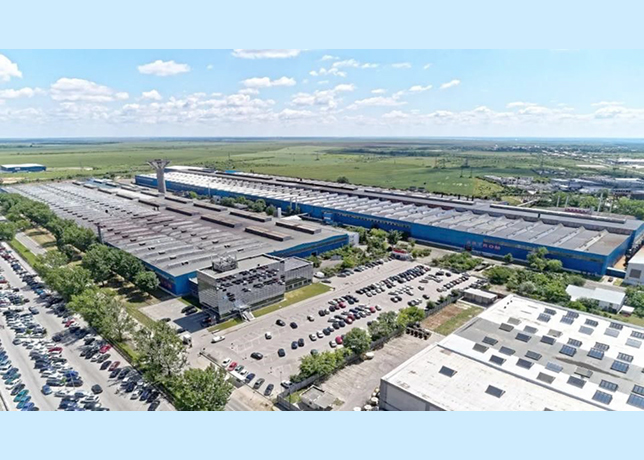
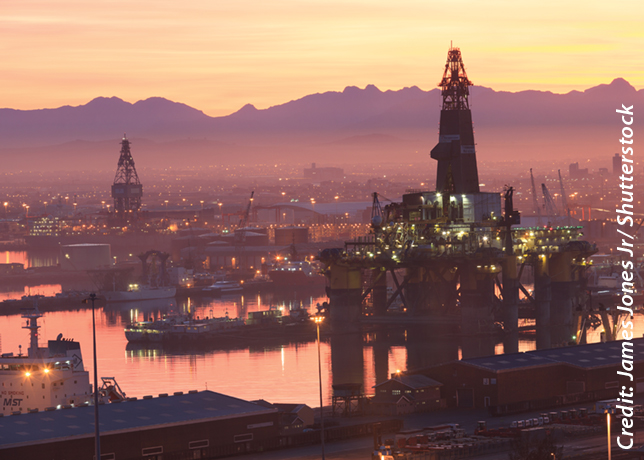


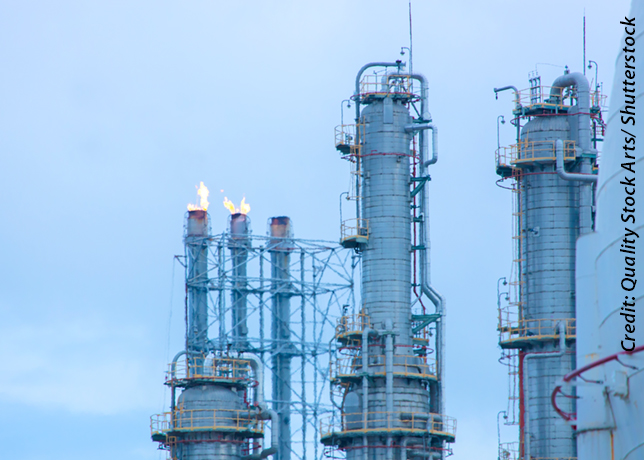






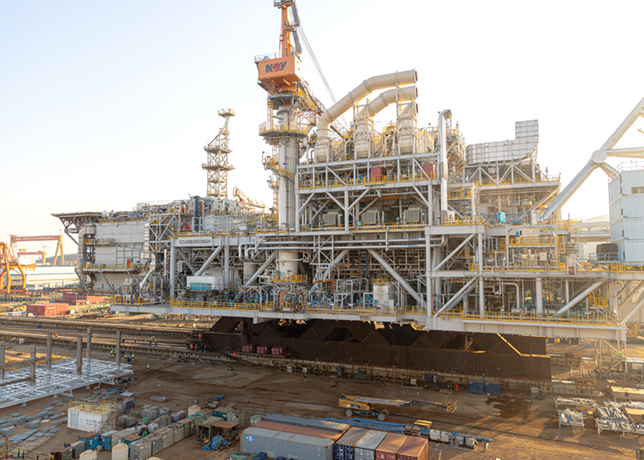

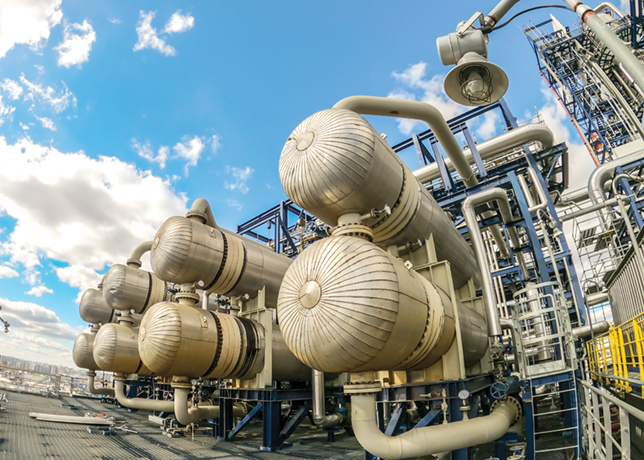

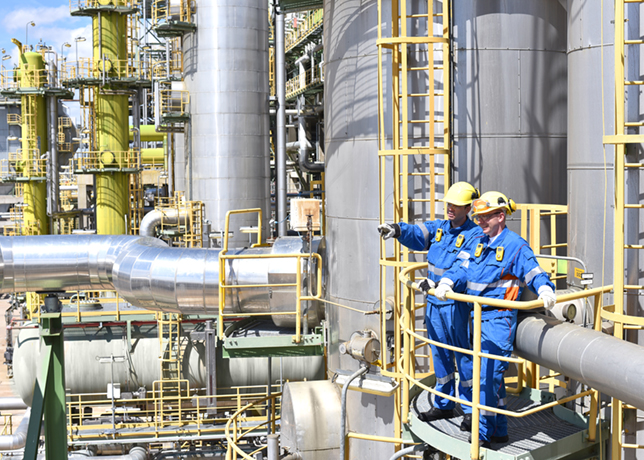
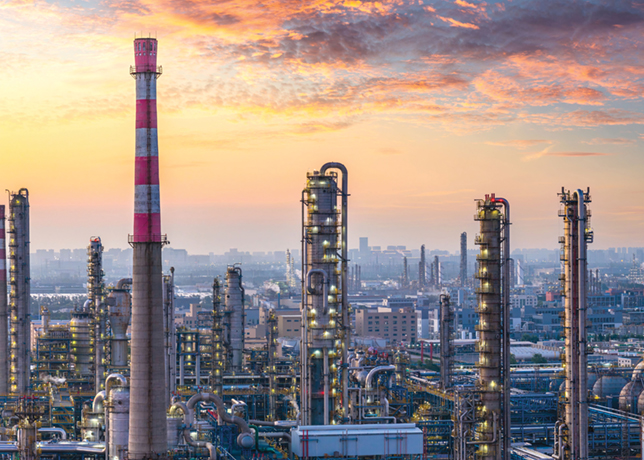

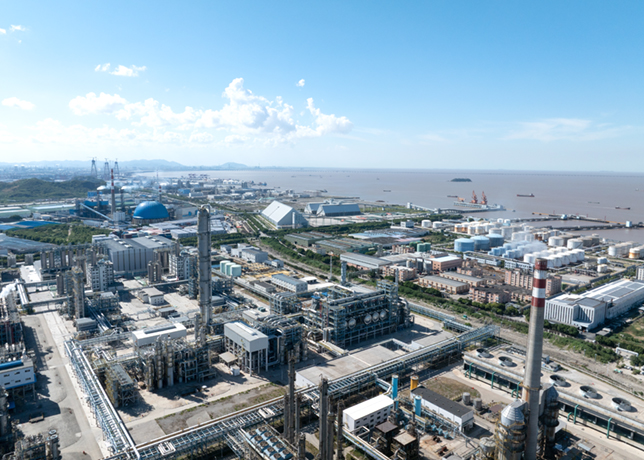



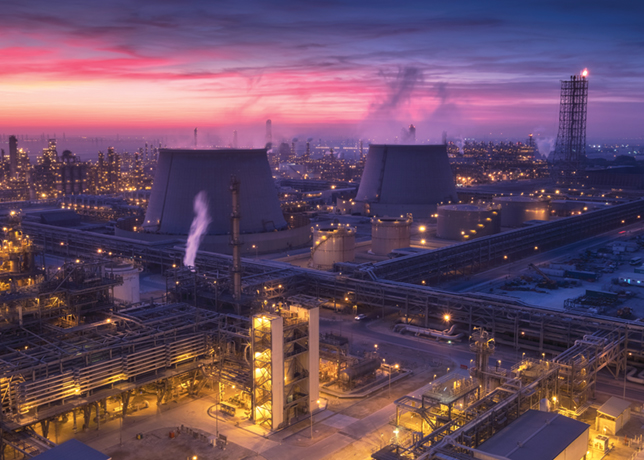

THE $5-billion Bapco refinery modernisation programme, which will be the single largest investment in Bahrain’s history, will move to front-end engineering design (Feed) in late 2012. The engineering design package will be awarded by 2013-14 and construction should start 2015, says Bahrain’s Minister for Energy Dr Abdul-Hussain bin Ali Mirza.
“Bapco is working on a Refinery Master Plan (RMP). The Bapco board has approved the development of exploratory work to increase throughput to 450,000 barrels per day (bpd) from 267,000 bpd, while meeting all fuel and environmental specifications likely to be mandated in the long term. While the plan development is still in its early stages it is likely that the new/upgraded refinery will come on line in 2018,” Dr Mirza says in an exclusive interview with OGN.
A project execution plan (PEP) is being prepared, technology selection is proceeding and options for financing are under review, he says.
“There has been a lot of industry interest in our project. PEP and technology selection will be completed this year,” Dr Mirza says.
Excerpts from the interview:
You have said that Bahrain plans to invest more than $20 billion in the energy sector over the next two decades. Have you a detailed plan of which all sectors will come under the investment?
Yes, we do have specific plans and project teams for all of the planned projects and most of the ones that are at conceptual stage. The investment will primarily be made in the upstream oil and gas sector followed by refining.
However, downstream projects, EHS, solar energy, etc will also receive a share of the investment.
What would be the role of foreign companies in bringing capital to the kingdom? Have you identified who all could be partners in the joint ventures that would come as part of the investment?
The oil, gas and petrochemical sector is undergoing major changes and foreign companies have already invested a lot of money in this sector and a lot more investments yet to be made. We have already joined forces with international and regional companies and formed joint ventures like Tatweer Petroleum (a joint venture between nogaholding, Occidental, US and Mubadala, UAE) and Bahrain Lube Base Oil (a joint venture between nogaholding, Bapco and Neste Oil Bahrain, a wholly owned subsidiary of Neste Oil of Finland).
Another example is Skaugen Gulf, a shipping company specialised in the transportation of petrochemical gases. This is a joint venture between nogaholding, Capital Management House and IM Skaugen of Norway.
We have also joined forces with international companies in major oil and gas exploration initiatives. These companies have a lot to offer the kingdom and they bring in the know-how, technology, and resources including investment funds and the skilled workforce to train Bahrainis and, of course, if any discoveries are made, joint ventures will be formed accordingly. We are also now considering expansion of the Gulf Petrochemical Industries (GPIC), which may result in a new joint venture with Sabic of Saudi Arabia and PIC of Kuwait.
In your blueprint to make Bahrain the hub of the region’s energy sector, which all energy-related companies will be set up in the kingdom? Who will bring the capital?
In line with the National 2030 Economic Vision, His Majesty the King has initiated major economic, social and political reforms and the Economic Development Board of Bahrain, under the guidance and leadership of His Royal Highness the Crown Prince, have developed the mechanism and structure to deliver the National Strategic plan, which is closely monitored and followed up by His Royal Highness the Prime Minister.
This provides robust framework and infrastructure for achieving the national strategic objectives and realising the kingdom’s vision, which in turn has led to enhanced foreign investors’ confidence in the local economy and the system overall. Accordingly, the kingdom is now witnessing major changes and a momentous period in the oil, gas and petrochemicals history of Bahrain.
The influx of foreign investment, knowledge, expertise and technology in this field, coupled with the intensive training that is being provided to Bahrainis will provide an excellent foundation for creation of a hub for skilled manpower, thereby attracting more foreign companies who will invest in the kingdom’s oil, gas and petrochemical sectors and provide the necessary capital.
We have already succeeded in attracting several international oil and gas companies that are currently operating in the kingdom. Several legal, technical and commercial consultancy firms have moved their offices to Bahrain and others have setup their oil and gas or energy centres here.
How far has US-based Occidental reached with its deep gas exploration programme in the kingdom? What update do you have from them?
Oxy started the First Exploration Phase (four years) by initiating a number of geological, geophysical, and engineering studies. These studies and analysis will take around one year to complete and will result in the final selection and design of three exploratory wells. The exploration drilling phase for deep gas will commence in 2013.
Studies that are being carried out include:
• Seismic reprocessing;
• Seismic interpretation;
• Core and cutting samples analysis;
• Geochemical and stratigraphic analysis;
• Geomechanics;
• Petrophysical analysis; and
• Engineering and stimulation designs for deep wells.
Have you discovered any new gas fields recently?
No new commercial field discoveries were made in recent years. The additional gas supplies needed for the medium term will be secured through development drilling and expanding the surface production facilities in the Bahrain field. The approved development plan will provide the required gas production capacities that will ensure meeting all gas demands in the kingdom until year 2024.
 |
|
Bapco ... on the path of modernisation |
Could you provide us with an update on the gas supply-demand situation in the kingdom? What are the measures the kingdom plans to initiate to get more gas supplies?
Current supply-demand balances indicate that Bahrain is quite comfortable for the present and that we could depend on our indigenous resources for the foreseeable future. However, it has been long recognised by Noga and the leadership of the kingdom, that due to the rapid growth in the demand for natural gas, primarily in the power generation and desalination sectors, and secondarily for expansion of existing industries, that in the longer term the nation may face shortages of gas.
Recognising the rapidly growing demand for gas, Noga has taken strategic initiatives under its long term energy policy to meet future gas requirements. To this effect, Bapco have invested $200 million to drill eight new wells that will provide an additional 500 million standard cubic feet per day (mmscfd), which is expected to meet demand until 2014.
In 2009 Noga took another initiative and signed a DPSA with Occidental Petroleum and Mubadala, whereby the incremental gas production is estimated to meet the peak demands for gas until the year 2024, based on current Electricity and Water Authority (EWA) demand forecasts but without major industrial development included. The planned industrial expansions plans in the kingdom require additional gas and several other initiatives were undertaken to ensure that the gas demand needed for the projects will be there when required.
To this effect, Noga signed an Exploration and Production Sharing Agreement (EPSA) with Occidental Petroleum and PTTEP of Thailand to grant these companies concessions in four offshore blocks. Exploration activities have already started in these blocks in the search of both oil and gas. Four offshore exploratory wells are planned to be drilled this year as part of the EPSA.
Additionally, in the very near future, under the deep gas initiative, Occidental Petroleum will begin the development and drill for gas resources from the pre-Khuff reservoir at depths between 13,000 and 20,000 feet.
The dialogue on potential gas supply by pipeline continued with our neighbours and other potential suppliers, but In order to ensure that peak demand is met Noga has also taken the initiative and undertaken a study to import LNG to supplement the indigenous gas supply. Fourteen potential partners were invited to submit proposals and nine expressed strong interest to participate. The evaluation process is in its final stages and the finalist(s) will be announced before the end of this year.
The 2011 BP Statistical Review says Bahrain had proven natural gas reserves of 7.7 trillion cubic feet at the end of 2010. The review says production last year was 1.3 billion cubic feet per day (bcfd). Do you plan to increase the daily production from existing sources?
Current peak gas production capacity from the Bahrain field is about 1.9 bcfd. In order to meet the increased demand for power generation and industrial use we plan to increase production capability by about 40 per cent to over 2.7 bcfd by 2024.
Additionally we plan to augment production from the offshore fields and the deep gas initiative as and when these resources become available.
What are your plans to keep the Bapco refinery competitive in the coming years? What are the high-value products that you would concentrate on and which low-value products will be eased out?
Bapco is working on a Refinery Master Plan (RMP). The Bapco board has approved the development of exploratory work to increase throughput to 450,000 barrels per day (bpd) while meeting all fuel and environmental specifications likely to be mandated in the long term. While the plan development is still in its early stages it is likely that the new/upgraded refinery will come on line in 2018.
A project execution plan (PEP) is being prepared, technology selection is proceeding and options for financing are under review. There has been a lot of industry interest in our project. PEP and technology selection will be completed this year. Project will move to front-end engineering design (Feed) late 2012.
Engineering design package will be awarded 2013-14. Construction should start 2015. We will concentrate on increasing the production of high value middle distillates and will ease out fuel oil.
Bahrain is on its way to become a world leader in the production of high quality lube base oils with the opening of the $450-million lube base oil plant. How will the launch give a fresh impetus to business investments in Bahrain?
The Lube Base Oil Plant (LBOP) has been Noga/Bapco’s first joint venture with an International Oil Company (IOC). This model has been successful in attracting foreign inward investment and technology and will, we hope, provide us with a future business model. Such projects allow opportunities for employment in Bahrain, local contractors, JV partnerships and technology transfer.
What would be the economic impact of the A-B pipeline planned between Bahrain and Saudi Arabia?
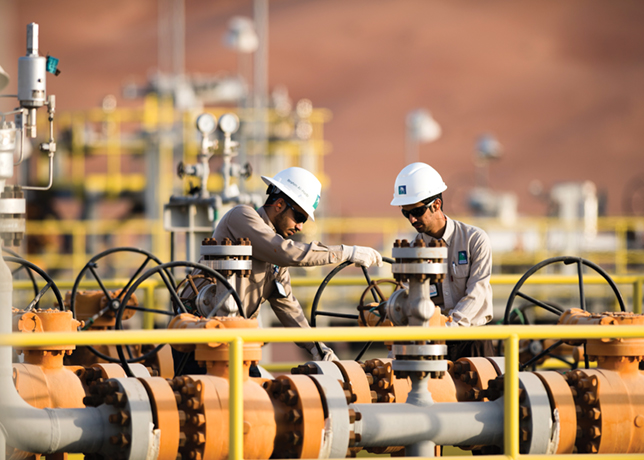
Currently, Bapco operates a 267,000 bpd refinery for which approximately 235,000 bpd of Arabian Light Crude Oil is sourced through a 62 km long pipeline from Saudi Aramco and the rest is produced by our Bahrain Fields. The existing Saudi Arabia – Bahrain crude oil pipeline system or the A-B Pipeline is now ageing and needs replacement. Also, when the pipeline was first laid, the routing was through nothing but open desert.
The onshore routing of the pipeline is now a cause of concern to the governments of Bahrain and Saudi Arabia as due to urban expansion, the pipelines pass through developed residential areas and in close proximity to heavily trafficked road carriageways. We are planning to build a new single crude oil pipeline system with supporting facilities from Aramco’s Abqaiq plant to Bapco refinery.
This new crude oil pipeline shall be of 30 inch diameter, approximately 115 km long, and capable of supplying 350,000 bpd of Arabian Light Crude to Bapco Refinery.
This capacity can be increased to a maximum of 400,000 bpd.
This new A-B Pipeline will complement the refinery modernisation programme, which will increase Bapco’s refining capacity to 450,000 bpd even while the Bahrain Field’s production is on an upward trend thanks to the efforts of Tatweer. Leaving aside the refinery modernisation programme, which will be the single largest investment in Bahrain’s history, the new A-B Pipeline Project in itself during project execution will provide several opportunities in the form of jobs to Bahrainis and development of local industry and contractors.
Also very importantly, as a natural spin-off by utilising a different and clear route for the new A-B Pipeline, city planning and urban development works can progress without any impediments caused by the existing pipelines. We can expect new plans for infrastructure development such as upgrades to highways, development of strategic service corridors, laying of utility lines and the like. All of this will contribute immensely to the development of our national economy.
 |
|
RDGP ... improving environmental |
What is your evaluation of over two years of Tatweer Petroleum’s efforts to raise hydrocarbon production in the kingdom? Are targets being realised?
Indeed, Tatweer Petroleum has met and exceeded its targets for the last two years since it assumed responsibility of Bahrain Oil Field in December 2009.
Tatweer has achieved more than 50 per cent increase in the production of oil to 42,500 bpd last year compared to 28,000 bpd when it took over Bahrain Field, while maintaining a safe working environment for the employees and contractors.
Tatweer also has achieved a lot in a very short period and notably the following:
• The safe start-up of new enhanced oil recovery pilots process for water flooding together with the first ever steam injection into the Bahrain reservoirs;
• The successful installation of more than 130 mmscfd of compression facilities to handle the increase in associated gas production;
• Remarkable increase in drilling with 25 new oil wells drilled in 2010 and 165 drilled in 2011, in addition to the completion of over 130 workovers and conversion of 300 wells to beam pump lift;
• Constructing 13 low-pressure modifications to the Khuff gas dehydration facilities and drilling five new Khuff gas wells, enabling the National Oil and Gas Authority to meet the energy needs of the kingdom throughout the last two years; and
• Successful growth in recruiting 191 employees in 2011 in addition to 189 employees in 2010, providing new opportunities for Bahraini nationals.
When do you propose to start the energy agency that would focus on green power working closely with the United Nations Development Programme (UNDP)?
The leadership of the country and Noga have recognised the need for energy conservation initiatives in the kingdom. One of the UNDP’s affirmed objective is to promote initiatives that develop the supply of energy, promote energy conservation and alternative energy initiatives.
Discussions between the UNDP and Noga progressed the idea of creating an entity that will oversee the integration of the activities within one single body that will oversee and integrate the initiatives. A joint feasibility study was conducted by Noga and UNDP. Various stakeholders were consulted in the process and the concept received wide acceptance and support. This institute will be formed once the necessary approvals are received from the concerned authorities.
The implementation plan, from inception to a fully operational organisation is expected to take five years.
 |
|
Refinery masterplan ... very much on track |
Having commissioned the Al Dur power plant, Bahrain is expected to produce nearly double the amount of power it needs to meet demand for energy. Wouldn’t a power-surplus scenario dampen the kingdom’s efforts to harness renewable energy, which could be costlier to tap?
Al Dur Power and Water Company, part of Bahrain’s IWPP will be commercially operated at during February 2012 after passing the entire performance test. When fully operational will produce 1,234 MW of electricity and will have a maximum water output capacity of around 48 million gallons per day.
With Al Dur fully operational the rated generation capacity will go up to 4009 MW and the forecasted load demand will rise close to 3150 MW in summer 2012. To meet this demand the required generation will be around 3450 MW which will leave around 559 MW surplus generation.
Al Dur Power and Water station will enhance the services delivered for the consumers through providing them with quality electric energy round-the-clock, supplying other economic and infrastructure projects with their energy needs, boosting national economy and creating job opportunities. This would not dampen the kingdom’s efforts to harness renewable energy.
For example, as for investment in renewable energy, the kingdom is keen to invest in this field and EWA has appointed a German consultant to study the possibility of establishing a pilot plant to produce electricity by renewable energies, and if it successful then we will use it commercially to produce power.
Also Noga is in final discussions with an American Company to implement a pilot solar energy project in Awali.


