

















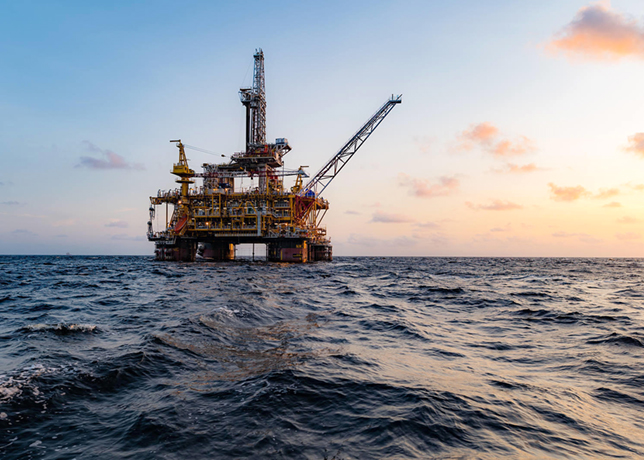















A few years ago it seemed as if enhanced oil recovery (EOR) using carbon dioxide (CO2) would be the next big thing in Western Canada.
With strong oil prices, proven technology and a vast light oil resource amenable to CO2 EOR, an investment decision seemed like a slam dunk. Although a few producers have done small projects, no one has plunged into a large CO2 EOR venture since the Cenovus Energy project at Weyburn, Saskatchewan, began injecting 11 years ago. Even Enhance Energy – which has Alberta government financial support to build a pipeline to supply CO2 for EOR – has announced an agreement with only one producer, Fairborne Energy, to supply CO2 to a relatively small oilfield at Clive in central Alberta.
Bruce Peachey, an Edmonton-based consulting engineer and longtime EOR advocate, offered some answers in a presentation to a Petroleum Technology Alliance Canada conference on CO2 management. “It can’t just be economic.
It has to be more economic than anything else that shareholders’ money can be invested in,” Peachey says. And drilling wells for primary production is still more economic than CO2 EOR. Recent advances in horizontal drilling and multi-stage fracturing has commercialised light oil resources that were previously uneconomic.
“CO2 EOR reserve estimates must be based on economic reality, not wishful thinking,” Peachey says. “So we really need to look at what the economics are that are going to drive the people that have to implement CO2 EOR – not just saying if we provide the CO2, it will happen. Because it really won’t unless it’s the best economic option,” he adds.
Making CO2 EOR more economic than other investments is a challenge, he acknowledges, but notes the investment climate for CO2 EOR is much friendlier in the US than in Canada.
“The US (Department of Energy) spends a lot of money doing this. We hardly spend any money doing similar things in Canada,” Peachey says. While the Alberta government’s $2-billion commitment to putting CO2 in the ground does indeed have an EOR component, the primary goal is CO2 disposal.
Peachey believes any major producer considering a significant investment in CO2 EOR will look at the US first because of the advantage of existing operations, cheap CO2 and public policies specifically crafted to encourage EOR with few strings attached to greenhouse gas management.
“They’re not doing EOR to get rid of greenhouse gases, they’re doing it to make money. The same as Weyburn,” he says, referring to the primary reason Cenovus’s predecessor, PanCanadian Petroleum, decided to sanction Canada’s first big CO2 EOR investment. “CO2 EOR operators in the US are doing it when and where it’s economic with more plentiful and lower-cost CO2. Because they can get those natural CO2 sources, it’s cheap. They can do it a lot more economically than we can,” Peachey says.
Although much of the CO2 for US EOR projects comes from wells drilled exclusively to produce CO2, the gas is also captured from natural gas processing plants – and that business has some big players. According to the Massachusetts Institute of Technology’s carbon capture and sequestration (CCS) website, ExxonMobil spent $86 million to start capturing CO2 stripped from natural gas processed at its Shute Creek gas plant at LaBarge, Wyoming, in 2008. An expansion to capture 50 per cent more CO2 was completed last December.
The gas stream has an extraordinarily high CO2 cut of 65 per cent and the CO2 is sold to oil producers for EOR, according to the MIT website. In a brochure on its website, ExxonMobil boasts the LaBarge plant captured nearly four million tonnes of CO2 in 2008, which it says was more than any such project in the world.
“The most successful example of CO2-based EOR is in the Permian Basin of west Texas, where significant investment by ExxonMobil and others has resulted in the recovery of an additional one billion bbls of oil production. Approximately 25 per cent of today’s production in the Permian Basin is generated by CO2 enhanced oil recovery,” the ExxonMobil brochure says.


