





















Advanced nuclear reactor systems, including Gen III/III+/IV and small modular reactors could address the future energy market needs
Electricity consumption has been increasing steadily around the world, and this trend is expected to continue in the future.
Worldwide, electricity generation represented 26,762 terawatt hours (TWh) in 2020, with almost two-thirds produced from fossil fuels, 10 per cent from nuclear, 16 per cent from hydro, 3 per cent from biomass and 9 per cent from wind and solar, accounting for around 20 per cent of total energy consumption and 40 per cent of global energy related carbon dioxide (CO2) emissions.
Add to that the ever changing needs of energy markets in the context of the global movement towards a carbon neutral economy, increased liberalisation of energy markets and the development of various energy-related technologies.
In such a scenario, nuclear power technologies for residential and industrial heat offer a potential option that could contribute to further decarbonisation.
The ‘Advanced Nuclear Reactor Systems and Future Energy Market Needs’ report by the Organisation For Economic Co-Operation And Development’s (OECD) Nuclear Energy Agency investigates the changing needs of energy markets, and the potential role of nuclear energy as a low-carbon energy source.
Currently, various advanced nuclear reactor systems (ARS) – evolutions of today’s generation III and III+ reactors, small modular reactors and generation IV reactors – are under development and are capable of offering more flexible options with respect to energy supply.
POWER SYSTEMS TODAY AND TOMORROW
Most power plants are generally centralised, dispatchable units with a sizeable production connected directly to high-voltage transmission lines, as is the case for coal, gas, nuclear or hydro power plants.
These plants use fuel to produce electricity, and that fuel acts as a large, long-term storage that contributes to the resilience of the system.
Power generation is linked to end consumers through a network consisting of several levels.
 |
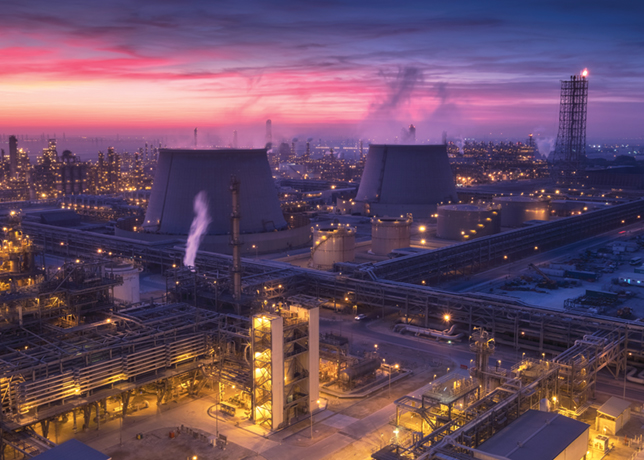
The Barakah Nuclear Energy Plant in the UAE ... nuclear power offers a |
Power production must nonetheless match the demand in real time since electricity cannot be stored by the grid. In other words, the energy injected by production needs to be immediately withdrawn by consumers.
In 2020, electricity represented 20 per cent of final energy consumption. This share is set to continue growing. New uses of electricity worldwide, such as electric vehicles, heat pumps for heating and cooling, and green hydrogen obtained through electrolysis, will also contribute to this increasing share.
Low-carbon technologies to produce electricity are indeed readily available today: renewable energies (hydro, biomass, wind and solar) and nuclear energy. The share of electricity could therefore reach upwards of 50 per cent of final energy consumption with fossil fuel usage ultimately being replaced partially by electricity.
OVERVIEW OF ARS
The nuclear industry has been developing and improving reactor technology for more than six decades. Generation I reactors in the 1950s were followed by generation II reactors with larger capacities in the 1970s.
The recent development of commercial nuclear reactors continues to expand with generation III and III+ (Gen-III/III+) reactors, which have evolutionary designs that include improved fuel technology, thermal efficiency, modularised construction and enhanced safety systems.
Further innovation has been seen with generation IV (Gen-IV) reactor technologies, which offer significant improvements compared to current nuclear technologies in terms of closing the fuel cycle, waste minimisation and enhanced resource use, inherent safety, economics, and proliferation resistance and security.
Several Gen-III/III+ reactors are currently operating or are under construction in some countries.
Among their characteristics, the most significant is be improvements in nuclear safety. Gen-III/III+ reactors have significantly reduced the possibility of core damage accident from the previous generation.
Another advantage of these reactors is related to its manoeuvring capabilities. In contrast to previous generations, most Gen-III/III+ reactors are planned and designed to meet the enhanced requirement for manoeuvring capabilities required by grid operators.
Since 2001, for example, the European Utility Requirements stipulate that new reactor designs must be capable of continuous operation between 50 and 100 per cent of rated power, must implement scheduled and unscheduled load-following operations, and be capable of taking part in the primary control of the grid within the range of ±2 per cent of the rated power.
• Small modular reactors: SMRs are defined as advanced reactors that produce electricity at roughly 300 MW(e) per reactor. These reactors have advanced engineered features, might be deployable either as a single or multi-module plant and are designed to be largely made of pre-assembled factory-built modules, which can be shipped to construction sites. Some SMR projects are targeting lower power levels (from 1 to 20 MWe) and are called micro modular reactors.
The International Atomic Energy Agency (IAEA) currently estimates that there are more than 50 SMR designs and concepts globally, based on the different reactor technologies that may encompass Gen-III/III+ and Gen-IV technologies. These include water-cooled reactors, high temperature gas-cooled reactors, liquid metal-cooled and gas-cooled reactors with fast neutron spectra and molten salt reactors.
Existing SMR designs are in various developmental stages, and though some are claimed to be near-term deployable none have reached a full commercial maturity as yet, apart from the Russian floating nuclear power plant, Akademik Lomonosov.
From a technical point of view, SMRs are often cited as flexible enough to be positioned within a grid not only for baseload production but also in mid-merit order.
When taken individually (a single reactor), SMR technologies have yet to prove that they will reach high levels of flexibility.
When taken as a fleet – in the case that a sufficient number of units will operate on the same grid – they could take advantage of their numbers and provide a flexible and reliable power source able to balance the intermittency of variable renewable energy (VRE) sources.
From an economical point of view, SMRs have to offset the size effect. They should benefit from modular production in a series to obtain economies of scale and to reduce their production costs.
• Generation IV reactors: Gen-IV systems offer prospects for significant improvements in terms of enhanced resource use, inherent safety, economics and/or proliferation resistance and security.
These reactor concepts are still in the development phase and, although there are some research or demonstration reactors, no Gen-IV reactors have been deployed on a commercial scale.
• Decarbonisation: The heat sector, which accounted for about 50 per cent of final energy consumption globally in 2018 and about 40 per cent of energy related carbon dioxide (CO2) emissions, is another area where ARS can make a significant contribution to decarbonisation.
Low temperature heat (less than 300 deg C) for district heating, seawater desalination and for some industrial process heat systems can be provided by nuclear reactor systems that are already available, and higher temperature heat (over 550 deg C) could be provided by many generation IV concepts under development.
A large percentage of the current global heat demand falls in this latter temperature range of heat.
Hydrogen production by advanced nuclear reactor systems (ARSs) could significantly contribute to the reduction of CO2 emissions in many sectors.
All ARS concepts can produce hydrogen using the existing low-temperature electrolysis technology, and some concepts could supply process heat at over 750 deg C, producing hydrogen with even higher efficiency through high-temperature electrolysis or thermo-chemical processes.
Some national research and development programmes are working on the economic and technical challenges associated with coupling nuclear reactors to hydrogen-producing facilities.
In addition to the potential benefits associated with closed fuel cycles, for example, minimising radioactive waste and enhancing resource use in the longer term, other potential benefits of generation IV systems, particularly the higher temperatures, may prove to be another strong motivation for deploying such systems in the short to medium term.
• Opportunities for ARS and requirements: The needs for flexible power operation from power plants, which cover both shorter-term and longer-term flexibility, are growing as variable renewable sources are increasingly penetrating into electricity grids.
ARS are capable of providing not only firm capacity to help the electricity system ensure sufficient supply and system stability but also to ensure manoeuvrability over a wide range of timescales, from very-short-term (frequency response) to seasonal dispatchability.
Current generation III/III+ reactor technologies are already compliant with the latest grid operators’ requirements.
Future advanced reactor system concepts, including small modular reactors and generation IV reactors, have different characteristics for flexible operation, making it important for flexibility requirements to be taken into account by developers.
• Challenges: First of all, public anxiety about nuclear accidents is a common challenge for all nuclear power plants. Overall, nuclear power reactors have had a strong safety record, and safety improvements have evolved through generations of nuclear technologies.
SMRs are said to be advantageous in avoiding large releases of radioactivity because of the small source terms in their reactor cores, along with other safety features.
On the other hand, ARSs will have to address some specific safety issues when they are coupled with other applications, such as district heat and hydrogen production, as well as demonstrate safe operation in industrial applications.
Securing water resources can be a constraint for nuclear power plant development and operation.
Nuclear power needs larger amounts of cooling water per unit of energy than coal and gas power plants.
The management of spent nuclear fuel is a common issue with nuclear power plants. While some ARS concepts might be able to improve radioactive waste management by reducing decay heat and radiotoxicity, adoption of ARSs would not eliminate the need for a radioactive waste repository.
From an economic point of view, the large capital costs and long construction lead times are also recognised as barriers to new nuclear plant projects.
The political situation also has a great impact on securing investment for new nuclear power plant projects.