

















Despite still inhabiting the pre-eminent position of the world’s largest oil concern, Saudi Aramco has proved its innovative and responsible approach to its future by re-conceptualising its strategic imperatives to ensure an even more successful future.
Saudi Aramco has analysed its most pressing challenges and identified six strategic imperatives, detailed in the panel, right. The goal of this review has been to impart a precise focus to Saudi Aramco’s future, a course that calls for a significant increase in the company’s contribution to the Kingdom’s revenue needs and for consistent promotion of development in the local economy.
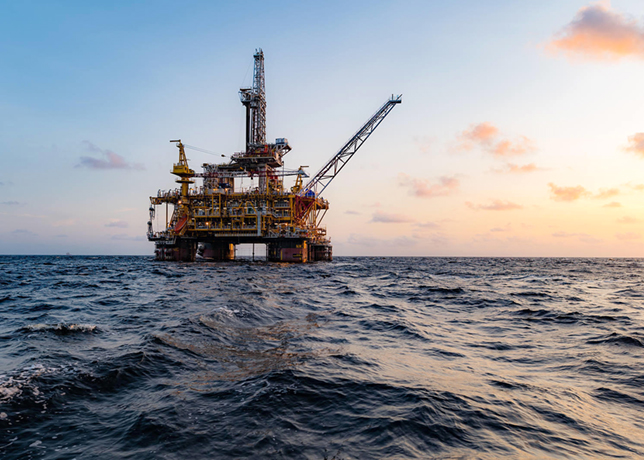
The continually pioneering spirit demonstrated by this strategy is evident in the firms recent achievements. Saudi Aramco continues to hold the top estimated crude oil and gas reserves position among the world’s oil companies for total crude oil reserves and annual production. Oil reserves under company administration were 259.4 billion barrels at year’s end. Additions to oil reserves booked during the year matched the year’s total annual production of 3.0 billion barrels, an indication of the continuing success of the company’s exploration efforts. During the year the company discovered the Yabrin oil field and the Awtad gas field. Yabrin-1 well flowed 5,100 barrels of Arabian Light crude oil and 14.7 million cubic feet of gas per day in open-hole tests. Awtad-1 flowed 32 million cubic feet per day of sweet gas and 640 barrels per day of condensate in open-hole tests.
The company continues to make significant investments to maintain a maximum sustainable capacity of 10 million bpd and utilises this spare capacity to ensure that consumers worldwide have access to stable and affordable energy supplies.
Known gas reserves of 234.5 billion cu ft at year’s end establish Saudi Aramco as fourth in the world for reserves of this increasingly important form of hydrocarbon energy, with daily gas production averaging 6.9 billion cu ft during 2003, as compared to the previous year’s daily production average of 5.2 billion cu ft, an increase of’ 33 per cent. The company remains committed to expanding gas reserves and production to march the robust domestic.
In this area Aramco has made enormous strides in opening up huge concessions to international exploration. Firstly, in the form of the Upstream Gas Offering. Companies from the geographically diverse trio of Russia, China and Western Europe, are the debut winners of Saudi Arabia’s recently repackaged and relaunched natural-gas development initiative, now known as the Upstream Gas Offering, in which Saudi Aramco will participate as a partner with international firms in various major gas exploration and development projects in the Kingdom. The successful bidders are Lukoil of Russia, Sinopec of China, and a consortium of Italy’s Eni and Spain’s Repsol.
Secondly, Saudi Aramco secured the South Rub Al Khali Company Limited (SRAK), a joint venture between Shell, Total and Saudi Aramco, signed an agreement with the Government of Saudi Arabia to explore for natural gas and associated liquids in a 210,000 square kilometre concession in the Kingdom’s South Rub AI Khali (Empty Quarter). The concession was awarded to the joint venture following negotiations which have taken place over the last few years for what was known as the Saudi Arabian Natural Gas Initiative.
In terms of production the firm continued to manage its portfolio effectively to ensure long-term sustainable production, as well as making great strides with its latest major new oil production increment the Qatif and Abu Sa’fah fields.
When completed, hopefully in the later stages of this year, the development will bring an increment of 500,000 bpd of Qatif blended Arabian Light (composed of Arabian Extra light and Arabian Medium) and double Abu Sa’fah Arabian Medium production to 300,00 bpd.
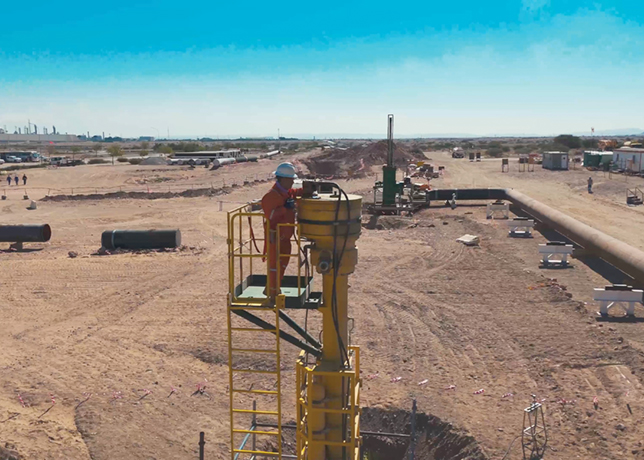
Part of this project and also a Kingdom wide initiative is an investment into co-generation technology - heat and power creation and usage. In the spring of 2006, a pipeline will open at ‘uthmaniyah gas plant to begin transmitting natural gas to the facility’s new electricity/steam cogeneration plant-the first of four such co-generation facilities scheduled to commence commercial operation by the end of that year at Saudi Aramco sites in the kingdom’s eastern province.
Once all the facilities’ powerful electricity-generating gas-fired turbines and heat-recovery units roar to life, they will produce a combined 1,063 megawatts of electricity and 4.4 million inch-pounds of high-pressure steam hourly. The co-generation plants will be developed, financed, built and operated by Tihama power generation co, a joint venture of international power plc of the United Kingdom (60 per cent) and Saudi Oger ltd. (40 per cent), in the first large-scale independent power project to be undertaken in the kingdom by the private sector.
Aramco also continued to modernise and update its vital infrastructure systems such as human resource and environmental management, and continues to hone its dual role as a commercial enterprise that continually strives to maximise its financial performance and to contribute to the national interests.


