









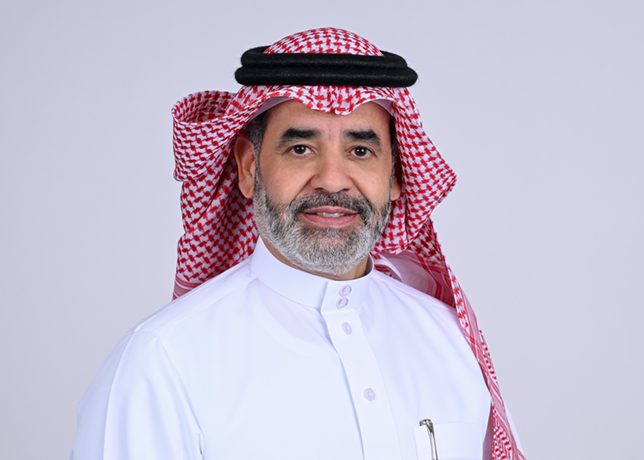




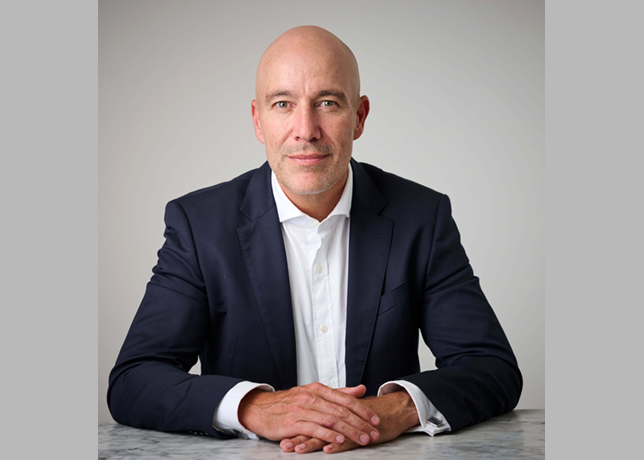







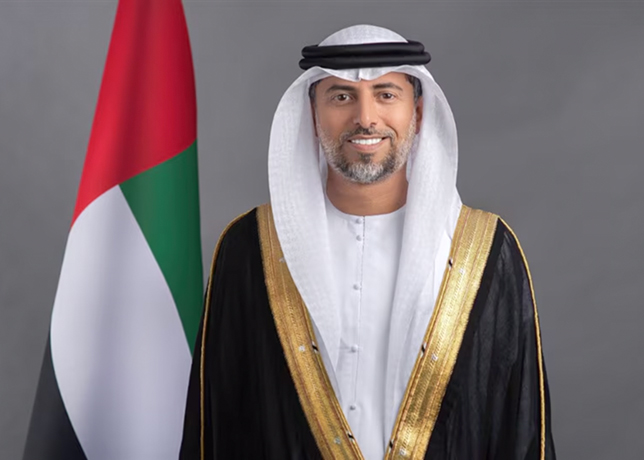

As Saudi Aramco begins to open up enormous concessions to a range of international concerns, Jum’ah shoulders the importance of his firm’s role with a noble strength.
In a recent address to the Royal Institute of International Affairs, Jum'ah states 'By any measure, Saudi Aramco must be counted as a leader in the petroleum industry. We are responsible for the world’s largest crude oil reserves: 260 billion barrels of oil, or roughly a quarter of the world’s total.
“We are also the global leader in crude oil production and exports. Saudi Aramco is the number one supplier of crude oil to the United States and to Japan, the world’s two largest economies, and is a major supplier to the European market and other Asian economies. Because oil is a fungible commodity, our exports even have a positive impact on consumers in regions where we are not a major supplier, such as Latin America and Africa, since the crude we export helps to sustain the entire global energy market.
“We’re also a leader in the field of advanced technology. The computing facility in our Exploration and Petroleum Engineering Centre (EXPEC) is not only among the most powerful in the industry, but also ranks among the world’s top computer centres of any kind. It stores some 1.2 petabytes of data: that’s roughly four times as much as NASA handles, and is equivalent to four million copies of the 32-volume Encyclopaedia Britannica. EXPEL also boasts advanced parallel processing systems, 3-D visualisation centres, and proprietary reservoir simulators unmatched for their size and sophistication.
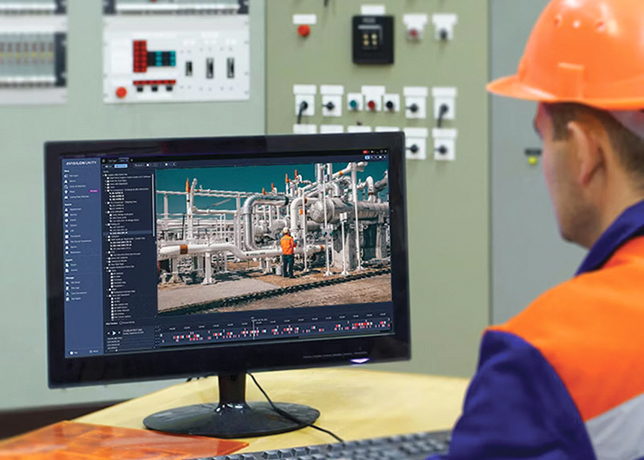
“Beyond our core oil and gas operations, we are one of the world’s largest users of SAP technology, and utilize the latest business integration systems to manage our ongoing operations. V-SAT satellite systems allow us to maintain real-time access to remote facilities and field operations, and an extensive corporate IT network facilitates internal communication across our worldwide network of offices.”
With all this leadership, however, Jum'ah exercises his humility in declaring his pride and sense of responsibility.
“We’re proud,' he continues, 'of our leadership role within the global petroleum industry.
“However, with that role come responsibilities - awesome responsibilities, in fact. And that is where I take greatest pride: in the commitment of our people to fulfil those responsibilities, and our company’s ability to make good on its promises, day after day, year after year, decade after decade. We have a responsibility to the international community and the global economy; as well as to the citizens and society of the Kingdom, and we seek to serve our stakeholders through our daily operations, our long-term strategies, and our core philosophy of business.'
As well as this pride in work, he looks forward to the future embracing needs and requirements that are hitherto unforeseen.
“We’re meeting the world’s energy needs now. But what about the decades to come? What happens as demand increases in developing economies such as India and China, even while the industrialised economies of Europe, North America and Asia continue to rely heavily on imported energy?
“We understand that our responsibility embraces the long term, and we’re working to ensure that future generations will be able to depend on our energy production just as consumers around the world have relied upon us for the last seventy years. That commitment touches many different aspects of our operations.”
His dedication to the future is evidently paramount and his firm and himself have clearly taken great strides in preparing for a myriad of posibilities. He outlines the steps taken to safeguard a better future.
“Reserves, of course, are the basic building blocks of the petroleum industry, and we stand upon a firm foundation of 260 billion barrels of crude. Those reserves are spread across 85 fields and 320 different reservoirs, and represent a conservative accounting of our total reserve base, given our cautious assumptions about ultimate recovery rates.
“However, we are also working hard to identify new reserves through additional discoveries, enhanced recovery techniques, and more accurate characterisation of our reservoirs and a better understanding of their behaviour over time. And those efforts are paying handsome dividends: for many years we have been able to make healthy additions to our reserves, or at the very least to replace our production, meaning that despite our prolific output, we have not had to draw down our total reserves.
“We are confident that we can extend that success well into the future, given continued advances in exploration and production technologies and the fact that more than half of the Kingdom’s potential hydrocarbon-bearing areas are still relatively unexplored.
“Based on available data, in the next 25 years we expect to find more than 100bn barrels of recoverable reserves in those areas, plus additional recoveries coming from our known fields. That puts future reserves in the neighbourhood of 360bn barrels, which at current production levels translates into close to 120 years’ worth of oil.
Finding reserves is important, but so is managing them over the long term. In the case of Saudi Aramco, many of our large fields have been producing for decades yet are still not mature by industry standards.
'These are some of the largest fields on earth - for example, if we were to position the southern tip of the Ghawar field here at Chatham House, the northern edge would end up somewhere around the touch line at Old Trafford in Manchester. Because of the sheer size and volume of these giant fields, they play a vital role in the continued health of the global economy.
“Our primary reservoir management objective is to maximise the ultimate recovery of hydrocarbons from our fields, and that requires a long-term view of our production. As a result, gradual depletion makes good business sense for us, and for our customers. Our experts aren’t looking at what we’ll pump in the next decade, but rather at our production strategies for the year 2054.
“Our intensive computational efforts, involving detailed reservoir modelling, allow us to develop a much clearer understanding of reservoir behaviour, in great detail and over long periods of time. By testing various production scenarios and identifying the optimal production strategy for a given reservoir, we are able to make the most of the reserves we manage - for our benefit and the benefit of world economic markets.
“Just as we take the long view in our exploration and reservoir management functions, our obligation to the international economy requires us to look at achieving higher potential production levels in the future.
“At the moment, we account for about 11 per cent of the world’s production of crude oil. Depending on market demand, we can now produce 10 million bpd of oil, and easily sustain that production level for the next five decades.
“Our ability to achieve that level has been tested repeatedly over the last several years, and without exception we have been able to bring the necessary additional barrels on-stream, helping to maintain market stability and meet consumer demand.
Even though our 10m bpd production capacity currently includes a surplus capacity of some 2m bpd, we have developed a range of long-term crude development scenarios that would raise our production capacity to 12m or even 15m bpd. The capital commitments needed to expand our capacity will be made when market conditions warrant, but we have no doubts regarding our ability to deliver extra production capacity should the need arise.”
Operational flexibility
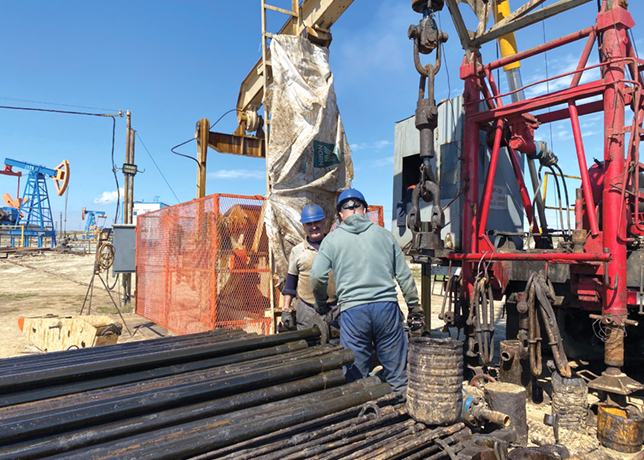
Jum’ah remains practical despite his often lofty duties saying “getting oil to market is the final piece of the puzzle. To accomplish that objective, we maintain tremendous operational flexibility and a robust network of production, processing and distribution facilities.
“Those facilities are designed with multiple back-up systems and are configured to facilitate future expansion. Our crude oil pipelines system connects production facilities in Saudi Arabia’s Eastern Province to export terminals on the Red Sea, enabling us to export crude from both coasts of the Kingdom.
“To better meet the needs of our customers, we operate a large owned fleet of very large crude carriers and maintain operational storage in both the Caribbean and Western Europe. We pay tremendous attention to safety and security in all of our facilities and installations, and have never suffered a supply disruption related to our operations. Nor have we experienced an operational situation where we were unable to meet a supply commitment to one of our customers.
“Extensive reserves, prudent reservoir management, an unmatched production capacity with the ability to expand, and operational flexibility and reliability: all of these factors enable us to meet the energy needs of the world.
“We have been blessed with extensive petroleum reserves, but with that blessing comes the burden of responsibility. It’s a burden we have borne successfully for seven decades, and we will continue to fulfil our responsibilities to the global economy for many, many decades to come.
Our international profile is matched by the prominent role we play in the Kingdom. The nation’s leadership has entrusted numerous responsibilities to Saudi Aramco - responsibilities that bear directly on the prosperity of the nation and its people.
“We have worked hard to meet those needs and to fulfil our responsibilities, and we continue to look for ways we can contribute to the well-being of our country and our fellow citizens.”
The inextricable link between country and company is one which Jum'ah takes very seriously, being sure to mention it's impotance.
“First and foremost we play a vital role in the Saudi economy. Saudi Aramco works diligently to maximse the revenue it provides to the Kingdom, and to realise the value of the nation’s precious hydrocarbon resources, be it oil or gas.
“Many people think first of crude oil when they hear the Saudi Aramco name, but that’s not the whole story. We manage the fourth-largest natural gas reserve base in the world and supply gas to industries and utilities throughout the Kingdom, providing the fuel and feedstock needed for future economic development and diversification.
“This area of operations is nothing new for us: in fact, our Master Gas System will shortly be celebrating its thirtieth anniversary. However, it is also true that gas is an increasingly important aspect of our activities, and that the Master Gas System’s capacity has been doubled since its inception.
“This expansion will allow further growth in the Kingdom’s giant petrochemical industry. Without a doubt, the continued development of the nation’s natural gas reserves and their wise utilization by industries and utilities is vital to the economic future of the Kingdom.
“The crude oil, refined products and natural gas that we produce make modern life possible, create new jobs, and enable economic development and diversification.
“At the same time, the wages we pay, the contracts we let, and the goods we purchase are also important drivers for the Kingdom’s domestic economy. Last year Saudi Aramco executed contract actions worth some $3.5billionn, with a majority going to Saudi-owned or Saudi joint-venture companies. We also issued purchase orders of $1.66 billion for materials, equipment and supplies: 87 per cent of that total was placed directly with Saudi manufacturers and vendors. Clearly, we are a major player in the Kingdom’s economy, not just in terms of the dollars we spend, but also in working with local private sector companies to improve their performance levels and quality standards, so that we all benefit.
Saudi Aramco is also a leader in the foreign direct investment (FDI) in the Kingdom, working closely with overseas partners in a range of joint ventures in the petroleum and petrochemical sectors.
“Recently we have concluded several landmark upstream gas deals with a number of leading petroleum companies, and just this month we signed a memorandum of understanding with Sumitomo to expand our refinery in Rabigh to a full-scale petrochemical complex. We’re also pleased to be working with Saudi Oger and International Power PLC of the United Kingdom to develop co-generation facilities in a number of Saudi Aramco plants using a build-own-operate-transfer business model. Aside from their direct economic impact, these Fvi projects also create new jobs, generate increased domestic demand for goods and services, and are indicative of the Kingdom’s attractive investment climate. There is a wide range of investment opportunities available in Saudi Arabia for far-sighted international companies, including firms from the United Kingdom, and I believe we will see even greater levels of foreign direct investment in the years to come.
Wide-ranging impact
Saudi Aramco also has had a wideranging impact in the area of human resource development, confirms Jum'ah
“We maintain one of the world’s largest corporate training programmes, which runs the gamut from technical and vocational training to advanced degree programmes. A well-educated, highly motivated workforce is of course vital to our business success, but the skills and talents of these individuals also benefit the Kingdom as a whole.
“Saudi Aramco has long been a leader in the area of Saudisation, and while we have citizens of more than 50 different nations on our employment rolls, some 85 per cent of our workforce is made up of Saudi nationals. Saudis account for essentially all of our operations personnel, form the overwhelming majority of our professional and engineering staffs, and hold roughly 97 per cent of the top 200 jobs in the company.
“Given its demographics, employment is one of the most important issues facing the Kingdom, and I’m proud that for many years Saudi Aramco has demonstrated that young Saudis, well trained and provided with real career opportunities can be as productive and as dedicated as any employees in the world.
“These individuals are also responsible for much of the innovation generated by Saudi Aramco - another key area of contribution to the Kingdom.”
Aramco’s diversity of influence is unquestionable and it is a testament to the firm’s expertise that Jum'ah can proudly touch upon such a vast range of subjects as global hydrocarbon potential, HR policies, Saudisation, and Research and Development (R&D).
“With the completion of phase two of our new R&D Centre, that facility will grow to 33,000 square metres of state-of-the-art laboratory space, boosting our capacity for applied research, product quality assurance and special laboratory services. But innovation isn’t limited to researchers in white lab coats.
“Since its inception last year, our online Idea Management System has received more than 16,000 submissions from employees from all parts of the company, which are directed to the appropriate organization for review, appraisal and, where beneficial, application in our operations.
“These submissions range from ways to simplify work processes to ideas that may ultimately transform our industry and generate new revenue streams for Saudi Aramco. Since knowledge sharing is another important aspect of our domestic role, these ideas have a wider significance for the Kingdom. From collaboration with government institutions and joint research programs with universities to participation in professional societies, our people are sharing information and ideas with colleagues throughout the nation, for the benefit of all.
“This exchange of knowledge extends to other areas of our business, since many people in the Kingdom see Saudi Aramco as a pioneer in many fields, and an example to be emulated. Many different organisations throughout the country are interested in how we run our business, the systems we utilise throughout our operations, and the factors that shape Saudi Aramco’s distinctive corporate culture. We run our business like any major international corporation, with an emphasis on commercial efficiency, transparency and good governance, strong systems and processes, and due concern for health, safety and the environment.
“At the same time, we are a Saudi company, we are an integral part of the Kingdom, and we are dedicated to the continued prosperity of its people. If robust, systems-based operations are what enable our performance, our ultimate purpose as an organisation comes from our thorough understanding of our larger responsibilities to the Kingdom and Saudi Aramco is really in a class of its own. Yes, this is due in part to our extensive reserve base, the scale of our petroleum operations and our application of cutting-edge technology, but it is also true in the way we approach our business.”
The Saudi government has bestowed upon its largest corporate offspring a certain amount of independence, which Jum’ah supports fully.
“We are a national oil company, but not in the traditional sense. We are not trapped in a rigid state bureaucratic apparatus, nor do we operate along the lines of a government agency. Rather, the leadership of the Kingdom has, quite wisely in my view, provided us with the space and autonomy necessary to operate as a fully commercial enterprise. The government sets our strategic objectives, then allows us to achieve those objectives utilising appropriate technology, industry best practices, keen business acumen, and the dedication and hard work of our people.
“Yet we are not a typical international oil company, either. We share their commercial outlook, their ability to develop and implement advanced technology, and their global presence, but we are free of many of the short-term constraints they face. Because these international companies are publicly traded, they must, by necessity, compromise on their long-term strategies as a result of short-term needs like boosting quarterly earnings or keeping their share price above a certain level. Saudi Aramco, by contrast, is better able to look at its future business strategies, assess the long-term needs of its customers and of consumers around the globe, and take the long view when it comes to maximising the value of the Kingdom’s hydrocarbon resources. We do not ignore short-term business requirements, but we are able to undertake them in a different context than do our international oil company counterparts. It is a unique perspective, and one that I believe is at the heart of the success we have created as a company.
Despite the firm's massive infrastructure and widespread capabilities, Jum'ah does, in no way, feel that the company is above the dependancy of others, and again he comes back to the idea of responsibility in a wider more altruistic sense.
“We are not a company that operates in isolation, or an organisation that can do the job alone. Yes, we have an important role to play in maintaining a stable supply of energy to the world, but other actors must also play their parts. We must also look at the need for increased co-operation and co-ordination, not just among petroleum companies, but more importantly between producers and consumers.
“We must work together first and foremost in order to achieve the goal of market stability-a goal that serves the interests of both exporters and importers. Without stability, producers cannot accurately predict their revenues or the funds available for reinvestment, while consumers are unable to calculate their costs and with them the proper prices for their goods and services. No national economy can make meaningful progress in the face of such uncertainty, and no company - large or small - can effectively run its business given this degree of doubt over energy costs.
Working together we can maintain stability and avoid the ruinous swing in oil prices we’ve seen all too often in the past. However, neither side can achieve stability on its own; instead, we must talk, we must co-operate, and we must work together. The creation of the International Energy Forum, an initiative spearheaded by HRH Crown Prince Abdullah, is a positive step in that direction, and I believe we will see more activity in this area in the months and years to come.
“Co-operation is also essential if we are to achieve another shared goal: improving the performance of petroleum. Over the last twenty or thirty years, we’ve heard a good deal about the promise of alternative fuels, but have seen little in the way of tangible results. If the world has learned anything from the last several decades, it is that reliance on these speculative energy sources is not the responsible option. Looking back, it is petroleum that has fuelled a century of unparalleled global economic development, today petroleum continues to meet much of the energy needs of the planet’s population, and looking forward, petroleum will sustain future growth and prosperity.
Finally, Jum’ah is mindful of a more overall responsibility that all oil-producers face.
“We must not grow complacent, since petroleum is by no means a perfect fuel. Oil producers, equipment and transport manufacturers, end-user businesses, research and academic institutions, and governmental agencies and policymakers should all work together to improve petroleum’s performance. More efficient engines, cleaner burning fuels, improved transportation systems, and other developments can help enhance oil’s economic and environmental performance. We must look closely at the impact of hydrocarbon consumption on the natural world, and explore ways to mitigate that impact. There is exciting work being done on hybrid engines, carbon sequestration and other emerging technologies, but more needs to be done.
“Such applications will not only help the developed world to sustain its living standards in a responsible manner, but also enable many developing economies to avoid the environmental destruction and degradation that results from the consumption of fuel sources like coal.
“In the West, the industrial revolution took an enormous toll on natural ecosystems, and while industrialisation may seem like ancient history in London, it is today’s reality in places like Lima, Lagos and Lucknow. More efficient, more eco-friendly use of petroleum can minimise the environmental impact of development while still improving health, educational and social conditions in these economies.
“Petroleum is too precious a resource to waste. We owe it to ourselves, and to future generations, to explore areas of cooperation to encourage the wise use of oil and gas for the benefit of planet Earth and its people.
“Never before have the conditions for such co-operation been so favourable, nor the need for joint effort so acute. Furthermore, the fact that the relationship between producers and consumers is one of mutual dependence has never been so widely understood, in my opinion. However, increased co-operation is not just an opportunity, but also our shared responsibility. Together, I believe we can provide the steady, stable and affordable supply of energy needed by the people of planet Earth, so that they may realize their aspirations, achieve their dreams, and together build a better tomorrow.”
Material provided courtesy of OPEC Bulletin - May 2004


