









































KPC believes that its real wealth is not only in its hydrocarbon wealth rather that its biggest asset lies in its human resources who contribute to the development of the oil industry and the best exploitation of the "black gold."
In translation of this, KPC has drawn up a comprehensive training strategy which aims at training, developing and upgrading the competences of national executives.
KPC established a Supreme Council for Training and Education to supervise the implementation of training and career structures designed for all the oil sector employees. This Council is headed by the Managing Director for Training, Sheikha Shatha Nasser Al Sabah.
The Corporation's mission is to support and promote the role of the national labour force at all levels, and to encourage personal initiatives for education and development in the oil sector.
The Council formulates training policies and plans, and reviews them annually. It also devises the general strategy for training for the oil sector.
KPC seeks to reach a world level of performance by developing and promoting the skills and capabilities of the Kuwaiti manpower in the corporation and its subsidiary companies.
It considers this education and development a responsibility to be shared equally by all oil sector managers and employees. It further focuses on education and development as a major added value for investment in the future business of the Corporation, emphasising the important of professional development as a means to advance and gradually reach the highest professional standards, and in maximising the benefit from private and public educational institutions and universities to develop Kuwaiti executives.
With respect to the training strategy of the oil sector, Sheikha Shatha said, "It is indeed a huge challenge to realize the requirements of this strategy which are based on modern international criteria and standards, and which have now come to govern training systems terms and methods.
"We are moving in the right direction and are determined to make the required qualitative leap, in order to meet the oil sector's needs for training programmes and to render the best training services to the staff of the oil sector while taking into account all the requirements and needs of our companies during the implementation of the plan."
Sheikha Shatha added, "KPC seeks to adopt best world practices in its work, and considers human resource investment and national manpower development in the oil sector a top priority in ensuring added value for the sector."
She pointed out the strong link between education, development, human resources, and health and safety systems at KPC. She emphasised that the measurement and assessment of the training output were carried out according to international standards and followed best world practices.
The major achievement of the Corporation in terms of developing staff capabilities in the sector is the expansion of the Petroleum Training Centre at Ahmadi.
With the expansion of the Centre, which serves all the subsidiary oil companies, new horizons have been opened for training and its duty of catering for present and future needs of the oil sector in line with the corporation's development plans.
The decision to expand the Petroleum Training Centre to accommodate the increasing number of trainees every year is in response to wider trends in national strategic training policies, particularly after the creation of the Supreme Council for Education and Development.
An effective translation of this is KPC's decision that all oil sector contracts stipulate that a minimum of 25 per cent of the contractor's manpower should be Kuwaiti. This and other factors within the Corporation make a strong case for building up training capabilities in the oil sector.
Work to expand the existing Petroleum Centre commenced on December 22, 2001 and the building was completed and fully equipped by the end of 2003.
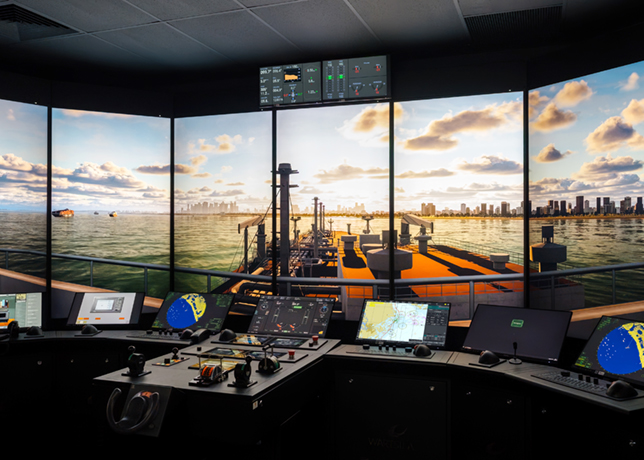
The new building contains 29 training rooms, including seven laboratories and computer rooms, as well as an amphitheatre or conference room which can accommodate 110 persons; the building is fitted with all the training equipment including equipment for hosting conferences via satellite and interpretation
The project also includes shaded parking for 525 cars, 25 offices for employees, two cafeterias each containing 100 to 120 seats with all the associated services, and a library.