
























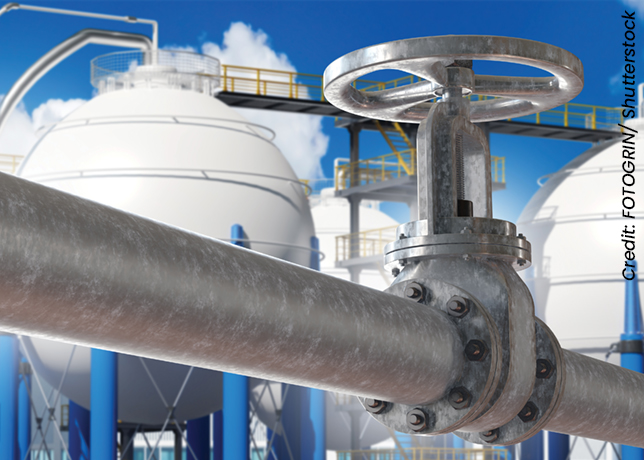

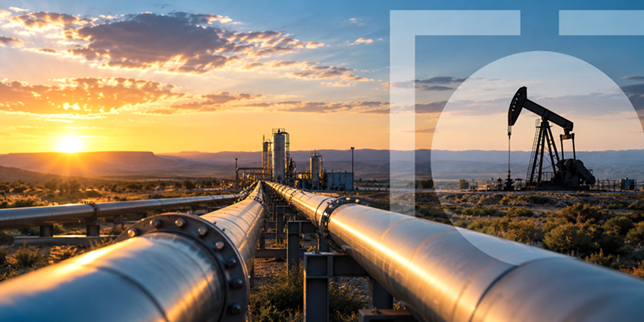



















The Chinese government has given final approval to two oil pipelines along the ancient Silk Road that will help secure its energy supply and ease transport bottlenecks.
The 1,800-km oil product pipeline and the 1,500-km crude pipeline, both connecting the northwestern Xinjiang region with neighbouring Gansu province, will cost a total of 14.6 billion yuan ($1.8 billion), Beijing officials said.
They will eventually be linked up with an international crude pipeline from Kazakhstan, they said.
Most oil imports to China are shipped from the Middle East through the narrow and at times piracy-plagued Malacca Straits and Beijing is keen to diversify supply routes.
The new pipelines will be built by state oil giant CNPC, parent of the Hong Kong and New York-listed PetroChina, which plans to start up the 20 million tonne-per-year (400,000 bpd) crude oil pipeline by August 2006.
The oil product pipe, designed to move 10 million tonnes of products a year from the Xinjiang capital, Urumqi, to the Gansu capital, Lanzhou, will be operational by the end of this year to match the start-up of the Kazakhstan pipeline, the officials said.
State-owned China National Petroleum Corp (CNPC) sealed a landmark deal with Kazakhstan last year to build a $1 billion crude oil pipeline from the land-locked Central Asian country. The 1,240-km line has an initial 200,000 bpd capacity.
China imported 1.29 million tonnes of crude from Kazakhstan by rail last year, official data showed.
To handle the new crude from its neighbour, PetroChina is building a 1 million-tonne-per-year ethylene plant and more than doubling the refining capacity of its Dushanzi refinery in Xinjiang to 200,000 bpd, company sources have said.
“Both the crude and oil product pipelines will be linked to Dushanzi via branch pipelines to pump (products and) Kazakh and domestic oil out of Xinjiang,” one official said.
At the moment all crude and oil products produced in the region are moved out by rail.
Crude oil production in Xinjiang was 22.28 million tonnes last year (446,000 bpd) and is expected to more than double to 50 million tonnes (1 million bpd ) in 2010, becoming the top oil producing area in China, another official said.
PetroChina’s Lanzhou Petrochemical Co, the largest refinery in the west, has a nameplate processing capacity of 200,000 bpd. It also provides oil products to the southwest region via a major pipeline.