

















































Saft, a specialist in the design and manufacture of high-tech batteries for industry, has launched the world’s first Li-ion (lithium-ion) cell capable of operating at temperatures of up to +125°C – an innovation that opens up exciting new possibilities for the design of MWD (measurement while drilling) tools.
At the same time, Saft has also launched a new D-size primary lithium cell.
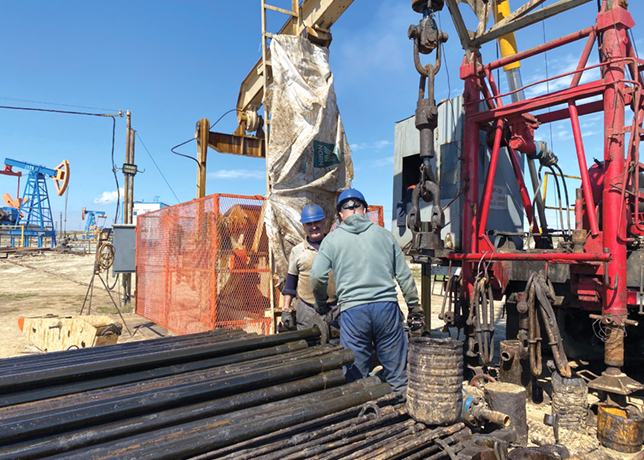
The launch of the new VL 25500-125 Li-ion cell and the new LSH 20-150 primary cell is a major development in the design of reliable, cost-effective power sources for electronic equipment operating under the high levels of shock, vibration and pressure and extreme temperatures experienced by MWD tools in the oil and gas exploration industry.
To complement its growing range of lithium cells for MWD tools, Saft operates a dedicated battery design, development, testing and volume production facility at its factory in Poitiers, France. Here, the lithium cells are integrated into bespoke, ruggedised cylindrical MWD battery systems, known as ‘Staves’.
As well as ensuring that the lithium cells have reliable electrical connections, a key element in the stave design is to provide complete mechanical integrity, even under extreme temperatures, vibrations and pressures.
This involves careful selection of the construction materials and specialised manufacturing techniques, such as the cross-ply tape wrapping process. The staves also incorporate electronic controls, such as diodes to protect primary cells or balancing circuits to manage rechargeable cells.
MWD tools incorporate a variety of electronic sensors, such as accelerometers and magnetometers.
Conditions
These provide the operator on the surface with real-time information about the tilt and position of the wellbore, especially in directional drilling, as well as detailed information about the conditions at the drill bit, such as: rotational speed; torque and weight on the bit; vibration; temperature and type of rock formation.
Since there is no possibility for a direct cable link from the surface to the drill bit, the electronics are powered by onboard battery systems, and the data is transmitted most commonly by a technique known as mud pulse telemetry.
MWD is a highly demanding application that creates a challenging environment for the batteries.
They must operate over a wide temperature range – from well below 0°C at the surface in Arctic oil and gas exploration projects to well over 100°C during drilling – while enduring very high vibrations (20 g rms) and provide complete reliability for long periods (typically from a few hours to over 20 hours).
This is especially important as ‘time is money’ in the exploration industry.
