


























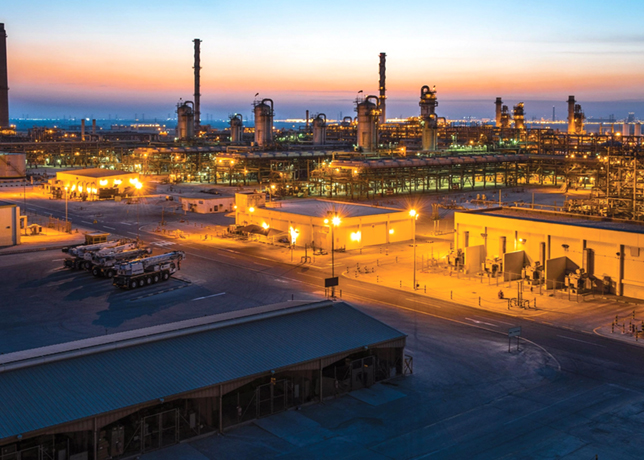
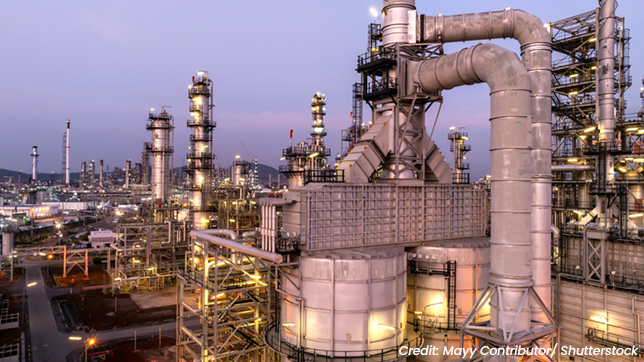























CONCERNS about long-term gas availability in Oman have eased considerably.
Over the past decade, proven gas reserves have risen steadily to more than 35 tcf. PDO, in which Shell is the technical leader, is committed to a government plan to find more gas at top speed so that the proven reserves may reach 50 trillion cubic feet (tcf) by 2010.
In tandem, the government has drawn up alternative supply options, which can be exercised if additional volumes are required in future.
Demand for natural gas in the sultanate is forecast to reach 3,800 million cubic feet (mcf)/day by 2010, well above the planned supply for the domestic market of 2,600 mcf/d, according to the ministry of oil and gas (MOG). But Oman’s production of natural gas is to grow to 3,150 mcf/d in 2008. It was planned that some of the production will go to the LNG export plant. But if imports from Qatar and Iran lag behind demand requirements, the allocation to the LNG plant will be cut.
When commissioned later in 2008, the gas supply station’s capacity will increase to deliver 23 mcf/d of natural gas. As part of its contract, Galfar was to install additional pressure reduction trains and metering stations for new industrial consumers at Sohar. Besides, around 7.5 km of 16-inch header pipeline have been laid from the existing gas supply station to two new industries: Shadeed Iron and Steel and Aromatics Oman Limited.
An existing 5 km header pipeline has just been extended with installation of an additional 6 km of 6-inch header to link up with Sohar Aluminium and Sohar Sharq Steel Rolling Mill. Supplies to Sohar Sharq Steel has begun, while Shadeed Iron and Steel started receiving gas from OGC by mid-2008. A second gas supply station is being established close to the smelter of Sohar Aluminium Co.
Oman’s oil consumption in 2008 is expected to be limited to about 85,000 barrels per day (bpd), from 77,000 bpd and 70,000 bpd in early 2006. In early 2000, only 55,000 bpd of crude oils were processed into 2.2m tonne/year of products for the local market, compared to 40,000 bpd in 1994. Crude oil is processed at the country’s refinery in Mina Al-Fahal, with the Sohar oil refinery being for export.
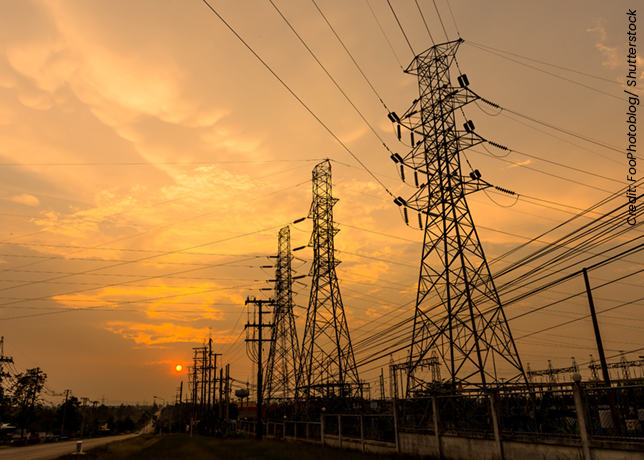
The power plants and water desalination complexes in Oman are the biggest users of energy, mainly natural gas. Consumption by the expanding utilities sector is to rise rapidly, estimated at the rate of 10 per cent per annum, with most gas-fired power plants to be built by the private sector in various parts of Oman.
The state’s Financial Affairs and Energy Resources Council, headed by Sultan Qaboos and set up in early 1998, focuses on new gas infrastructure projects and is determining where future industries are to be located, with Sohar to house heavy industry. Anticipating local demand and meeting needs is the Consumption Planning Department at the Ministry of Oil and Gas (MOG).
The state-owned Oman Oil Company (OOC) in late 2007 shelved a plan to partially divest its stake in Oman Oil Marketing Company (OOMC). OOC in March 2007 said it was planning to sell a 23 per cent stake in OOMC in favour of Omani investors by way of a public offering. OOC, the single largest stakeholder of OOMC, has 49 per cent in OOMC. OOMC is involved in the marketing and distribution of fuels and lubricants, which include the retail sector and direct sales to government. The company is also focusing on aviation refuelling business.
The domestic oil retail network includes Shell and the state controlled Al-Maha which was created in 1994. In 2000 the government sold 35 per cent of Al-Maha, a first step towards its privatisation, and ended a moratorium on retail sites imposed in 1994 on BP Oman and Shell Oman Marketing Co. The 35 per cent stake was bought by ABS, an Abu Dhabi-based firm. ABS produces the Top Lube brand of lubricant and markets it in the UAE and Oman. Some fuels being marketed in Oman are packed in Dubai’s Jebel Ali free zone. With the economy expanding rapidly, oil consumption will exceed 100,000 bpd by 2010.
A shift to biofuels is to begin sometime before 2010. This will first come from development of the Nimr oil and gas field in the south, a programme of projects being tendered. One project covers the innovative use of effluent water pumped from the wellhead to grow biofuel crops in the desert. The main concessionaire, the state-controlled Petroleum Development Oman (PDO), has opted for the contractor to use “desert greening” technology to grow reed beds for effluent treatment at the field. The treated water can then be used for irrigation processes.
A biological solution for the field was preferred to mechanical treatment as it is more environmentally friendly and does not require expensive gas feedstock. A number of companies are bidding for the work, including Shell, Veolia of France and AES Arabia, a unit of AES of the US. The winner will take 45,000 cm/d of water from the field, treat it and use it to grow crops suitable for biodiesel production. It is the first time such a project has been attempted in the Middle East.
The treatment and disposal of water is a major issue for PDO. At some of its mature fields, PDO produces five barrels of water for every barrel of crude oil, compared with the industry standard of three to one.
The other contract covers expansion of the gas network of state-owned Oman Gas Co (OGC), linking the Nimr field with Salalah on the coast.
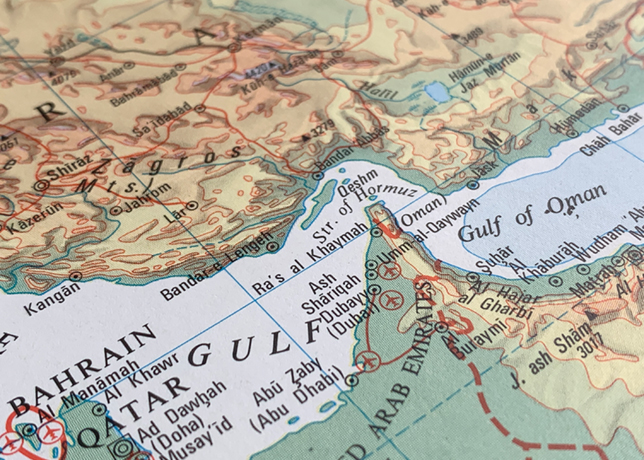
Consumption of natural gas has risen sharply since 1988 to reach 2,500 mcf/day in 2007 and in 2008 this is expected to average 2,700 mcf/day. Gas exports to the UAE, averaging 1,200 mcm/year, stopped on August 1, 2007. Now Oman is expecting gas to come from Qatar and to be supplied in 2008 by Abu Dhabi government-controlled Dolphin Energy Ltd (DEL). Oman is to import gas from Iran, including 1,000 mcf/day to be exported in LNG form on behalf of Tehran, but a final agreement is yet to be negotiated.
The sultanate began exporting ammonia on April 20, 2005, when the Maharshi Shivatreya tanker left Sur bound for India, loaded with the first shipment from Oman India Fertiliser Co (Omifco). The consignment, representing the first petrochemical shipment to depart from Omani shores, was significant in view of Omifco’s protracted gestation period, which began more than a decade ago. If all goes according to plan, exports of petrochemicals will exceed 6m t/y by 2009, and Oman will have joined the major league of Gulf producers.
The location of petrochemicals projects at Salalah, Sur and Sohar – with the latter having a new oil export refinery – reflects Muscat’s determination to further accelerate economic diversification and spread development evenly across the regions. Oman has an extensive gas pipeline network.
Although Sur is the site of the Omifco complex, its location is viewed as the hub for the LNG industry. Salalah may well see further petrochemicals investment, but it is Sohar which is to become the chemicals centre of the sultanate. With five confirmed projects at the northern port, economies of scale are improving, especially in terms of shared infrastructure and greater integration. This is highlighted by an aromatics project which will take residue as feedstock from the export refinery.
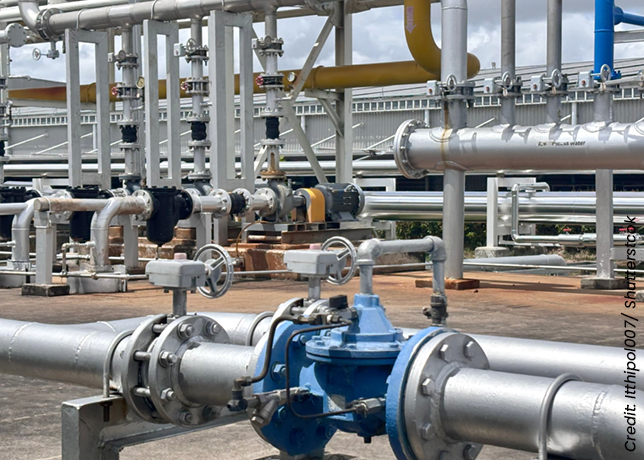
Domestic gas distribution is being handled by OGC, set up in 1999. Owned 80 per cent by the government and 20 per cent by OOC, OGC is marketing through a 635 mcf/d Government Gas Transmission System (GGTS). About 87 per cent is supplied from the Yibal/Natih non-associated gas reservoir. The rest is associated gas from the Shu’aiba reservoirs of the Yibal and Lekhwair oilfields of PDO, which produce most of the sultanate’s oil and gas. More than 90 per cent of the gas supplied through the GGS is used for power generation and water desalination. Apart from the expanding utilities, gas consumption is to increase in the coming years in view of a rapid population growth and rising industrial investments.
In 1999 Muscat granted OGC a 27-year concession to operate the GGTS and signed with it a tariff agreement. OGC will offer 40 per cent of its equity to investors on the Muscat Securities Market (MSM). OGC has two gas pipelines completed in late 2003: (1) A 305 km, 32-inch line can carry 550 mcf/d from the Fahud production and processing centre to the Sohar industrial zone. This was built by Dodsal of India under a contract signed in March 2000. The pipeline should be expanded to 805 mcf/d with installation of new compression facilities. (2) A 670 km, 24-inch line can carry 268 mcf/d from the Saih Nihayda production and processing centre to a new industrial zone in Salalah, capital of Dhofar province in the south.


